
In the ever-evolving landscape of computer hardware, storage interfaces play a crucial role in determining the speed, efficiency, and overall performance of storage devices. Two primary contenders in this arena are SATA (Serial ATA) and PCIe (Peripheral Component Interconnect Express). Understanding the differences, advantages, and limitations of these interfaces is essential for users looking to make informed decisions about their storage solutions.
Here’s how to distinguish the two storage options by size, speed, performance, and cost.
Connector and size
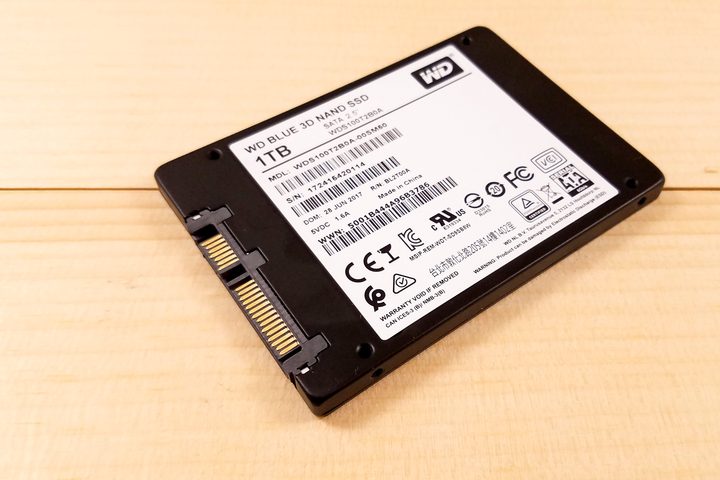
While SATA and PCIe are commonly associated with the drives they support, it’s important to recognize that these terms refer to the interface technologies themselves. SATA is characterized by a small L-shaped connector that has been widely utilized for connecting various drives, including optical drives, hard drives, and SSDs, to motherboards. This connector is accompanied by a secondary, longer L-shaped connector that supplies power to the connected device.
SATA hard drives are available in both 3.5-inch and 2.5-inch sizes, whereas SATA SSDs are typically limited to the 2.5-inch form factor. Over the years, SATA has undergone multiple generations of development, with SATA III being the most prevalent today, serving as the standard interface for modern hard drives and mainstream SSDs.
On the other hand, PCIe, or PCI Express, is a versatile interface found on modern motherboards, offering various-sized sockets for components such as graphics cards and smaller ports for add-in cards like Wi-Fi and USB ports. The bandwidth of PCIe can vary, ranging from x1 for smaller and less capable connections to x16 for larger connections with higher available bandwidth.
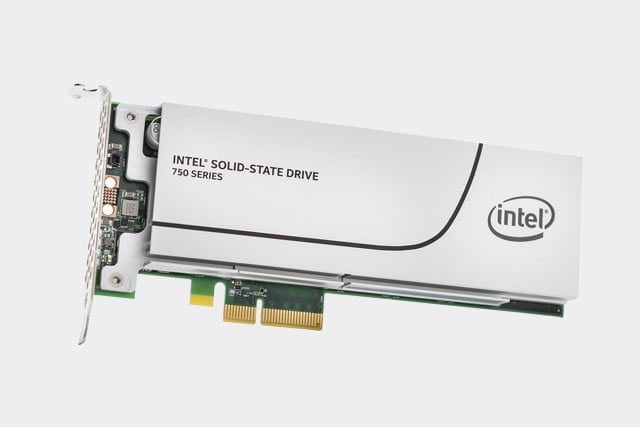
PCIe SSDs can directly plug into PCIe slots, often utilizing the NVM Express (NVMe) connector type. These drives are typically one-third the size of a standard graphics card. Both SATA and PCIe interfaces can employ the M.2 connector type, though PCIe drives are more prevalent in this form. M.2 drives are compact and slender, lying flat against the motherboard without the need for additional power. High-performance M.2 drives may include heat spreaders and heatsinks to maintain safe operating temperatures.
Whether utilizing the M.2 or NVMe connector type, PCIe drives can support different generations of PCI Express. While PCIe 3.0 is the most common, the introduction of PCIe 4.0, as seen in AMD’s x570 motherboards, offers double the bandwidth (16GBps), enabling faster and more efficient drives.
Performance
Each drive is characterized by its performance metrics, but both SATA and PCIe formats have their performance limitations. SATA III drives are primarily constrained to a maximum sustained read and/or write speed of 6Gbps, equivalent to approximately 550MBps. While a SATA hard drive may not achieve such speeds, SATA III SSDs, such as the impressive Samsung 860 Evo, can comfortably reach this threshold in synthetic testing.
It’s crucial to note that few drives attain such speeds in real-world scenarios, as practical usage may differ due to variations in file sizes and compositions impacting read and write speeds. M.2 SSDs employing the SATA protocol adhere to these same speed constraints, emphasizing the need for a PCIe M.2 drive if higher speeds are desired.
Note: Few drives will hit such speeds in real-world usage, as that is the practical maximum the drive can achieve, and differences in file sizes and composition can impact read and write speeds in practice.
These same speeds apply to M.2 SSDs that utilize the SATA protocol, so watch out for that when buying an M.2 drive. If you want greater speed, you need a PCIe M.2 drive, not a SATA M.2 drive.
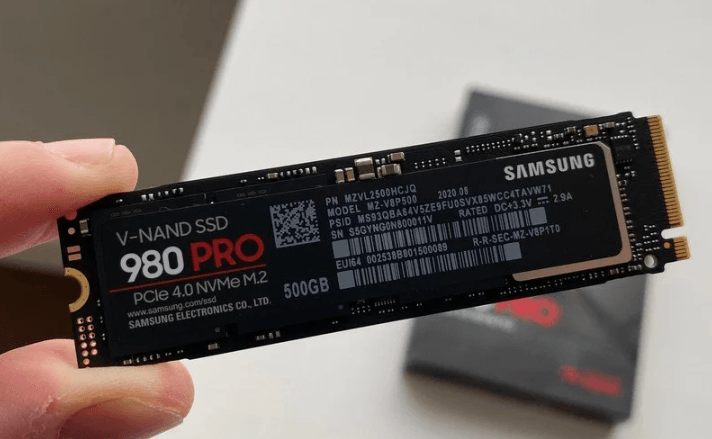
PCIe drives, whether utilizing the M.2 or NVMe connector standard, offer increased speed but are still governed by the memory chip speed on the drive and the PCI-Express generation for which they are designed. PCIe 3.0 drives typically boast a maximum sustained read/write speed of 3,500MBps, while PCIe 4.0 drives raise the bar with a typical maximum sustained read/write speed of up to 7,000MBps. We are also getting the next generation PCIe 5.0 drives that aim to go beyond 10,000MBps.
However, these speeds are seldom realized in real-world scenarios, with PCIe 3.0 drives commonly achieving around 2,500MBps sustained read in synthetic testing, and the most advanced PCIe 4.0 drives delivering approximately 6,500MBps sustained read. Exceptional cases exist where drives designed for high-speed data centers may offer read speeds exceeding 7GBps and sustained write speeds of 6GBps, albeit at a rare and premium price point.
Additional performance metrics, such as random read and write speeds, exhibit less disparity between SATA and PCIe drives. While PCIe drives may tout random read/write speeds three to five times greater than their SATA counterparts, the real-world improvement often translates to a more modest two to three times enhancement, particularly in longer transfers. In brief transfers, the performance gap narrows significantly.
The tangible difference in the feel of these drive types during use is heavily dependent on the user’s system requirements. While a rapid NVMe or M.2 PCIe drive may marginally expedite game loading and Windows boot times compared to a SATA SSD, the discernible difference is not substantial. Notably, if frequent large file transfers are part of the routine, the disparity becomes more noticeable.
In practical terms, the leap in real-world performance is more conspicuous when transitioning from a hard drive to an SSD (even from SATA to SATA) than upgrading from a SATA SSD to a PCIe SSD.
Cost
Due to their compact size and higher potential for performance, PCIe drives tend to come at a higher cost compared to their SATA counterparts. The price difference is not always significant; for instance, there may be only approximately a $30 gap between the 500GB Samsung 870 Evo SATA SSD and the 500GB Samsung 970 Evo PCIe M.2 SSD.
However, certain drives can be notably expensive. For instance, Intel’s Optane-based 905P 960GB drive could exceed the cost of more than five average 1TB PCIe drives combined.


