1. Home
  2. Phones
  3. Mobile
  4. News

Motorola debuts four new G series phones starting at $227

Add as a preferred source on Google

Motorola has just refreshed its G series of budget smartphones with four new offerings. The new series starts with the Moto G31 at 200 euros ($227). It’s joined by the Moto G41 at 250 euros ($284) and the Moto G51 and Moto G71, which will sell for 230 euros ($261) and 300 euros ($340) respectively.

Along with the G series, Motorola has also announced a highly affordable flagship called the Motorola G200 that will cater to the premium segment. The G series follows closely on the heels of the Moto Watch 100 that was launched yesterday.  

Recommended Videos

While each of these phones cater to a particular price point, there are quite a few similarities between them. For instance, all the phones have the same 5000mAh battery, the same vanilla version of Android 11 with some customization features built on top by Motorola, and one guaranteed OS update. The four phones also share the same central hole-punch cutout display, as well as an 8MP ultrawide camera and a 2MP macro lens.
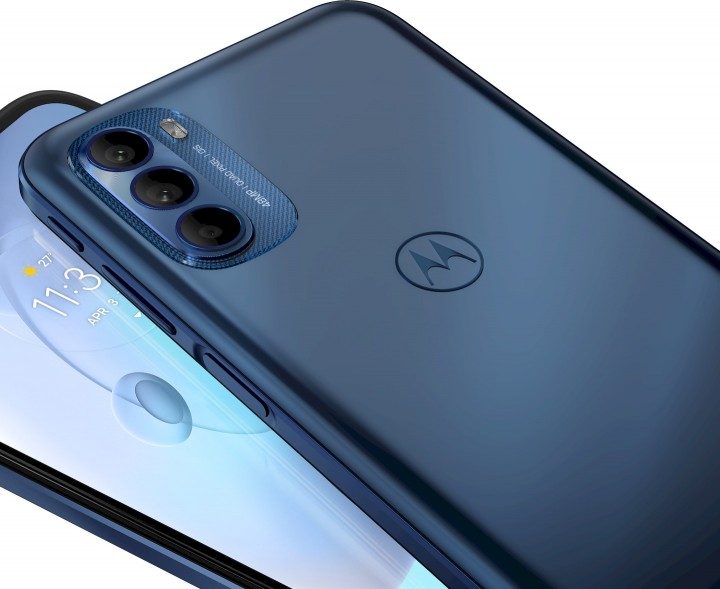
Moto G41
Image used with permission by copyright holder

The Moto G31 and G41 are 4G devices that share the same MediaTek Helio G85 processor, a 6.4-inch FHD+ 60Hz OLED display, and a 13MP selfie shooter. Both the devices also have an IPX2 rating, as well as a microSD card slot. 

The Moto G31 has a 50MP main camera, 10-watt charging, 4GB of RAM, and 64GB or 128GB of storage, while the G41 comes with a 48MP main camera, 30W charging, 6GB of RAM, and 128GB of storage. 

The Moto G31 will be available in Mineral Gray and Baby Blue, while the Moto G41 will come in Meteorite Black and Pearl Gold. Both the Moto G31 and G41 will be available in Europe soon, followed by launches in Latin America and the Middle East.
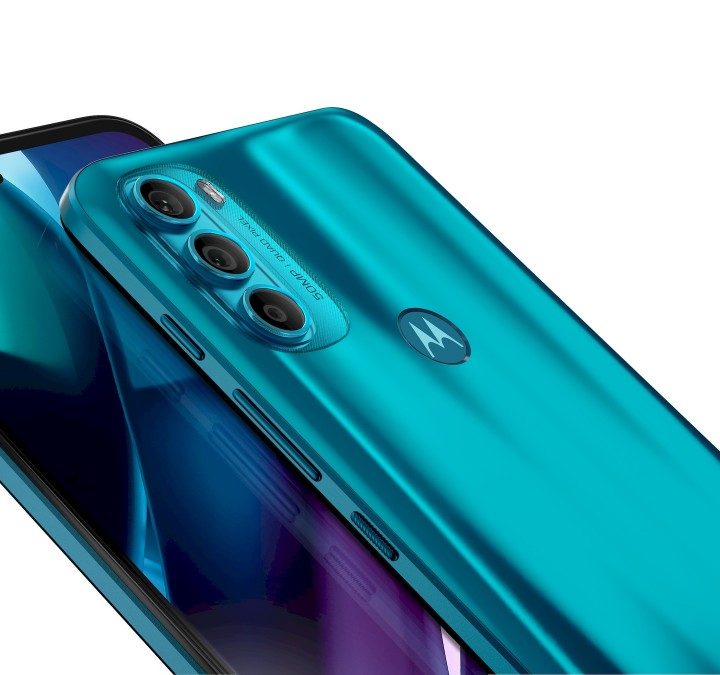
Moto G71
Image used with permission by copyright holder

The Moto G51 and G71 offer Snapdragon chipsets, along with 5G, as part of their more premium prices. The G51 has a Snapdragon 480 Plus chip running beneath a 6.8-inch FHD+ LCD with a 120Hz refresh rate, as well as 4GB of RAM and 64GB of storage. The phone also brings 10W charging, a 50MP main camera, and an IP52 rating. The Moto G71. which is on the high end of the series. has a newly launched 6nm Snapdragon 695 5G processor, 6GB of RAM, and 128GB of storage. It is equipped with a 6.4-inch 60Hz OLED panel, 30W charging, a 50MP main camera, and a 16MP selfie shooter. 

The Moto G51 will be available in Bright Silver and Indigo Blue, while the G71 will come in Arctic Blue, Iron Black, and Neptune Green. Both these handsets will also be released in Europe first, followed by India, Latin America, and the Middle East.

Abdul Q
Former Digital Trends Contributor
Abdul can be tagged as a true blue smartphone enthusiast. As part of his professional career, he has contributed to a number…
Gemini Intelligence has strict requirements, and your phone may not qualify
Gemini Intelligence

Google’s new Gemini Intelligence platform is quickly becoming one of the biggest talking points in the Android world right now. After being highlighted during this week’s Android Show, the feature is already being tied to several upcoming premium foldables and flagship phones. But there’s a catch: not every high-end Android device will be able to run it. And surprisingly, even some of Google and Samsung’s latest foldables may miss out.

According to Google’s requirements, Gemini Intelligence isn’t just another software update you can casually push to older devices. The company appears to be building this around a much stricter hardware and long-term software support system. To qualify, a phone needs a flagship-grade chipset, at least 12GB RAM, support for AI Core, and Gemini Nano v3 or newer. That immediately creates a problem for several current-generation phones.

Read more
Meta’s Ray-Ban Display now types messages from your finger movements
Neural Handwriting is a really cool feature, but Meta opening the Ray-Ban Display to developers is the quiet announcement that turns a clever wearable into a platform with immense possibilities.
Meta Ray-Ban Display and EMG Band.

Six months into its life, the Meta Ray-Ban Display is starting to look less like an experiment, thanks to what is arguably the most significant update Meta has ever pushed for the device. 

The headline feature is Neural Handwriting, which is now available to every Ray-Ban Display owner, having spent its early months in limited access for Messenger and WhatsApp users. 

Read more
WhatsApp is testing disappearing messages that wait for you to actually read them before vanishing
WhatsApp's new After Reading timer deletes messages only after the recipient reads them.
whatsapp-disappearing-messages-after-reading-timer

WhatsApp has always let you send messages that vanish on a timer, but the clock starts the moment you hit send, not when the other person actually read it. That means a message could sit unread for hours and still disappear before anyone sees it.

This is why WhatsApp is testing a new feature called 'After Reading' timer for disappearing messages, spotted in the latest iOS beta update by WABetaInfo.

Read more