  1. Home
  2. Computing
  3. Trash
  4. News

Powerful 2nm chips are set to launch in 2026

Add as a preferred source on Google

Global semiconductor foundry TSMC has just confirmed that its production of the 2-nanometer process node is on track. This means that computer chips with yet unseen power are on the horizon.

According to the current estimates, chips based on 2nm architecture will enter mass production in 2025.
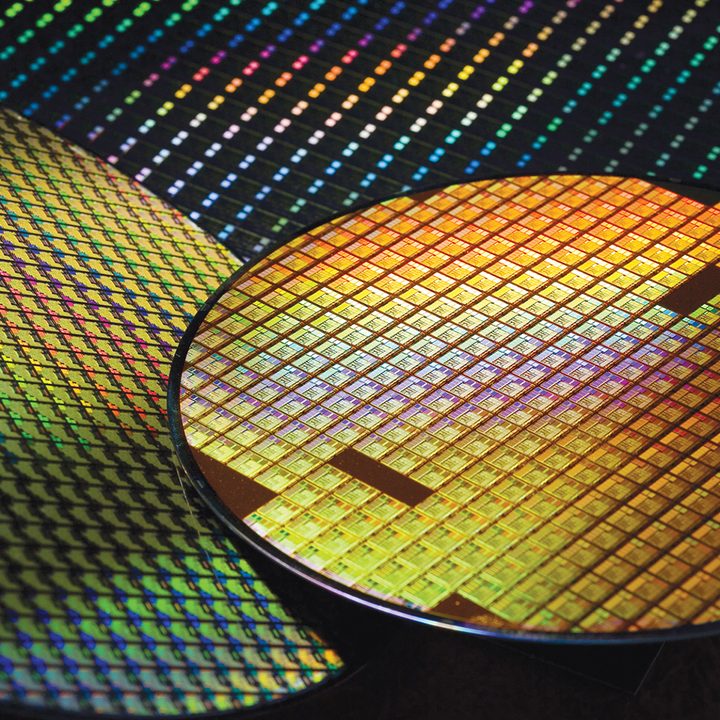
TSMC wafers.
TSMC / TSMC

The information comes from C.C. Wei, chief executive of the Taiwan Semiconductor Manufacturing Company (TSMC), and was disclosed during an earnings call. TSMC first confirmed that it’s been working on a 2nm process node in 2020, but it kept the details pretty scarce. This time, the company divulged a bit more about the node’s architecture and shared new updates on the planned road map.

A good amount of technical information was shared as part of the earnings call. The new N2 node will rely on gate-all-around (GAA) transistors, which marks a change from its current Fin Field-Effect Transistor (FinFET) structure. The nodes will continue being fabricated based on extreme ultraviolet (EUV) lithography.

Such technical details may not mean much to most end users, but TSMC hasn’t shared much in the way of expectations where performance is concerned. However, it’s not the first foundry to work on a 2nm process, and some of its competitors have already made some serious headway. IBM unveiled its first 2nm chip last year.

IBM’s breakthrough was significant. The manufacturer said that using its 2nm process, it was able to fit a massive 50 billion transistors into a fingernail-sized chip. That’s 20 billion more than the 5nm process had when IBM announced it in 2017.
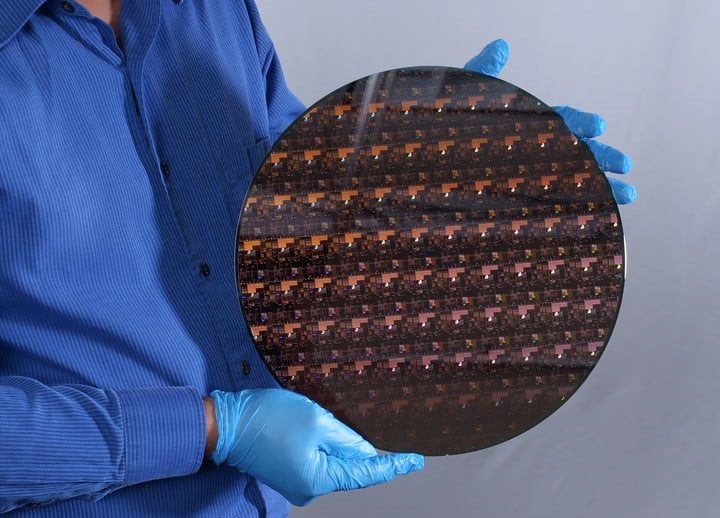
IBM employee holds 2nm wafer.
IBM

All of the big manufacturers are slowly making their way toward smaller and smaller process nodes. Switching from 7nm to 5nm, and in the future, from 5nm to 3nm, will bring significant upgrades in terms of performance and thermals. Smaller transistors use less power, take up less space, and push the performance ceiling up as more cores can be stacked in a smaller chip.

The information was first shared by Tom’s Hardware. TSMC has consistently delivered process node upgrades around once every two years, with enhanced and customized versions of already existing nodes launching in between. This time around, it seems to have hit a bit of a delay. Wei confirmed that while the “progress is to our expectation,” the risk production will only begin around the end of 2024. Then, the chips will enter high-volume production (HVM) in 2025, probably around the second half of the year, or even the end of it.

Switching to 2nm could result in performance we can’t imagine in consumer computers with today’s hardware, but we will have to wait. Although the chips are on track to start being mass-produced in 2025, it’s unlikely that we will see them in our PCs sooner than the second half of 2026. It’s a long road before the 2nm process is included in products that make it to market.

Monica J. White
Monica is a computing writer at Digital Trends, focusing on PC hardware. Since joining the team in 2021, Monica has written…
Pope says AI must be disarmed and shouldn’t dominate humanity. We’re going the opposite way.
The Pope just dropped his first encyclical, and AI companies should probably read it.
Pope Leo XIV signing his first encyclical

Pope Leo XIV signed his first encyclical on May 15, the 135th anniversary of Pope Leo XIII's Rerum novarum. The document, Magnifica humanitas, was published on May 25 and addresses one of the defining challenges of our time: artificial intelligence and its impact on humanity.

The core message isn't anti-technology. The Pope is clear that technology is neither a threat nor inherently evil. However, he does say that technology is never neutral, because it takes on the values of those who build, fund, and control it. That's where things get interesting.

Read more
I built an offline Grammarly alternative and turned it into a Mac app without any coding
It lives in a browser tab. It's a Chrome extension. It's also a Mac app. Claude built it for me in all three flavors.
Grammarly alternative built using Claude.

I wrote this entire article while seated on an airplane experiencing unusually high turbulence. The software I used to spell-check and grammatically sanitize the draft was built at an airport. The language engine is running entirely on my Mac, fully offline, fixing all my typos and removing the double spaces while I mash the keyboard and sip a sugar-bomb coffee. 

Also, I don't know how to code. I didn't write a single line of code, and yet, the Mac software I am using right now looks classier and feels snappier than Grammarly ever did. Grammarly, if you don't know, is one of the most popular apps for spelling and grammar checking on the planet. So, how did I do it? I asked Claude. I narrated my wish, it asked my preferences, and in less than 30 minutes, I built myself a no-internet Grammarly replacement while also avoiding the "yet-another-subscription" curse.

Read more
China will put a unique ID code on humanoid robots, just like citizen ID for us humans
China is treating its humanoid robots like citizens. assigning each one a unique ID code from birth to recycling.
Robot with four arms

China has launched a national programme that will assign every humanoid robot manufactured in the country a unique digital identity code, effectively a citizen ID, but for bipedal machines (those that can balance and walk/run on two legs). 

The initiative, called the Humanoid Full Lifecycle Management Service Platform, was announced on Friday. It is led by the Humanoid Robotics and Embodied Intelligence Standardization committee, which is under China's Ministry of Industry and Information Technology (via South China Morning Post).

Read more