  1. Home
  2. Audio / Video
  3. News Round Ups

Sennheiser’s Momentum 4 Wireless headphones teaser looks a lot like Sony’s WH-1000XM5

Add as a preferred source on Google

In an unusual move for Sennheiser, the company has released an early sneak peek at its next flagship wireless headphones, the Momentum 4 Wireless. Only one photo of the product was included in the press release — a close-up of the headband’s intersection with the earcups — but that’s enough to tell us that Sennheiser is following in Sony’s footsteps.
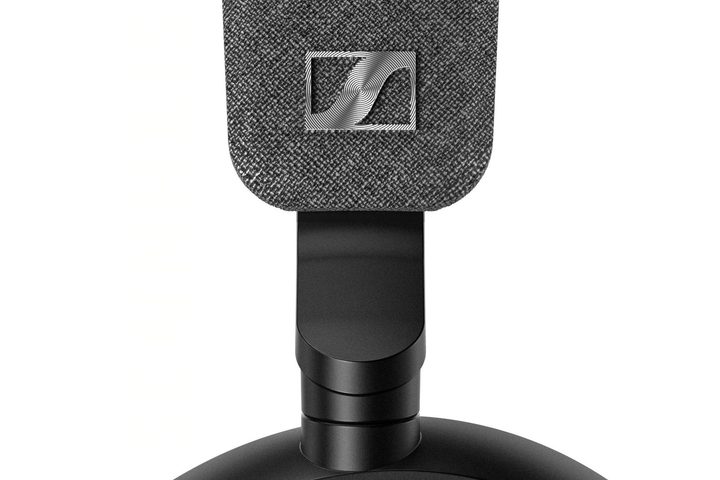
Teaser photo of the Sennheiser Momentum 4 Wireless Headphones.
Sennheiser

When Sony introduced its top-of-the-line WH-1000XM5 wireless headphones earlier this year, the biggest change from 2020’s WH-1000XM4 was the design. Sony ditched the traditional earcup fork-based pivot in favor of a unified twisting and pivoting stem that enters the earcup from the top instead of the sides.

Recommended Videos

And from what we can see in this single photo, Sennheiser has done something similar. Its Momentum 3 uses a fixed metal headband on which the earcups can move up and down, and exposed wires to create the connection between the earcups. By contrast, the Momentum 4 uses a simplified single point of contact, with what looks like an adjustable, generously padded headband and completely concealed wiring. In short, it looks like a completely different product.

The one drawback to the new design, as we discovered with the WH-1000XM5, is that it no longer folds up for easier storage. It’s too early to say for sure that the Momentum 4 suffers from this too, but there’s no visible hinge in this teaser photo.

Sennheiser says this new design will be more comfortable than its predecessor, and that’s welcome news. One of the the downsides we noted in our review of the Momentum 3 was a lack of decent padding on the headband. Another gripe that appears to have been addressed is battery life. At just 17 hours, the Momentum 3 weren’t even considered well-powered when they debuted in 2019, but with a claimed 60 hours on the Momentum 4, Sennheiser has gone from underdog to world champion.

The new cans will include active noise cancellation (ANC) and transparency as its predecessors did, and hopefully Sennheiser has managed to improve both — they were good, but not great on the Momentum 3. What needs to remain, and what Sennheiser is promising, is great sound courtesy of “an audiophile-inspired 42mm transducer system” that the company says will deliver brilliant dynamics, clarity, and musicality for exceptional high-fidelity sound.

We don’t yet know how much the Momentum 4 Wireless will cost, but Sennheiser’s flagship cans have typically been priced about $50 more than Sony’s, which means they could be anywhere from $350 to $450, depending on Sennheiser’s strategy.

But we do know when we’ll find out: Sennheiser says the Momentum 4 will be available globally starting in August 2022.


Simon Cohen
Former Contributing Editor, A/V
Simon Cohen obsesses over the latest wireless headphones, earbuds, soundbars, and all manner of related devices and…
Spotify removed tens of thousands of fake podcasts tied to online drug sales
Spotify is cleaning up thousands of fake podcasts linked to scam websites
spotify

Spotify has spent the past year quietly removing tens of thousands of fake podcasts that were allegedly being used to promote illegal online pharmacies and scam websites. Now, a new congressional report is raising questions about how the scheme was able to flourish on one of the world's largest audio platforms in the first place.

According to the Wired report, bad actors created thousands of fake podcasts that were never intended to attract real listeners. Instead, they were designed to manipulate Spotify’s search rankings and boost the visibility of websites selling prescription drugs without prescriptions, including opioids, stimulants, and benzodiazepines.

Read more
I tried Acer’s new 5K MiniLED Gaming monitor, and OLED kept popping into my head
After seeing it in action at Computex, I finally understand where MiniLED shines and where OLED still wins.
MiniLED vs OLED Hands On Computex 2026

If Computex 2026 taught me one thing, it's that monitor makers are no longer interested in building one-trick ponies. They want displays that can wear multiple hats, seamlessly switching between work and play without making users choose. Acer's new Nitro XV345CKR P is perhaps the best example of that philosophy, and after spending time with it on the show floor, I walked away impressed by its ambition while also questioning whether MiniLED is really the future for gaming monitors.

I've always had a slightly complicated relationship with MiniLED. On a massive living room TV, it works wonders because you're sitting several feet away, and the local dimming zones blend beautifully. Put the same technology on a monitor that's sitting barely two feet from your face, however, and suddenly you're no longer admiring the display, you're inspecting the physics behind it.

Read more
Google’s new Gemini TV controls are here and TCL owners get them first
Your TCL TV can now fix its own picture with a simple voice command
TCL 85-inch T7 QLED deal

Adjusting your Google TV settings is one of those things that sounds simple until you are three menus deep trying to find the brightness slider. Google just made that whole experience a lot less annoying.

The company has rolled out new controls for Gemini, and TCL is the exclusive launch partner, meaning TCL TV owners get access to the feature for the first 60 days before it opens up to other Google TV brands.

Read more