
Micron has just announced that some of the best graphics cards might soon receive a considerable boost — and this announcement couldn’t have come at a better time.
According to Micron, the next-gen GDDR7 memory standard is expected to launch in the first half of 2024. Will this address the growing concerns regarding VRAM limitations, or will it simply contribute to the ongoing rise in GPU prices?
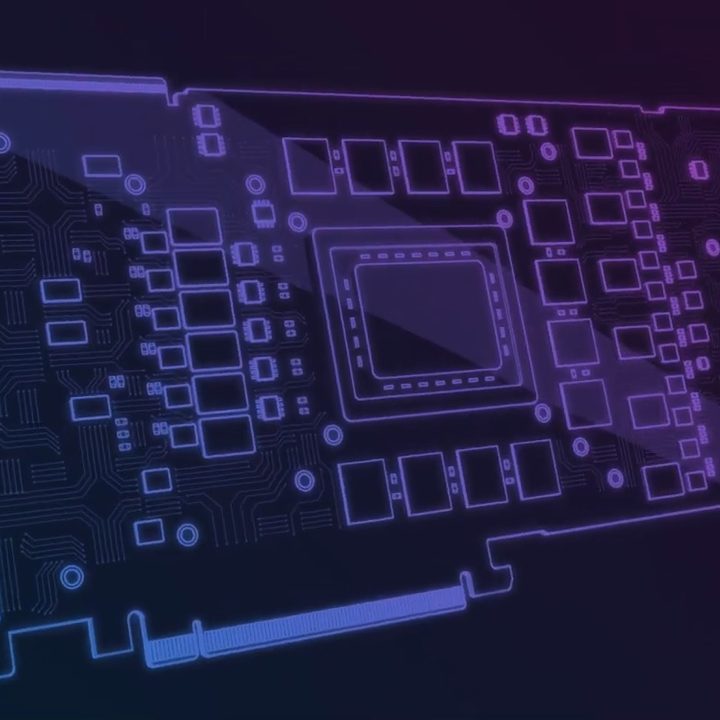
While GDDR6/GDDR6X are the current video memory standards in graphics cards, it’s time to move on — the tech has been around since 2018, which is a long time in the world of computer hardware. Micron has a fix in the form of GDDR7, and it talked about its plans during its recent earnings call. So far, it appears that everything is on track and GDDR7 memory will make it to the market in less than a year from now — but that doesn’t mean we’ll be seeing it in GPUs right away.
Once GDDR7 is here, it’ll definitely serve up a massive boost in bandwidth, and that could be a lifesaver for cards with a small memory bus, like the RTX 4060 Ti or the RX 7600. However, even high-end GPUs will certainly benefit.
Wccftech reports that Micron is aiming for 36Gbps of bandwidth per pin, while the current maximum is around 22Gbps in Nvidia’s GDDR6X solutions, and 20Gbps for AMD’s GDDR6 options. Upgrading the bandwidth per pin will drastically boost the memory bandwidth for each GPU equipped with GDDR7. For instance, a budget card with a 128-bit bus will now offer 576Gbps of bandwidth, which is a huge step up. High-end models, like the RTX 4090, will be able to hit a massive 1.7TB/s in memory bandwidth versus the current maximum of 1TB/s.
This boost will arrive courtesy of Micron’s latest 1ß (1-beta) node, which utilizes deep ultraviolet lithography (DUV). The node that will follow, dubbed 1y, will move on to extreme ultraviolet lithography (EUV).
Micron’s announcement is, indeed, perfectly timed. There’s been a lot of buzz about the problems that limited VRAM and memory bandwidth can cause in gaming scenarios. Nvidia received quite a bit of backlash for its $400 RTX 4060 Ti, which only sports 8GB of VRAM across a 128-bit bus. Imagine how much better that card might have fared if it already had GDDR7 RAM to give it that crucial boost of bandwidth.

The timing of Micron’s release is also pretty great. Nvidia isn’t planning to release a follow-up to its RTX 40-series graphics cards until 2025, so that gives it enough time to migrate to GDDR7. AMD is likely to follow suit, although it still has a fairly small range of RDNA 3 cards that needs to be filled out before it moves on to the next generation.
However, there’s a downside to GDDR7, which is that it will likely cause an increase in GPU prices. Seeing as some current-gen cards are already extremely overpriced, that doesn’t bode well for our wallets.
It also means that the GPUs that need this upgrade the most — meaning midrange to entry-level cards with a narrow memory bus — will likely not receive it for some time. We may see an RTX 5090 sporting GDDR7X VRAM, but the RTX 5060 might not be quite as lucky. Of course, nothing is certain right now, so we’ll just have to wait and see.


