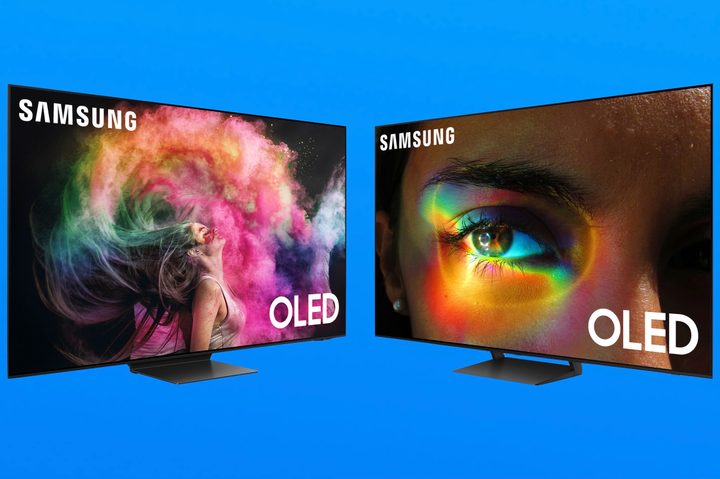
After years of dissing LG’s OLED TVs, Samsung is now 100% on team OLED. Not only did the company create its own OLED technology called QD-OLED, it also struck a deal with LG Display to buy the same WOLED panels that Sony and LG use to build some of their OLED TVs. That’s an extraordinary turnaround.
But as satisfying as it is to see the world’s largest TV manufacturer finally acknowledge the benefits of OLED TV tech, we’re also seriously perplexed by Samsung’s confusing approach to selling its OLED TVs.
Before we get into the details, let’s take a look at quick look at the state of OLED TV display technology. If you’re already familiar with the differences between WOLED, QD-OLED, and MLA, feel free to skip down to The Samsung S90C dilemma.
WOLED, QD-OLED, and MLA
The OLED world is a little more nuanced today than it was five years ago, and not all OLED TVs are created equal.
WOLED, or white OLED, is the OG of OLED TV tech. Until recently, all OLED TVs were WOLED TVs. LG Display has been at the forefront of this OLED panel type for years and remains one of the only companies that make them. WOLED uses two types of OLED material to create white light, which is then separated into red, green, and blue subpixels with a color filter. A fourth white subpixel is used to enhance brightness — this is where the W in WOLED comes from.
Then came QD-OLED — quantum dot OLED — which was first commercialized by Samsung Display. A QD-OLED panel uses just blue OLED material for each pixel and then converts a third of that pixel into red and a third into green using two types of quantum dots, resulting in a true RGB pixel that needs no further color filtering.
QD-OLED’s claim to fame is that it provides more accurate colors at higher brightness levels because it doesn’t rely on WOLED’s white subpixel, nor does it use brightness-sapping color filters.
Does that claim pass the smell test? Absolutely. When Digital Trends Editor At-Large Caleb Denison got his hands (and eyes) on the first QD-OLED TVs from Samsung (S95B) and Sony (A95K), he was unequivocal in his praise.
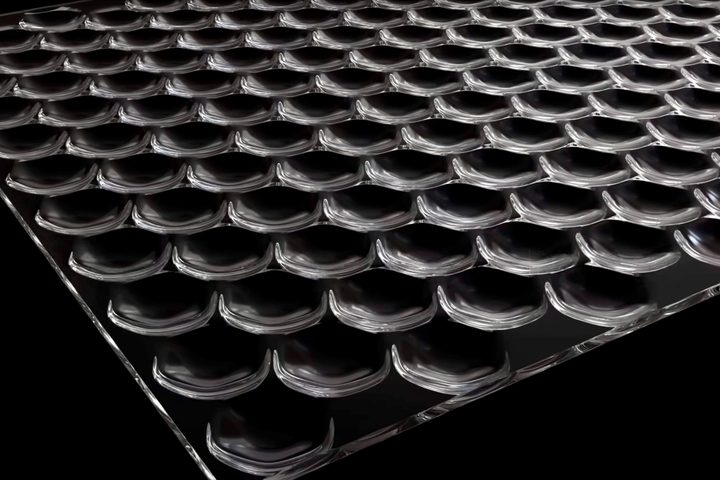
Not to be outdone, LG Display found a way to further improve its WOLED performance by adding a Micro Lens Array (MLA) layer to its panels. Billions of tiny, invisible lenses release additional light from the panel that had been previously trapped due to internal reflections. When combined with a dedicated picture processing algorithm, MLA-based WOLED TVs offer 22% more brightness than their non-MLA cousins.
MLA is so effective, that when Denison went back into the lab to compare Samsung’s QD-OLED S95C versus LG’s MLA WOLED G3, he simply couldn’t declare one to be superior to the other.
The Samsung S90C dilemma
Normally when it comes to TVs, if a company makes a model in a variety of screen sizes, you can expect that the overall dimensions are the only differences — at least in terms of picture quality — from one size to another. There are sometimes other specifications that change, like the included stand (or the number of local dimming zones in the case of LED/mini-LED TVs), but that’s about it.
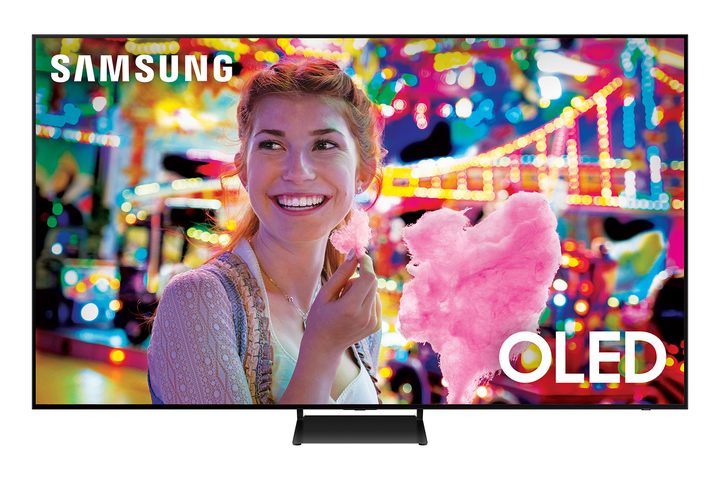
Not so with Samsung’s S90C. In its three smallest screen sizes: 55-, 65-, and 77-inches, the S90C uses a QD-OLED panel, but in its biggest format — the recently introduced S90C 83-inch model — it’s a WOLED panel.
Samsung doesn’t exactly go out of its way to tell you this. The product page for the S90C is confusing in a number of ways. Samsung uses it to promote both the S90C and its more potent big brother, the S95C. All four screen sizes are listed below the model names, but if you pay close attention, you’ll notice that clicking on the 83-inch option always switches the model name to S90C, even if you started by looking at the S95C.
Look even closer and you’ll notice the one surefire giveaway that the 83-inch model isn’t like the other sizes: there’s no mention of quantum dots anywhere in the description. The three smallest sizes for both the S90C and S95C refer to “Samsung OLED Technology,” whereas the 83-inch S90C says just “OLED Technology” — a subtle but telling difference.
Splitting hairs?
Are you rolling your eyes yet? Am I being too pedantic? Didn’t I just point out that even Digital Trends’ foremost TV expert can’t really decide if he prefers QD-OLED or MLA WOLED?
It’s true, I did just write that. But therein lies the problem. The 83-inch S90C doesn’t just use a different panel technology than the smaller versions — it also uses non-MLA WOLED, which is not equivalent to QD-OLED. In other words, the 83-inch S90C can’t claim to offer the same picture quality as the 55-, 65-, and 77-inch versions.
To be fair, LG isn’t completely innocent. Its G3 models sized 83 inches and above don’t use MLA either. But at least they are in the same family of OLED tech by using LG’s own WOLED panels.
Just use another model name already
So what’s the solution? Well as nutty as this sounds, I think Samsung should just create a new model designation for its WOLED-based TVs. Sony, the only other company we know of that sells both QD-OLED and WOLED TVs, already does this. Its A95-series Bravia TVs are strictly QD-OLED based, and available in the same 55-, 65-, and 77-inch sizes as Samsung’s S95C. For its WOLED models, it uses the A80- and A90-series Bravia designations, and these models come in 55-, 65-, 77-, and 83-inch sizes.
WOLED here, WOLED there
As if all of this weren’t confusing enough already, apparently Samsung is planning a new OLED model designation. According to FlatpanelsHD, the company has started buying 77-inch WOLED panels from LG Display and is going to use them in an upcoming range that might be called the S89C or possibly the S85C.
If that report is accurate, Samsung seems to see the benefit of segregating its WOLED TVs from its QD-OLED models. And yet — unless it changes its strategy midstream — the S90C will remain a hybrid of the two technologies depending on the size you buy.