
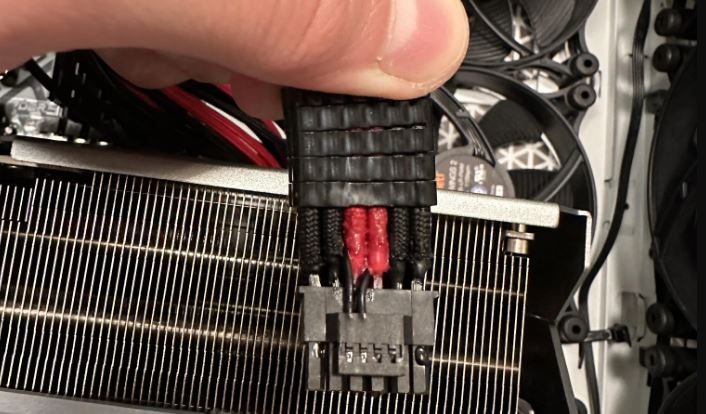
Nvidia’s best GPU continues to melt, and even third-party adapters can’t seem to prevent it from happening. CableMod’s adapter, which many had hoped would fix all problems, is now pinned as the cause of some of the instances of melting connectors. Unfortunately, using it voids the warranty on the GPU, as one unlucky user found out from MSI.
Reddit user Agentcamels reported on the MSI subreddit (via Tom’s Hardware) that their RTX 4090 went up in smoke. We’ve heard of this before — it’s a seemingly never-ending saga of melting RTX 4090 connectors. It seems that they were playing Cyberpunk 2077 when they saw smoke. CableMod’s 12VHPWR adapter was in use here, and that may have caused the meltdown; in any case, it appears that the adapter is now stuck to the GPU.
Upon requesting repairs or a refund from MSI, the user was told that the fault lies with the CableMod adapter. MSI blamed “manufacturing and tolerance issues” and denied the claim, leaving the user to fend for themselves, suggesting that they contact CableMod instead. MSI has also said that the issue voided the warranty on the RTX 4090 in question.
Being denied return merchandise authorization (RMA) on any product is stressful, but when it’s a graphics card that costs upward of $1,600, that’s even more worrying. However, if the CableMod adapter is indeed the cause, it makes sense that MSI would direct the blame in a different direction.
When the first cases of the RTX 4090 melting were reported, various tech gurus and Nvidia itself quickly found the root cause of the problem — the 12VHPWR connector. When improperly installed, the connector has a tendency to heat up, and that can damage not just the cable, but also the graphics card itself, as well as the power supply. It turns out that bending the cable is often the main culprit. The problem is that the RTX 4090 is enormous, taking up four (or more) slots, which means that many users had to get creative to even install it in their PC cases in the first place.
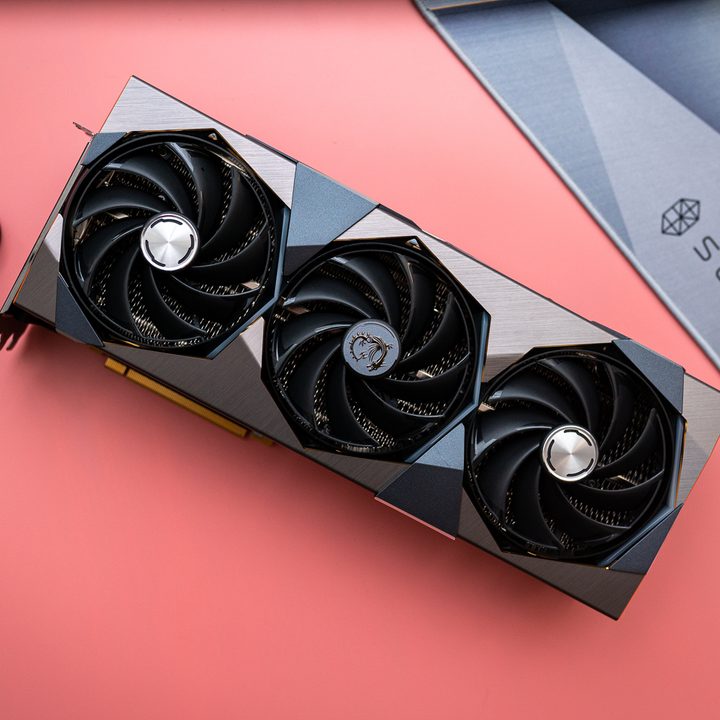
Some people ended up buying even bigger chassis, while others left theirs open just to be able to fit the graphics card. However, CableMod came to the rescue with its angled adapter, and many thought it’d be the much-needed solution to the melting fiasco — but it was pretty clear from the start that using it could void the warranty on your graphics card.
Now, a few months after the release of CableMod’s adapter, it’s clear that melting still occurs. CableMod is planning to release an improved version of its adapter at some point in the future. Meanwhile, those who want to avoid problems can try out other third-party solutions (which might also void the warranty), stick to the CableMod product, or just use the 12VHPWR connector and make sure to install it properly without any bending.
While MSI refused the claim, CableMod reacted to the post and promised a full refund after initially deleting the user’s post in its own subreddit, which seems to get similar reports every so often. CableMod itself admits that the failure rate of the adapter is higher than the equivalent 12VHPWR cable and suggests that users switch to using a different solution if they want to avoid trouble.


