  1. Home
  2. Computing
  3. News

Even older RTX 4090s aren’t safe from melting connector

Add as a preferred source on Google
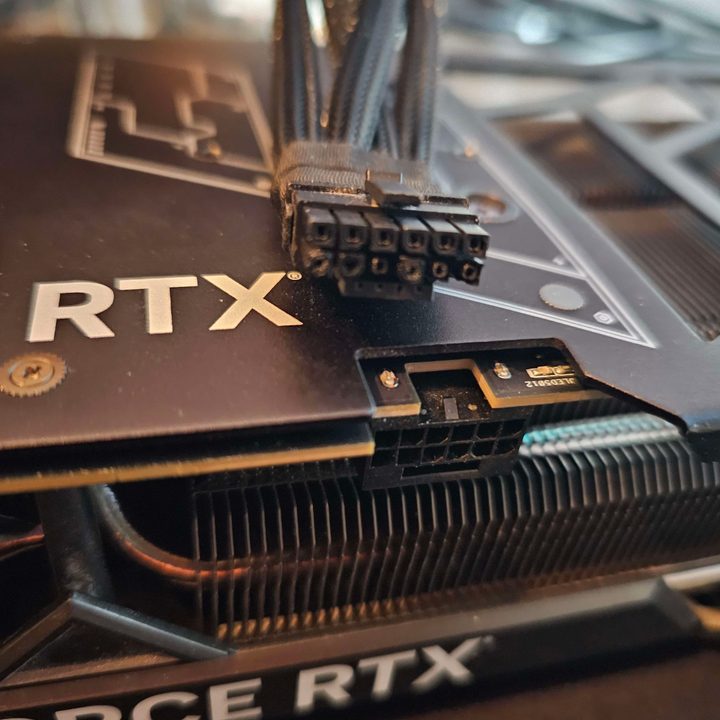
A melted connector on the Nvidia RTX 4090.
u/Byogore / Reddit

It’s no news that the power connector on one of Nvidia’s best graphics cards may sometimes melt, and yet, this is still new. Typically, the 12VHPWR connector found in the RTX 4090 would either melt quickly or not at all. Bad news for those who thought they were out of the woods and safe from the problem — it appears that the RTX 4090 can still melt after a year of usage.

Will the saga of RTX 4090 melting connectors never end? It seems not. When the card was initially launched a year ago, the reports of melting cables at the GPU side started cropping up, but then, slowly died down. Now, however, Byogore on Reddit posted a photo of a melted connector on the PCMR subreddit. After working fine for a year, the user started experiencing issues and noticed that the connector had melted.

Recommended Videos

Often, these issues have been written off as user error, even though the GPUs that are under warranty normally get replaced. The GPU itself, and the connector, are both enormous, so they’re often hard to fit inside a PC case. This can result in some bending, and that leads to the cable not being properly installed. As a result, under heavy usage, the connector can melt.

Byogore seems to have been aware of the issues surrounding the RTX 4090 because they say they made sure that the cable had no bends or extra pressure applied, and also that it was fully pushed in. “I’ve never had a card die on me since the early days. Disappointing that this is a thing at all,” said the Reddit user.
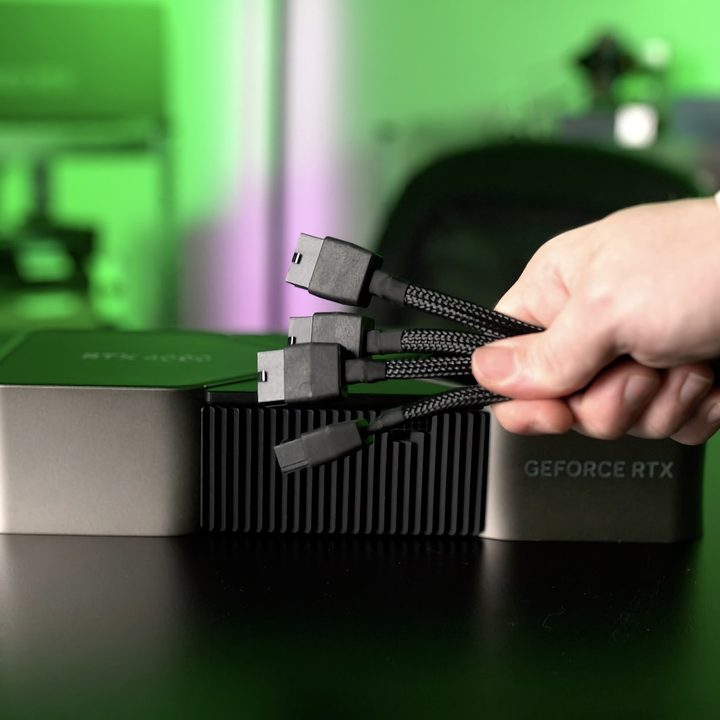
Nvidia GeForce RTX 4090 is shown along with a hand holding the power cable adapter.
Jacob Roach / Digital Trends

The 12VHWPR connector has had a rough run, and various attempts at fixing it have all been futile. Even CableMod’s adapter encounters the same (or more) problems, and to top it all off, it voids the warranty for the GPU.

User error or not, Nvidia seems to slowly be phasing out the 12VHPWR in favor of the new 16-pin 12V-2×6 connector. It comes with an increased power delivery, now reaching 660 watts, which is plenty enough for the RTX 4090. We haven’t heard any reports of that one melting just yet, but who knows how long it’ll take for anyone to be certain that it works well. One thing’s for sure: A year is not enough. Let’s hope that Nvidia ditches 12VHPWR entirely before moving on to the RTX 5090.

Monica J. White
Monica is a computing writer at Digital Trends, focusing on PC hardware. Since joining the team in 2021, Monica has written…
In a market where Mac has been aspirational, it’s somehow a better deal than windows machines now
Windows Laptops became so expensive that MacBooks look sensible now
Computer, Electronics, Laptop

For a long time, the laptop buying advice was simple enough. Windows had a more versatile portfolio that brought you affordable, mid-range, high-end, and even gaming options, while MacBooks were known as the easy premium recommendation.

But owing to the pricing circus caused by memory shortages and component price hikes, the equation makes no sense anymore.

Read more
HP’s new RTX 5070 laptop feels like the sweet spot between thin and bulky
The new HyperX Omen 15 combines AMD and Intel and targets portability without fully sacrificing performance.
HP HyperX OMEN 15 Gaming Laptop

Modern gaming laptops have largely drifted toward two extremes lately: massive 16-inch and 18-inch desktop replacements, or ultra-compact 14-inch machines that still feel slightly cramped for serious gaming sessions. That’s exactly why HP’s new HyperX Omen 15 feels refreshing, because it brings back the familiar 15-inch gaming laptop formula with a chassis that still feels portable without sacrificing proper gaming hardware underneath.

HP’s compact HyperX Omen 15 packs RTX 5070 graphics with AMD and Intel options

Read more
Corsair is putting Chinese RAM in mainstream market. It won’t quite end the crisis though
A cheaper DDR5 supplier could shake up the market, but it is not a magic fix
Samsung DDR4 RAM in hand

After months of painfully expensive RAM and SSD prices, the memory market may finally be showing signs of pressure from an unexpected direction: China. New reports suggest that Chinese memory manufacturers are rapidly expanding production of DRAM and NAND chips, and that major hardware brands are starting to take notice. The most notable example so far is Corsair, which has reportedly tested DDR5 memory modules using chips from Chinese DRAM giant ChangXin Memory Technologies, better known as CXMT.

This feels inevitable. Memory prices have remained frustratingly high across PCs, laptops, and storage devices for months. So when Chinese suppliers began offering RAM at nearly half the cost of some global competitors, manufacturers were always going to at least explore the option. According to market reports, some CXMT DDR5 modules are reportedly being sold near the $150 range, while equivalent products from larger global suppliers can hover between $300 and $400.

Read more