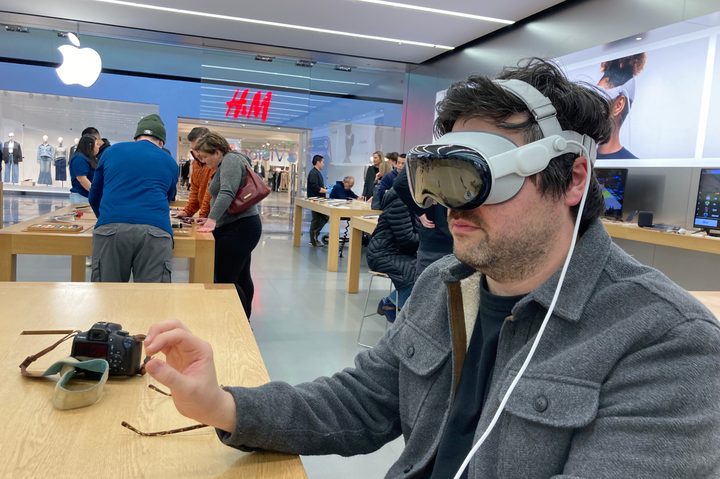
We all know that Apple’s Vision Pro is incredibly expensive — $3,499 is a huge amount to pay for a mixed-reality headset, even if it is by far the best on the market. That has apparently led to some high-profile Apple fans returning their Vision Pros, and not just because of the price.
In his latest Power On newsletter, Bloomberg’s Mark Gurman says he spoke to over a dozen prominent Apple users who have recently sent their headsets back for a refund. The reasons they returned their products, Gurman says, fell along a few familiar lines.
For instance, several said the headset was too heavy and uncomfortable. For others, the lack of apps, video content, and productivity features was disappointing. Some users complained about the headset’s glare and narrow field of view, while others said it made them feel “isolated from family and friends” due to its lack of meaningful shared experiences and the difficulties involved in letting other people use it.
Yet despite all that, Gurman pointed out that plenty of people are happy with the Vision Pro and don’t plan on returning it. That includes himself, he revealed, before adding that he’d written his entire newsletter using the headset.
Quizzing Apple employees
At first glance, this might seem like a major problem for Apple. After all, the Vision Pro’s price means it is not an everyday purchase for most people, so those customers who have shelled out for it are likely to already be convinced by Apple’s device and keen to get their hands on it no matter the cost. That makes their returns all the more surprising.
But it’s easy to see a few reports like this and think that the problem is widespread. After all, if die-hard Apple fans are sending back the headset, what must that say about people who are less committed to the Apple ecosystem?
Well, it looks like things aren’t actually that clearcut. Gurman cites “data from sources at retail stores” that implies Vision Pro return rates are “likely somewhere between average and above average compared with other products — depending on the location.”

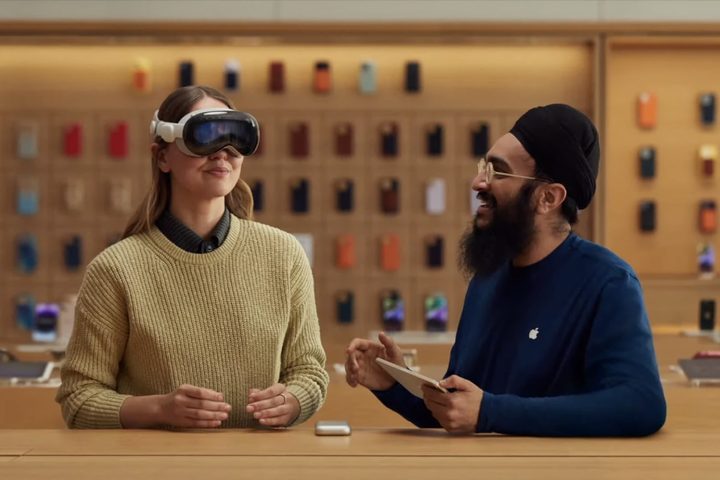
AppleInsider, meanwhile, did some research of its own. After quizzing employees at 24 Apple Stores in the U.S., the outlet found that “there doesn’t appear to be that much in the way of returns, and certainly not a cataclysmic flood.”
For instance, one “senior Apple Retail employee” told AppleInsider that Vision Pro return rates were roughly in line with “not-Pro iPhone levels.” Another said that they’d only had to process two returns in a week. That doesn’t sound like an alarming level of dissatisfaction.
Interestingly, some Apple Store staff felt that, alongside people who instantly felt ill using the device, most returns were sent in by content creators (or, as one employee put it, “fucking YouTubers”) who wanted to make a few videos with the device before sending it back.
While AppleInsider’s sampling is only representative of a small number of Apple stores, it’s potentially a more reliable method than scrolling through social media looking for accounts of people returning a Vision Pro. After all, if you search for something online, you will find it, but that doesn’t necessarily mean it’s a widespread phenomenon.
Vision Pro 2.0
Despite anxieties surrounding return rates, Apple probably isn’t overly concerned. While Gurman noted that people returning the headset are asked what went wrong — and Apple Store managers are sending feedback directly back to company headquarters — the return rates don’t seem to be through the roof.
Still, the feedback (both from customers cited by Gurman and reviewers in general) illustrates that the Vision Pro is very much a “version 1.0” product. It provides absolutely incredible visual experiences that no other headset can match, yet is heavy, buggy and of questionable utility for its price. In other words, at the moment, it’s a product for early adopters, not the public at large.
That aptly demonstrates the pressing need for Apple to launch a second-generation Vision Pro, as well as a cheaper model, with both versions potentially solving some of the problems affecting the current device. That idea was summed up neatly by Narinder Walia, a customer quoted in Gurman’s newsletter, who said: “If the price had been $1,500 to $2,000, I would have kept it just to watch movies, but at essentially four grand, I’ll wait for version two.”
Judging by some of the early feedback, Apple would do well to launch a revised, improved Vision Pro sooner rather than later. Yet, despite some concerns, it’s unlikely to be panicking over return rates for the current model. It suggests that you really shouldn’t trust everything you see on social media.