  1. Home
  2. Computing
  3. News

Apple defends the M4 Mac mini’s power button

Add as a preferred source on Google
The underside of the M4 Mac mini, showing its vent and power button.
Apple

Apple announced a new wave of product refreshes recently, and not only does the charging port for the Magic Mouse remain on the bottom of the device — the M4 Mac mini’s power button has been moved to the bottom, too. These design choices have riled up plenty of people, but it seems Apple stands by its new power button placement for the Mac mini.

In a video posted on Chinese social media platform Bilibili, Apple’s Greg Joswiak not only defends the decision but praises it. He calls it a “kind of optimal spot for a power button,” claiming that you just need to “kinda tuck your finger in there and hit the button.”

Recommended Videos

According to our M4 Mac mini review and many others, however, there isn’t enough room to reach the button without lifting the entire PC — and there’s no way to tell which side the button is even on. Things like that don’t just magically stick in everyone’s heads.

Joswiak also comments that “you pretty much never use the power button on your Mac,” so even if the button isn’t that easy to access, it seems Apple believes it doesn’t matter that much. Whether people should turn their computers off regularly or not is a topic of much debate — but at least we now know what Apple thinks. Who’s betting someone somewhere is now going to run a test to find out what happens when you turn a Mac mini off every night versus never turning it off at all.
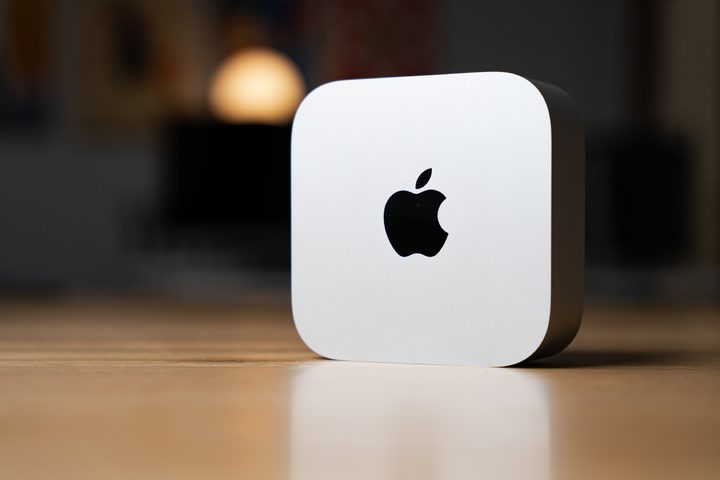
The Mac mini up on its side on a desk.
Chris Hagan / Digital Trends

In terms of the actual reason for the button placement, Joswiak implies that it’s due to the size reduction. If that’s true, it does seem like a decent trade-off — but some people are pretty convinced that Apple likes to sacrifice practicality just to achieve the most minimal design possible.

If you can deal with the power button, it’s worth noting that the power the M4 Mac mini provides is fairly amazing for the price.

Willow Roberts
Willow Roberts has been a Computing Writer at Digital Trends for a year and has been writing for about a decade. She has a…
In a market where Mac has been aspirational, it’s somehow a better deal than windows machines now
Windows Laptops became so expensive that MacBooks look sensible now
Computer, Electronics, Laptop

For a long time, the laptop buying advice was simple enough. Windows had a more versatile portfolio that brought you affordable, mid-range, high-end, and even gaming options, while MacBooks were known as the easy premium recommendation.

But owing to the pricing circus caused by memory shortages and component price hikes, the equation makes no sense anymore.

Read more
HP’s new RTX 5070 laptop feels like the sweet spot between thin and bulky
The new HyperX Omen 15 combines AMD and Intel and targets portability without fully sacrificing performance.
HP HyperX OMEN 15 Gaming Laptop

Modern gaming laptops have largely drifted toward two extremes lately: massive 16-inch and 18-inch desktop replacements, or ultra-compact 14-inch machines that still feel slightly cramped for serious gaming sessions. That’s exactly why HP’s new HyperX Omen 15 feels refreshing, because it brings back the familiar 15-inch gaming laptop formula with a chassis that still feels portable without sacrificing proper gaming hardware underneath.

HP’s compact HyperX Omen 15 packs RTX 5070 graphics with AMD and Intel options

Read more
Corsair is putting Chinese RAM in mainstream market. It won’t quite end the crisis though
A cheaper DDR5 supplier could shake up the market, but it is not a magic fix
Samsung DDR4 RAM in hand

After months of painfully expensive RAM and SSD prices, the memory market may finally be showing signs of pressure from an unexpected direction: China. New reports suggest that Chinese memory manufacturers are rapidly expanding production of DRAM and NAND chips, and that major hardware brands are starting to take notice. The most notable example so far is Corsair, which has reportedly tested DDR5 memory modules using chips from Chinese DRAM giant ChangXin Memory Technologies, better known as CXMT.

This feels inevitable. Memory prices have remained frustratingly high across PCs, laptops, and storage devices for months. So when Chinese suppliers began offering RAM at nearly half the cost of some global competitors, manufacturers were always going to at least explore the option. According to market reports, some CXMT DDR5 modules are reportedly being sold near the $150 range, while equivalent products from larger global suppliers can hover between $300 and $400.

Read more