  1. Home
  2. Space
  3. Photography
  4. News

Astronaut’s first photo of 2025 is a real stunner

Add as a preferred source on Google
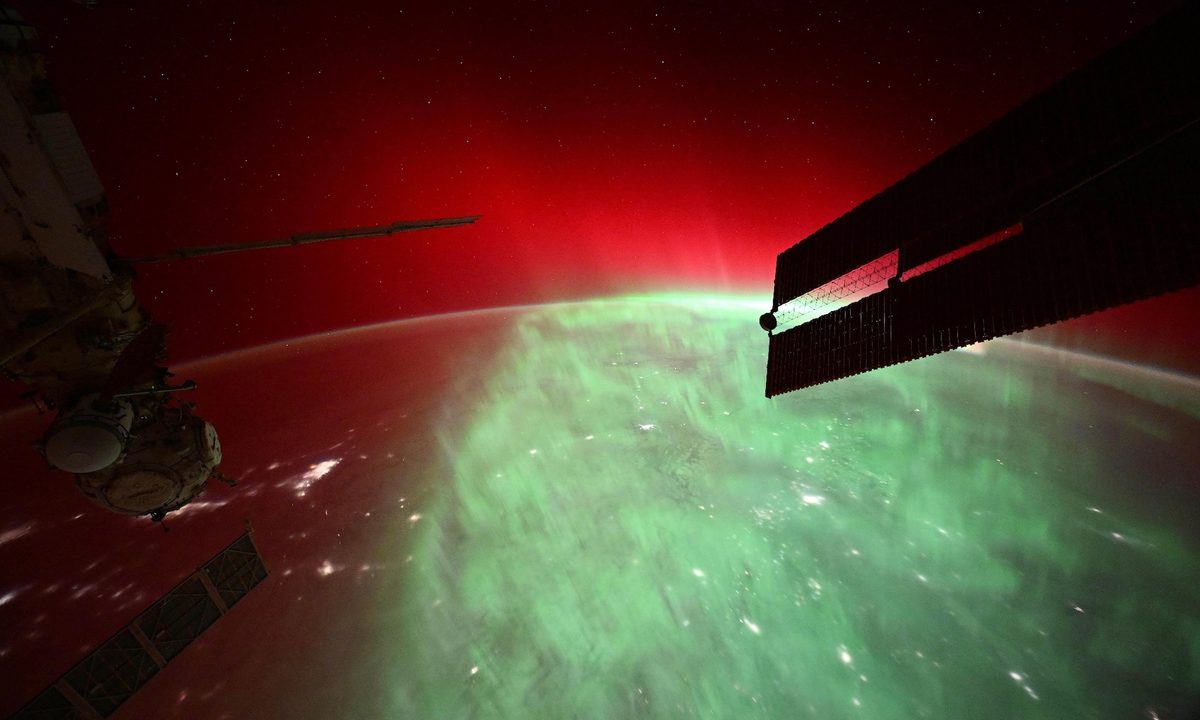
An aurora viewed from the space station.
Don Pettit/NASA

NASA astronaut Don Pettit has started 2025 with a stunning Earth photo that he described as a “New Year’s light show.”

Pettit captured the amazing image from the International Space Station (ISS), where he’s been living and working since September in his fourth trip to space.

Recommended Videos

It captures a stunning aurora over Earth, with parts of the orbital outpost also in the frame.

Our New Year’s light show pic.twitter.com/NB3gq8dxuf

— Don Pettit (@astro_Pettit) January 2, 2025

Auroras are actually a fairly common phenomenon for astronauts aboard the space station, with increases in solar activity upping the chances of catching sight of one.

Auroras happen when particles from solar storms clash with gases in Earth’s atmosphere, resulting in beautiful light displays above the surface of our planet.

Folks back on terra firma can also witness the natural wonders. The ideal vantage points are in locations in the far north like Alaska, Canada, Iceland, Greenland, Norway, Sweden, and Finland. In the far south, places like New Zealand and Australia’s Tasmania can also offer great views of aurora.

But witnessing them with your own eyes from 250 miles above Earth must be something very special for astronauts on the space station.

And it’s no surprise that Pettit has managed to capture this one in such a beautiful image. The American astronaut has earned a solid reputation for his photography work over his various orbital missions since his first one in 2002.

In his most recent mission alone, he’s taken photos that make clouds look like a work of art, and rivers that Pettit described as “silver snakes.” Star trails are also one of his specialties.

With his keen eye, Pettit was also able to spot and photograph a SpaceX spacecraft as it returned to Earth at high speed at the end of the historic Polaris Dawn mission.

The astronaut recently discussed his photography work in an interview from the space station.

With Pettit expected to remain on the ISS until around March, we can’t wait to see what other amazing shots he shares during the first few months of 2025.

Trevor Mogg
Contributing Editor
Not so many moons ago, Trevor moved from one tea-loving island nation that drives on the left (Britain) to another (Japan)…
Scientists have found a hidden galaxy inside the Milky Way, and they’re calling it Loki
A lost dwarf galaxy may be hiding inside the Milky Way.
milky-way-hidden-galaxy-loki

Our home galaxy has a secret buried inside. A new study published in the Monthly Notices of the Royal Astronomical Society suggests that the Milky Way swallowed an ancient dwarf galaxy billions of years ago, and its stellar remains are still embedded within ours.

Researchers have named this lost galaxy Loki, after the Norse trickster god, and the name is quite fitting because it remained hidden in plain sight for a very long time.

Read more
NASA aims September launch for Roman space telescope and it’s going to be a huge shift
An earlier target for Roman means one of NASA’s most ambitious observatories is getting close, with the potential to open a huge new era in space discovery
Machine, Wheel, Astronomy

NASA is now aiming to launch the Nancy Grace Roman Space Telescope as soon as early September 2026, a faster timeline than its earlier commitment to fly no later than May 2027. That alone makes this one of the agency’s most important missions to watch over the next few months.

The reason is simple, Roman is built to scan vast parts of the sky with sharp infrared vision.

Read more
Blue Origin successfully re-uses a New Glenn rocket for the first time ever
Blue Origin achieves first New Glenn reflight despite payload setback
Blue Origin

Blue Origin has achieved a major milestone in its spaceflight ambitions by successfully reusing a booster from its heavy-lift New Glenn rocket for the first time. The historic launch, conducted on April 19, marks a significant step forward for Jeff Bezos’ space company as it seeks to compete with rivals like SpaceX in the rapidly evolving commercial launch market.

A Milestone With A Mixed Outcome

Read more