  1. Home
  2. Space
  3. News

Astronaut’s photos from ISS make clouds look otherworldly

Add as a preferred source on Google
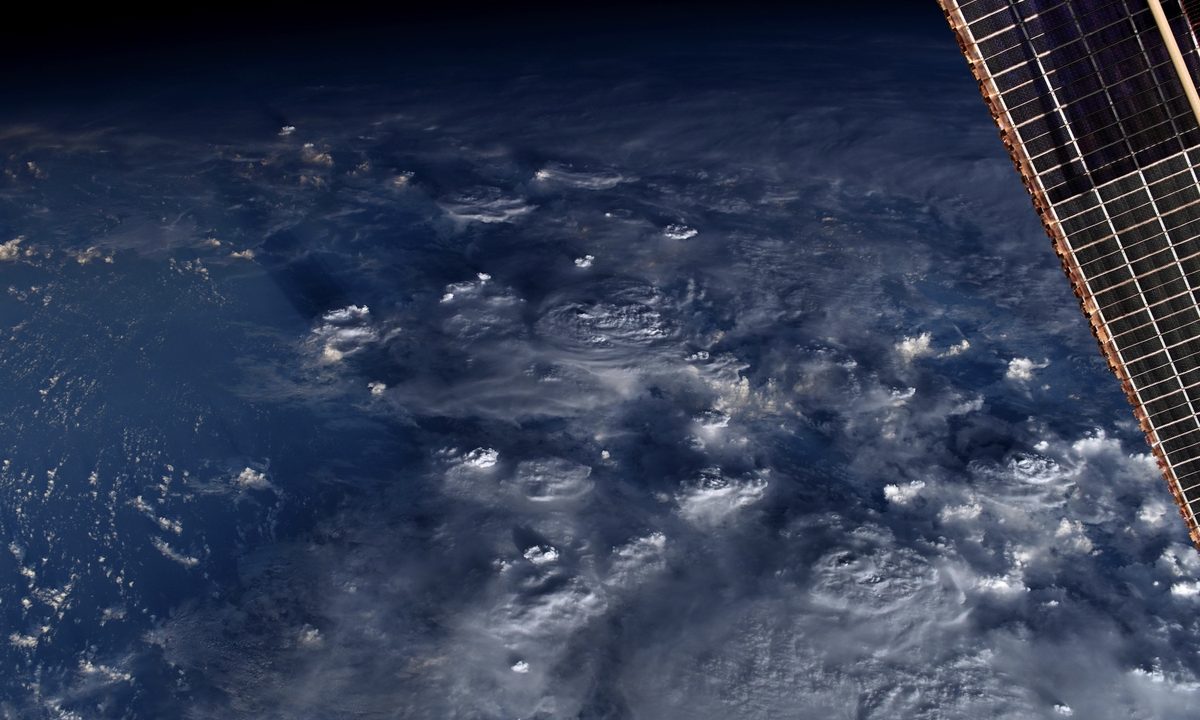
Clouds as seen from the space station.
Don Pettit / NASA

NASA astronaut Don Pettit has posted another set of stunning shots, this time showing clouds as you’ve never seen them before.

Captured from the International Space Station (ISS) some 250 miles above the surface of Earth, the clouds’ unique look is due to the the station’s alignment with our planet’s day/night shadow.

Recommended Videos

Living in the Twilight Zone,” Pettit wrote in a post on social media. “Our orbit on the space station now is aligned with Earth’s day-night shadow thus we see neither full day nor full night. This is the best time to photograph clouds under low-angle lighting.”

Living in the Twilight Zone. Our orbit on @Space_Station now is aligned with Earth’s day-night shadow thus we see neither full day nor full night. This is the best time to photograph clouds under low angle lighting. pic.twitter.com/pt7BS9eZwK

— Don Pettit (@astro_Pettit) December 8, 2024

Pettit, at 69 NASA’s oldest serving astronaut, has been dazzling his social media followers with a sublime stream of images since arriving at the the orbital outpost in September, and he’s also enjoyed sharing his space images during his previous ISS missions.

On of Pettit’s most remarkable images during his current mission shows moonlight reflecting off of a river in South America, a scene that he described as “flowing silver snakes.”

He was also quick enough to capture the sight of a SpaceX Crew Dragon capsule hurtling back to Earth at the end of a mission, with Pettit’s image showing a dramatic streak of light as the spacecraft reentered Earth’s atmosphere at the end of the historic Polaris Dawn mission in September.

Keen to improve his images, Pettit also created what became known as the “barn door tracker.” The DIY astrophotography tool allows for the capture of sharper images of city lights at night as the device compensates for the station’s movement relative to the Earth’s surface. It can also be used for long exposures of the night sky captured from back on terra firma, producing sharper images (without star trails) by counteracting Earth’s rotation.

Trevor Mogg
Contributing Editor
Not so many moons ago, Trevor moved from one tea-loving island nation that drives on the left (Britain) to another (Japan)…
Scientists have found a hidden galaxy inside the Milky Way, and they’re calling it Loki
A lost dwarf galaxy may be hiding inside the Milky Way.
milky-way-hidden-galaxy-loki

Our home galaxy has a secret buried inside. A new study published in the Monthly Notices of the Royal Astronomical Society suggests that the Milky Way swallowed an ancient dwarf galaxy billions of years ago, and its stellar remains are still embedded within ours.

Researchers have named this lost galaxy Loki, after the Norse trickster god, and the name is quite fitting because it remained hidden in plain sight for a very long time.

Read more
NASA aims September launch for Roman space telescope and it’s going to be a huge shift
An earlier target for Roman means one of NASA’s most ambitious observatories is getting close, with the potential to open a huge new era in space discovery
Machine, Wheel, Astronomy

NASA is now aiming to launch the Nancy Grace Roman Space Telescope as soon as early September 2026, a faster timeline than its earlier commitment to fly no later than May 2027. That alone makes this one of the agency’s most important missions to watch over the next few months.

The reason is simple, Roman is built to scan vast parts of the sky with sharp infrared vision.

Read more
Blue Origin successfully re-uses a New Glenn rocket for the first time ever
Blue Origin achieves first New Glenn reflight despite payload setback
Blue Origin

Blue Origin has achieved a major milestone in its spaceflight ambitions by successfully reusing a booster from its heavy-lift New Glenn rocket for the first time. The historic launch, conducted on April 19, marks a significant step forward for Jeff Bezos’ space company as it seeks to compete with rivals like SpaceX in the rapidly evolving commercial launch market.

A Milestone With A Mixed Outcome

Read more