
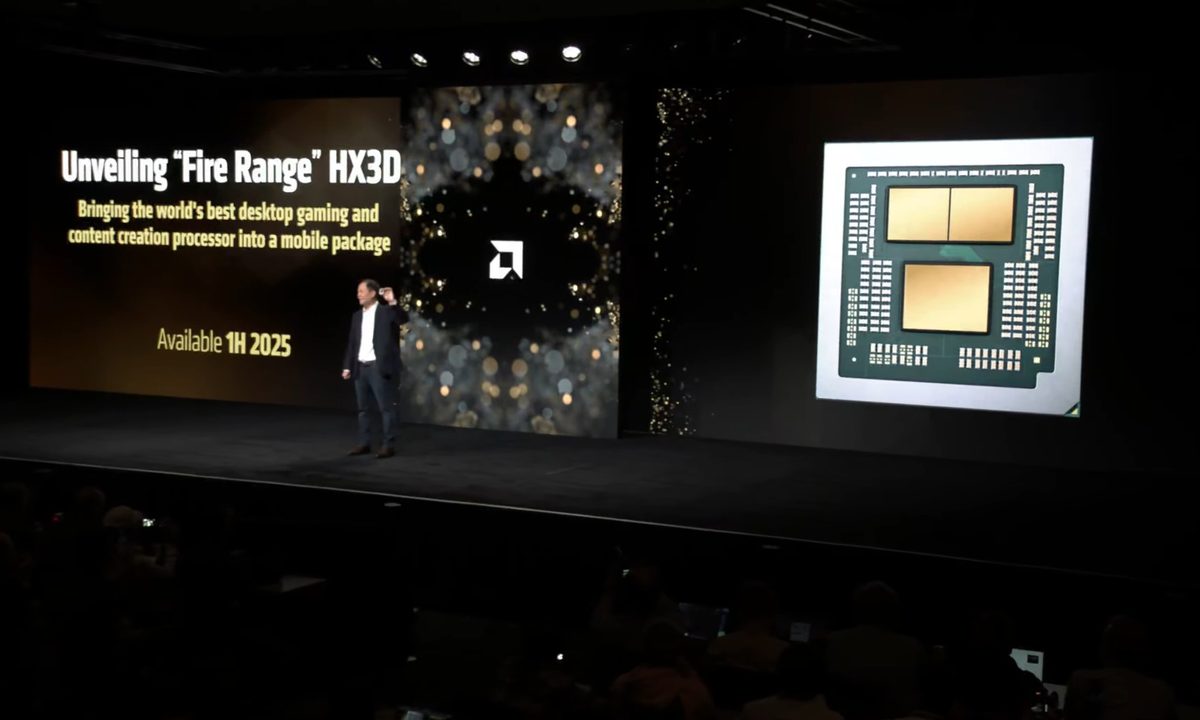
AMD just announced over a dozen new laptop CPUs, which will appear in over 150 new laptops being announced at CES 2025 and later this year, including a new 3D V-Cache chip for gaming laptops and some really impressive graphics in its new Ryzen AI Max+ halo chips.
Let’s start with Fire Range. These chips are for high-end gaming laptops, a successor to Dragon Range line, catering to enthusiast gamers and, so far, only enthusiasts are going to be happy, as those laptops likely be quite expensive. On the other hand, the CPUs sound mighty powerful. The lineup includes, first and foremost, the next big 3D V-Cache chip, dubbed the Ryzen 9 9955HX3D.
This is a follow-up to the first 3D V-Cache mobile, the Ryzen 9 7945HX3D, which launched in 2023. While it was impressive technically, it only ever showed up in one configuration of one gaming laptop, the Asus ROG Strix Scar 17. But on the desktop side, the line of chips has earned itself a reputation among PC gamers, using the unique vertical stacking of L3 cache to improve game performance. Hopefully we see the Ryzen 9 7945HX3D get wider adoption and come to some of the best gaming laptops later this year.
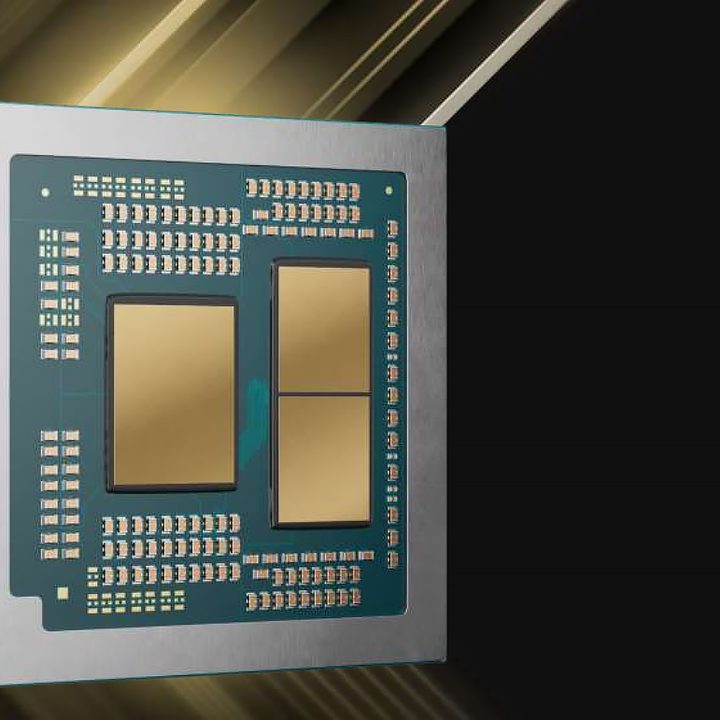
Beyond that, though, the other chips in the Dragon Range line include the Ryzen 9 9955HX, and the Ryzen 9 9850HX. Across all three chips, the specs are very much the same as Dragon Range, but the switch from Zen 4 to the latest Zen 5 will hopefully net some gaming improvements. The 9955HX3D comes with 16 cores, 32 threads, 144MB of combined cache, and a maximum clock speed of 5.4GHz. The 9955HX is almost the same, apart from a much smaller 80MB cache. Lastly, the 9850HX is limited to 12 cores and 24 threads, 76MB of cache, and a maximum boost frequency of 5.2GHz. All three share the same thermal design power (TDP) of 54 watts.
These CPUs are yet to receive a solid release date, but they’re going to be available in the first half of 2025.
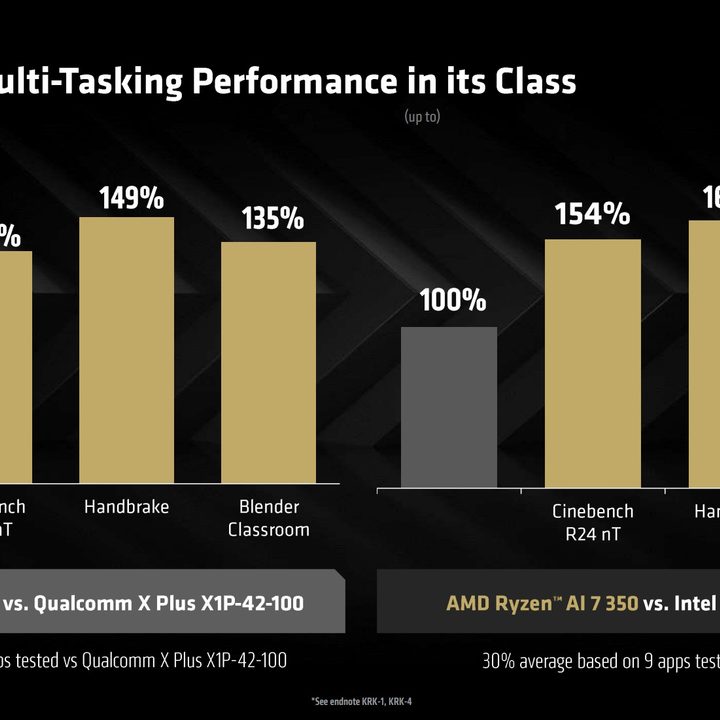
AMD is also expanding the Ryzen AI 300 series lineup with new midrange chips, and it’s promising to deliver sizable improvements over its competitors. The new additions include the Ryzen AI 7 350, the Ryzen AI 5 340, the Ryzen AI 7 Pro 350, and the Ryzen AI 5 Pro 340.
Ranging from six to eight cores and 4.8GHz to 5GHz in terms of frequency, these are workstation processors optimized to maximize battery life and support AI workflows. To that end, each comes with a neural processing unit (NPU) with up to 50 Tera Operations per Second (TOPS), so they’re Copilot+ ready. AMD claims that the NPU beats both Qualcomm’s X Plus and Intel’s Core Ultra 7 258V in Procyon AI.
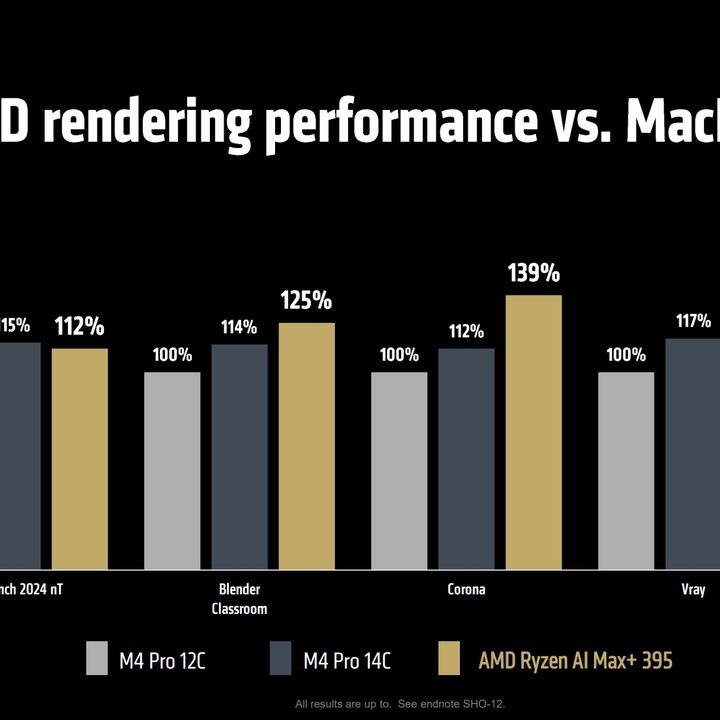
Next are AMD’s halo chips, namely the Ryzen AI Max+ Pro (and just AI Max). These come equipped with up to 16 Zen 5 cores, an XDNA 2 NPU with up to 50 TOPS, and RDNA 3.5 graphics with up to 40 compute units (CUs). AMD compared the new flagship Ryzen AI Max+ 395 to Apple’s M4 Pro, highlighting huge wins in 3D rendering over both the 12-core and the 14-core model; for example, in Vray, the AI Max was 69% faster than the M4 Pro.
AMD also claims to offer up to 14x faster graphics performance when compared to the Core Ultra 9 288V. That’s a big claim, especially considering how powerful the integrated graphics already are on Intel’s Core Ultra Series 2 chips.
All the chips in the new Ryzen AI Max+ Pro and non-Pro range have a highly adjustable TDP ranging from 45 watts to 120 watts. Availability will be spread over the first two quarters of 2025.
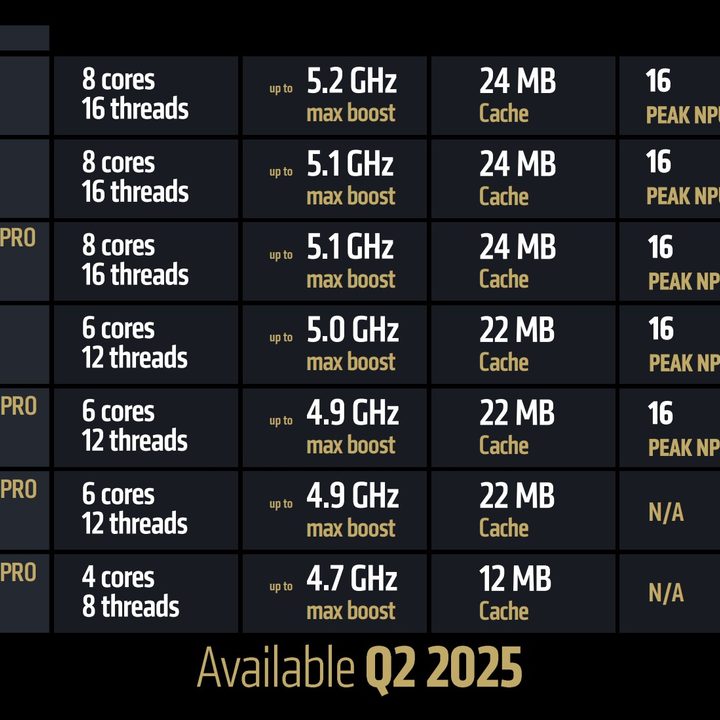
We all know that AMD is no stranger to coming back to its older CPU ranges and adding products to lineups that are no longer “current.” This is what’s happening to the Ryzen 200 series, which is a Zen 4-based platform that AMD itself advertises as “AI for everyday experiences.”
A whole bunch of CPUs are arriving in the second quarter of 2025, ranging from the Ryzen 9 270 with eight cores and 16 threads, to the budget-friendly Ryzen 3 and Ryzen 3 Pro 210 with a modest four cores and eight threads. All of these, apart from the top two chips, have TDPs ranging from 15 to 30 watts, which should translate to good battery life.
There are a whole lot of mobile processors to dig into this time around. Now, it all comes down to availability. Previous generations weren’t widely available, but perhaps this time around, AMD’s presence in laptops has grown enough to give these chips a chance at success.


