
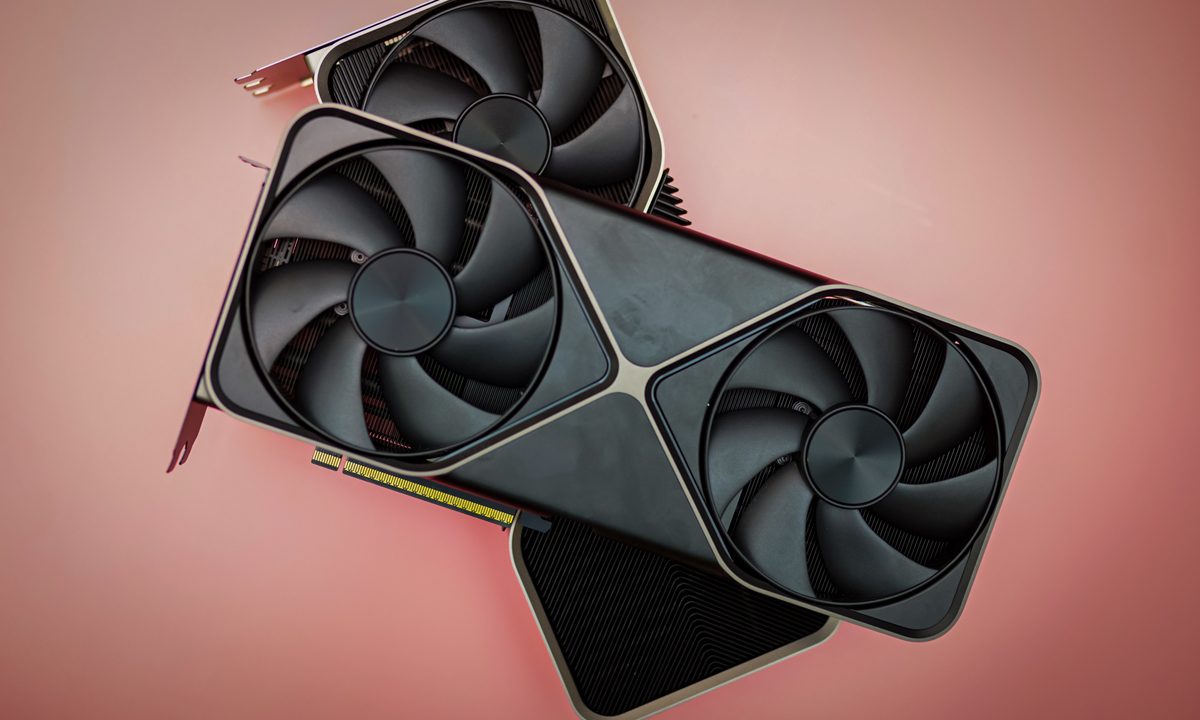
Nvidia’s new flagship is here. The RTX 5090 is real, in the flesh, and it’s as bonkers as Nvidia’s early announcements — even if the extreme performance claims come with a few new caveats. But is the generational uplift enough to warrant the increased price? And is it worth upgrading from the last-generation king, the RTX 4090? That card is no slouch, and until now, it was the fastest graphics card the world had ever seen, and it will remain a fantastic gaming GPU for many years to come.
So, how do these two behemoth graphics cards compare? Let’s take a look.
Pricing and availability

The Nvidia RTX 5090 was announced at CES 2025, with availability starting on January 30. Its recommended retail price is an eye-watering $2,000, however — more like the GPU-shortage pricing for the RTX 4090 than that card’s debut price. When that card debuted in October 2022, its launch price was a comparatively affordable $1,600.
Today you can find Nvidia Founders Edition 4090s for that same price, with third-party options ranging from $1,500 up to $2,000 for those with the most advanced cooling solutions. Nvidia has defended the price, of course, but we won’t know for sure how much extra value it offers until we’re able to see it more in action.
Specs
If we went by the specifications alone, the RTX 5090 should hold a commanding lead over its predecessor in just about any scenario, but all those additional cores and faster memory cells come at the cost of power.
| Nvidia RTX 5090 | Nvidia RTX 4090 | |
| CUDA Cores | 21,760 | 16,384 |
| RT Cores | 170, 4th generation | 128, 3rd generation |
| Tensor Cores | 680, 5th generation | 512, 4th generation |
| Boost clock | 2.41GHz | 2.5GHz |
| Memory size | 32GB GDDR7 | 24GB GDDR6X |
| Memory bus | 512-bit | 384-bit |
| Memory speed | 30Gbps | 21Gbps |
| Memory bandwidth | 1,792GBps | 1,008GBps |
| TBP | 575W | 450W |
The RTX 5090 is a big generational uplift in a number of ways. It’s got 33% more CUDA cores, which should lead to a strong improvement in general rasterization performance over the 4090.
There are more of a new-generation of RT and Tensor cores, too, which will work well with the new CUDA cores to make sure ray tracing doesn’t impact this card quite as much as its predecessors. Tensor cores are based on a new fifth-generation design. With more of them, too, we can assume even greater FPS uplifts from DLSS, but those cores are also there to handle the new multi frame generation technology that is currently an exclusive feature of the RTX 50-series.
On the memory front, the RTX 5090 sports a new generation of GDDR7 video memory, and 50% more of it, with 32GB. It’s much faster, at 30Gbps, delivering a near 80% improvement in overall memory bandwidth. That’s massive overkill for gaming, perhaps betraying this card’s design as more of a Titan-esque card, than a flagship gaming GPU — even if it is likely to be the fastest card of its generation.
All of that comes at the cost of power, though, as this flagship Nvidia card once again requires far more than its predecessor. Nvidia claims you’ll need 575W of power for the GPU alone. That’s more power than some modest gaming PCs need in their entirety.
Performance
Nvidia made some grandiose claims about the performance of all its RTX 50-series cards, and while they may be some technical truth to them, it’s not as clear cut as Team Green would have you believe. When we tested the card for our review, we found that Nvidia’s claims of 200% 4090 performance were overblown outside of very specific DLSS and frame generation-supporting titles. In reality, the raw performance uplift is more like 30% when you don’t factor multi frame generation.

There’s no denying that the RTX 5090 is by far the most powerful card we have ever seen, though. It is the first card to be able to play Cyberpunk 2077 at over 100 FPS in Ultra settings without upscaling, and up to 60 FPS with ray tracing enabled. We also saw saw big uplifts in performance over the 4090 in Returnal, Horizon Zero Dawn Remastered, and Dying Light 2, among others.
This is way off the double performance claims that Nvidia made at CES, but it’s a sizeable improvement and without a doubt secures the 5090 as the better of the two cards.
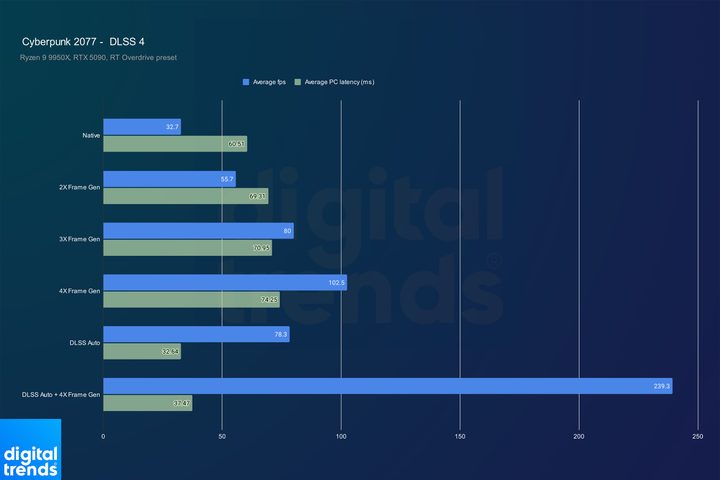
It’s also important to note just how incredible multi frame generation can be in the right setting. When combined with DLSS 4 upscaling, it can deliver a 200-300% increase in frame rates, which would have been unheard of just a year ago. And yet, the drop in visual quality at those settings rarely justifies such a leap, raising questions about the true usefulness of multi frame gen for now, even if it seems likely to play a big part in boosting frame rates in future games for all manner of GPUs.
The RTX 5090 is the best for some
The RTX 5090 isn’t quite on sale yet, but it’s very close. Certainly close enough that it’s worth waiting for if you’re in the market for the best graphics card money can buy, because that’s what it is. It’s faster than the RTX 4090 and its multi frame generation support gives it a unique feature that will really help smooth out frame rates as the technology improves. Its newer RT and Tensor cores make raytracing a toggleable option as and when you want it, rather than a frame rate killer, too, which is really nice to see after so many generations of lacklustre RT performance.
However, is it worth $2,000? Not if you already have an RTX 4090. That card is still very, very fast and more than capable of playing any game today at great detail and frame rates. Just not quite as many as the RTX 5090. If you have a top 40-series card, there’s not a tonne on offer with this latest release.
The value proposition is different if you’re running an older card, though. If your 2080 Ti is showing its age, or your RTX 3080 doesn’t have the VRAM you need anymore, the RTX 5090 is the fastest option out there. If you’re even considering a $2,000 graphics card, you probably don’t need to talk bang for buck. It’s the best there is, but you have to pay for it. If you have some AAA games you haven’t played yet because you were waiting for them to be smoother on modern hardware, the 5090 is the card to do it.
Just don’t expect it to revolutionize your gaming experience.


