“They don’t make them like they used to.”
As a movie buff, no phrase in the English language gets my eyes rolling more than this. For decades, I’ve had to hear that phrase repeated to bemoan the state of cinema. I’ve always found it to be a silly statement. For one: Of course they don’t. Art, and the tools we use to make it, changes. What gets me more is when the phrase is used to tear down modern film. The implication that the art we grew up with is inherently better than what’s around now always feels like a hard-headed snap take that only shows how resistant we are to change.
But after playing — of all things — Capcom’s new Onimusha 2: Samurai’s Destiny remaster, I find myself coming back to that phrase. Returning to the PS2 classic in 2025 is like digging up an ancient artifact. It’s a hypnotic time capsule that feels unlike any new release I’ve played this year. Its cinematic ambitions, paired with the limitations of video games at the time, creates an unmistakable texture that can’t easily be replicated. In this case, they truly don’t make them like they used to.
Back to 2002
Before diving into the remaster, my relationship to the Onimusha has always been at a distance. I didn’t have a PlayStation 2 growing up, but I was an avid reader of magazines like EGM and knew about every big game on the system. From that perspective, Onimusha always felt larger than life. It had the feel of a prestige game, right alongside works of the era like Shadow of the Colossus. Magazine screenshots left me to imagine a dark, serious action game that probably looked a lot like Elden Ring does to me now.
I was in for an adjustment as soon as I started Onimusha 2: Samurai’s Destiny. An opening story explainer comes out the gate swinging as I’m told that Nobunaga Oda is a.) dead and b.) commanding an army of demons. That detail is delivered so straight-faced in a dramatic voice over that I couldn’t help but crack up. It’s totally absurd, a B-movie premise treated with the gravity of a historical epic.
That attitude continued throughout my playthrough. Capcom’s ambitions were lofty for 2002, aiming to create a truly cinematic experience nearly a decade before tech allowed for it. If this were a movie, you’d likely label it as “amateur.” The script is filled with hacky jokes as characters constantly “hubba hubba!” over women. Cutscenes are shot through stiff camera placements that never quite feel like they’re in the right place. The voice cast has big high school theater energy.
And to be very clear: It’s positively awesome.
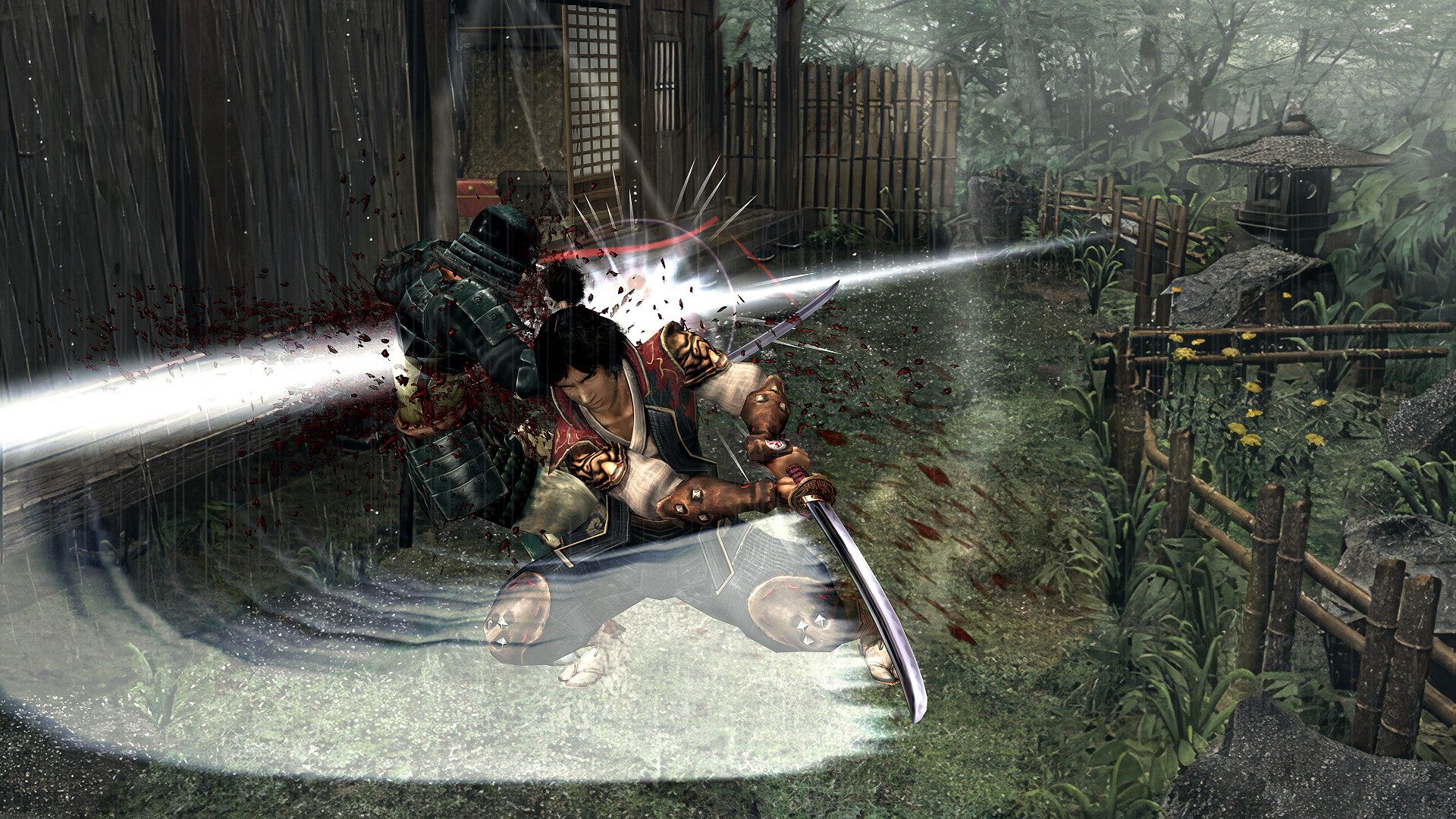
Like many games of its era, Onimusha 2 feels otherworldly. It’s just off-kilter enough in every respect that it approaches surrealism. A fierce demon will pop up out of nowhere, give a hammy monologue, and then start sprinting in and out of bushes like a Scooby Doo villain. It’s purely comedic on paper, but there’s a serious reverence for the lore and world that Capcom created. It’s a tone that’s always oscillating between wacky and serious, two feelings that many modern games tend to keep separate. It’s not a tone that’s unique to Onimusha either; it’s a running theme of the era. I have the same feeling when I play Capcom’s early Resident Evil games. They’re full of stilted acting and awkward one-liners, and yet, I’m able to take that world seriously instantly. Games like this were exceptional at crafting strange languages and making players fluent in them as quickly as possible.
That idea doesn’t just apply to cutscenes, but gameplay too. It’s very clear that Onimusha came in the wake of Resident Evil’s success. It has fixed camera angles that build tension by hiding what’s around every corner. Rooms are lined with random puzzle boxes that I need to solve to reveal hidden ladders. I learn about the world through plain text item descriptions that flatly pop up on screen. All of those design touchstones of the era create a texture that’s both hyper specific and hard to put to words. It’s remarkably atmospheric, claustrophobic and eerie even in its silliest moments. I’m not escaping into another world that is under my full control; I have fallen into a mysterious place dictated by the laws of a creator, and I must learn how to abide by them to make it out alive. It’s the same feeling as entering a hedge maze on a foggy evening.
Video games don’t feel like this anymore — at least not the biggest ones. Developers have finally cracked how to actually make a game feel “cinematic,” with the bar raised for acting, writing, and cinematography. That leads to digital worlds that feel more familiar, grounded in a visual language that’s recognizably human. Even this year’s Dynasty Warriors: Origins trades the series’ oddball acting and head-scratching wackiness for something that feels comparatively grounded. Playing Onimusha 2 feels like watching a 1930s Hollywood drama that deals in stage acting and larger-than-life gestures.

That’s perhaps why I’m so bullish about the current remake and remaster craze. Onimusha 2 is special because it’s a product of its time. It is defined by the weird quirks that redos like The Elder Scrolls IV: Oblivion Remastered so often attempt to flatten. Capcom is thankfully light with its adjustment here, giving it a clean resolution bump, reworked controls, and auto-save. The latter is more trouble than it’s worth, as dying loads the auto save. If that has left you in a bad position, you’ll have to quit and reload your proper save from the main menu. The rest of the package is filled with extras like at galleries that leave the main game untouched in all its glory, giving me plenty of space to appreciate it for what it is — a strange adventure that’s still swimming around my brain while so many new games go in one ear and out the other.
This doesn’t make Onimusha 2 better than today’s prestige games, just as I reject the idea that no modern movie could go toe to toe with Gone With the Wind. Playing its remaster now more just highlights how different game design is two decades after its original release. The medium is more defined, with established design rulebooks that prioritize immersion and emergent storytelling over airtight direction. I feel like I know exactly what Capcom’s upcoming Onimusha revival will look like, taking the form of a traditional third-person acting game with blockbuster production value. It’ll be a product of its own time just as Onimusha 2 is now. Maybe today’s young adults will reminisce on it in 20 years and say that 2045’s games just aren’t the same as the ones that launched in the now fabled PS5 era.
I hope that happens, because that will be a signal that the medium has moved. They shouldn’t keep making them like they used to; yesterday’s games should always feel like historical documents that tell us something about the artistic landscape of the time. Onimusha 2’s remaster is a perfect opportunity to travel back to 2002 and soak in all the oddball energy of a medium in an experimental creative peak.
The Onimusha 2: Samurai’s Destiny remaster launches on May 23 for PS4, PS5, Xbox One, Xbox Series X/S, Nintendo Switch, and PC.