
Look, hybrids are great and all, but let’s be honest: They’re a band-aid, a temporary solution.
For all their efforts to be “green”, hybrid vehicles still use fossil fuels as their primary power source, and all-electric vehicles use toxic batteries or power siphoned straight from a non-renewable grid.
As Top Gear presenter James May once said, “One day, we will sadly run out of oil, and then we’ll need something else. Now, electric cars have always seemed very promising, but as long as they’re powered by batteries, they don’t quite cut it.”
“So far,” he continued, “most electric cars have been appalling little plastic snot boxes that take all night to recharge, then take half a minute to reach their maximum speed of forty, then run out of juice miles from anywhere.”
While Captain Slow may be slightly exaggerating, he does have a salient point. These types of cars, while a step in the right direction, do not address the problem of pollution; they simply slow the bleeding.
Jim Lentz, CEO of Toyota’s North American region, agrees. According to statements documented in a report by Auto News, Lentz sees battery technology as feasible only in “a select way, in short-range vehicles that take you that extra mile, from the office to the train, or home to the train.”
“But for long-range travel primary vehicles, we feel there are better alternatives,” Lentz explained, “such as hybrids and plug-in hybrids, and tomorrow with fuel cells.”
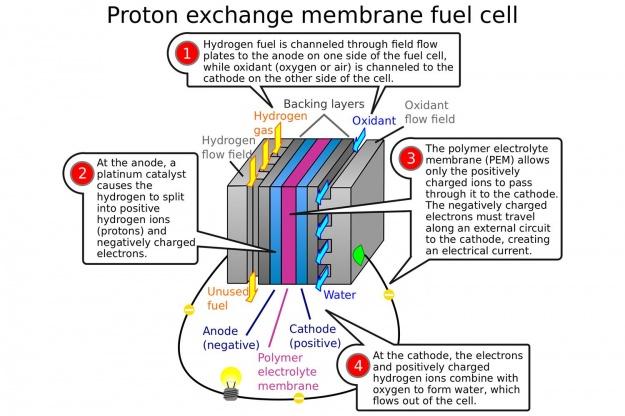
It’s easy to see why more auto manufacturers, like Honda and GM, continue to embrace hydrogen fuel cell technology over batteries and hybrids: they’re cheaper on a cost-per-vehicle basis, and also more efficient. As their only byproduct is water, hydrogen fuel cells produce no pollution. On top of that, fuel cells are safe, reliable (they have very few moving parts), and use the most abundant element in the universe as a power source.
Toyota’s first big step toward the future will come in Fall 2015, when they plan to implement a large network of hydrogen refueling stations across California. This is possible due to a $7-million loan with FirstElement Fuel Inc, which is lead by GM marketing chief Joel Ewanick.
Toyota estimates that 68 refueling stations will be required to satisfy the needs of California’s 10,000 fuel cell customers. By the end of 2016, Lentz hopes to have 50 stations operating across the state.
“My hope is that other automakers will see our investment and will invest as well,” he said, “so hopefully we can accelerate to 70 [stations] before 2018. Unlike hybrids when we were on our own, all the major players will be out there with us in fuel cells.”
As technology improves and attitudes change, hydrogen fuel cell vehicles will start to be more and more common sights on the road. The first steps are the hardest to take, but they’re almost behind us.
“We’ve built our lives around the car as know it,” James may reiterated. “You get in, you drive as far as you want to go, you fill up, you drive some more. That is the freedom that a petrol-powered car gives you. If its replacement is something that goes for 10 yards and then takes four hours to bring back to life, we’ll have gone backwards.”
Here’s to going forwards.


