  1. Home
  2. Computing
  3. News

After RAM, storage could be next to break your budget

Storage components face upward pressure as producers cut NAND production amid AI demand

Add as a preferred source on Google
Computer Hardware, Electronics, Hardware
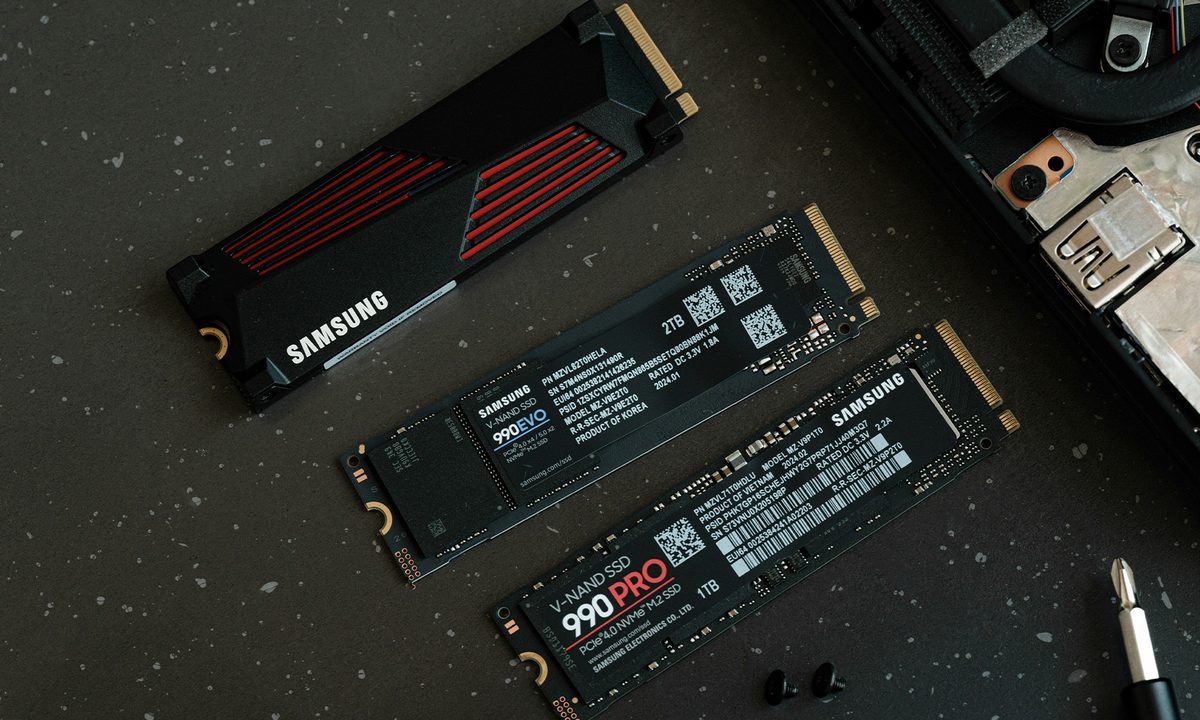
Samsung Memory / Unsplash

If you thought rising RAM prices were tough on your wallet, storage might be the next tech category to feel the pinch. According to a recent report from Chosun Biz, major flash memory producers Samsung Electronics and SK hynix are planning cuts to their NAND production in 2026, even as demand for storage continues to grow, particularly from AI and data center customers.

That shift has sparked concern that SSD prices, already trending upward, could climb even further this year. NAND flash memory is a core ingredient in solid-state drives, USB flash drives, and other storage products. As such, tighter supplies can ripple across PCs, tablets, and enterprise hardware alike. Analysts say the combination of supply constraints and shifting production priorities could reverse years of steady price declines in the consumer storage market.

Why NAND Cuts Matter for SSD Prices

At the heart of the issue is a strategic reallocation of production capacity within the memory industry. Samsung and SK Hynix together account for more than 60% of global NAND production, giving their decisions outsized influence over supply. According to the report, Samsung plans to reduce NAND output by 4.5%, while SK Hynix is expected to cut production by 10.5%. The reason is straightforward: both companies want to prioritize more profitable memory segments like DRAM and high-bandwidth memory (HBM) used in AI infrastructure.

That matters because less NAND availability means fewer SSDs can be produced, tightening supply across both consumer and enterprise storage. With AI models and data platforms consuming massive amounts of memory and storage capacity, traditional PC and device markets are increasingly competing for a shrinking pool of NAND chips. It’s a dynamic that clearly pushes prices upward. SSDs that once felt like bargains compared to hard drives could become noticeably more expensive across capacities and form factors if supply remains constrained.

For tech buyers and PC builders, this could hit at exactly the wrong time. The storage component of your next build or upgrade may end up costing more than expected, especially for anyone who has grown used to steady SSD price drops over the past few years. With both RAM and storage prices climbing, building a new gaming PC right now is starting to make less financial sense than it did even a year ago.


Varun Mirchandani
Varun is an experienced technology journalist and editor with over eight years in consumer tech media. His work spans…
Your next free Google account might only come with 5GB of storage
Google's free storage has been a competitive advantage over Apple's 5GB iCloud limit for years, but that’s changing.
Electronics, Mobile Phone, Phone

Google has quietly altered one of the most reliable promises in consumer tech: 15GB of free cloud storage. For years, signing up for a Google account meant getting 15GB of free storage, shared across Gmail, Drive, and Photos. However, that’s changed. 

New accounts are now defaulting to 5GB (same as iCloud), with the full 15GB available only if you have entered your phone number during setup. The prompt users are seeing reads: “Your account includes 5GB of storage. Now get even more storage space with your phone number.”

Read more
Sony shows off AI-touched Xperia 1 VIII camera samples. It’s an epic self-own that I can’t digest
Sony built the Xperia 1 series for people who know what a histogram looks like. Xperia Intelligence appears to have been built for everyone else, and the sample images make that tension impossible to ignore.
Sony aggressive AI photography featured.

Sony has a camera legacy that most brands, regardless of whether they make cameras or smartphones, dream of. The company rewrote what full-frame sensors could do with its Alpha series. 

That particular rendering of skin tones, that restraint with saturation, the commitment to accurate white balance; the company’s color science is precisely why cinematographers, videographers, and photographers like me, in the consumer tech space, swear by its color science and camera hardware. 

Read more
Razer’s new Blade 18 gets Arrow Lake refresh and a modest $3,999.99 starting price
For $3,999.99, you get the base model with Nvidia RTX 5070 Ti. A 5090 variant is available, too.
Razer Blade 18.

Razer has officially unveiled the 2026 Blade 18 today, and at the heart of all three configurations is an Intel Arrow Lake processor. 

I’m talking about the Core Ultra 9 290HX Plus, which features 24 cores, up to 5.5GHz clock speed (with boost), 36MB cache, and an onboard NPU that delivers up to 13 TOPS of compute power. 

Read more