  1. Home
  2. Computing
  3. News

Grammarly kills feature that unethically used experts — alive and dead — to fix your words

Turns out, real writers don't love having an AI impersonate them. Who knew?

Add as a preferred source on Google
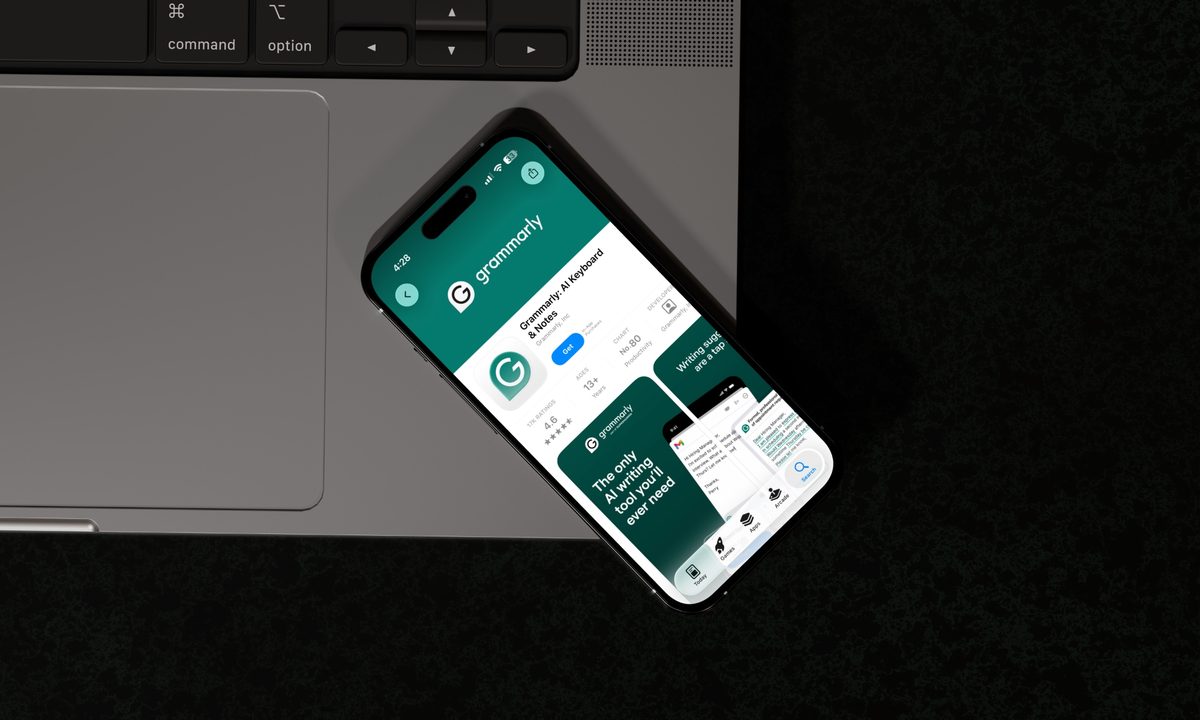
Grammarly on iPhone
Rachit Agarwal / Digital Trends

Grammarly’s parent company, Superhuman, has pulled the plug on its Expert Review feature after writers discovered that the AI was generating suggestions supposedly “inspired by” their published work, without their knowledge or consent.

The feature, which launched back in August, used third-party LLMs to surface writing suggestions styled after influential writers and experts. The problem? Those experts had no idea their work was being used this way.

Did Grammarly actually ask anyone?

No, Grammarly did not obtain permission from the people whose likenesses were used as expert references. While other AI companies also scrape data from online libraries and websites without explicitly asking permission, they at least did not use anyone’s likeness so blatantly. This is where Grammarly went off the rails.
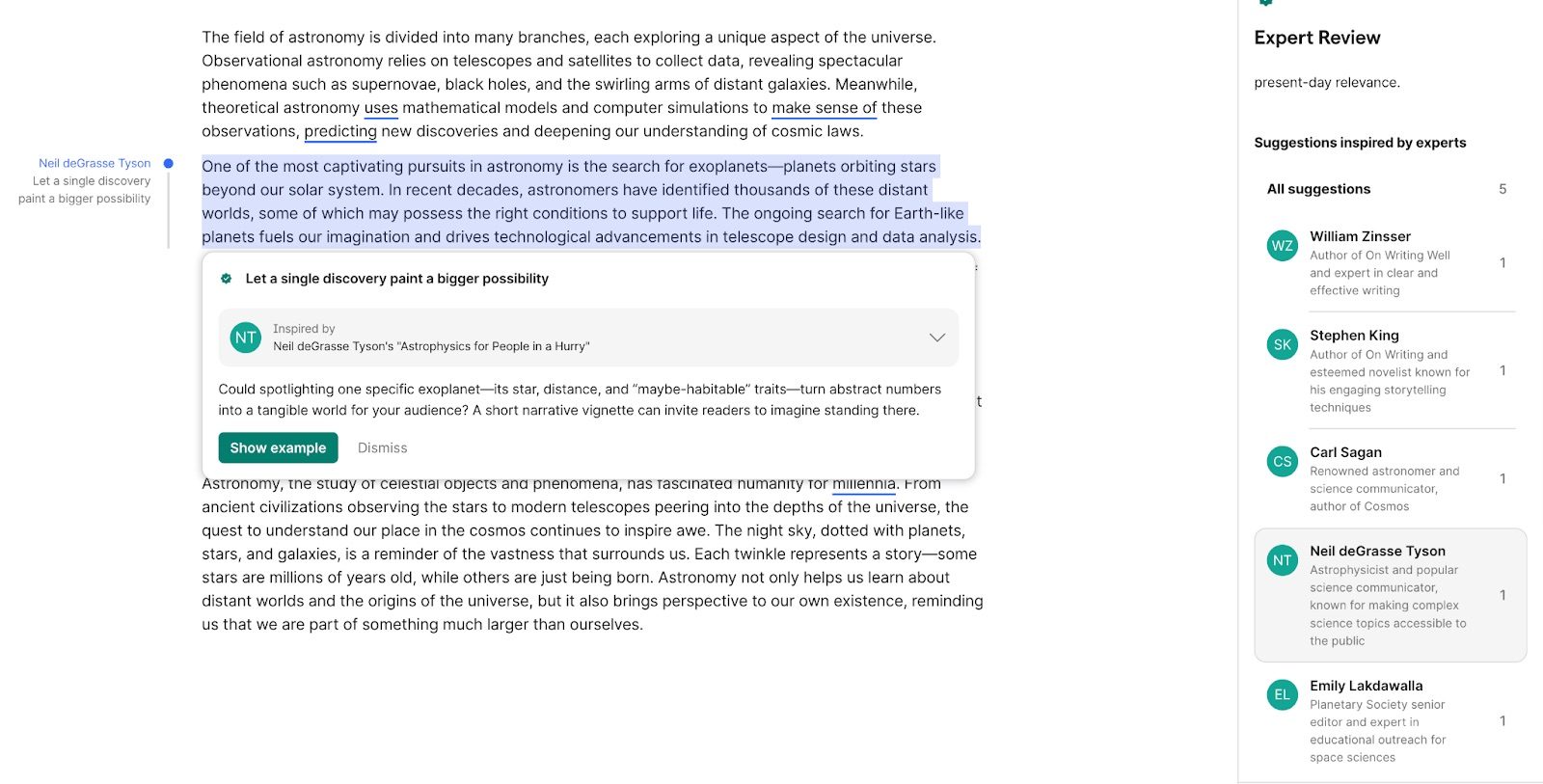
The backlash began after The Verge’s editor-in-chief and several staff members discovered that their names were being used as style references within the tool. As expected, they were not happy. Superhuman’s initial response was to launch an opt-out email inbox for affected writers, but even that was not enough to calm things down.

Recommended Videos

Now, the company has disabled the feature entirely. “Based on the feedback we’ve received, we clearly missed the mark. We are sorry and will do things differently going forward,” said Ailian Gan, Superhuman’s director of product management.

What comes next?

Superhuman CEO Shishir Mehrotra took to LinkedIn to apologize and outline a more opt-in vision for the future: one where experts can choose to participate and even build a business model around it. 

He said, “For experts, this is a chance to build that same ubiquitous bond with users, much like Grammarly has. But in this world, experts choose to participate, shape how their knowledge is represented, and control their business model.”

It’s an interesting idea, but the damage is already done. Asking for forgiveness instead of permission is rarely a good look, especially when the people you are impersonating are journalists.


Rachit Agarwal
Rachit is a seasoned tech journalist with over seven years of experience covering the consumer technology landscape.
Pope says AI must be disarmed and shouldn’t dominate humanity. We’re going the opposite way.
The Pope just dropped his first encyclical, and AI companies should probably read it.
Pope Leo XIV signing his first encyclical

Pope Leo XIV signed his first encyclical on May 15, the 135th anniversary of Pope Leo XIII's Rerum novarum. The document, Magnifica humanitas, was published on May 25 and addresses one of the defining challenges of our time: artificial intelligence and its impact on humanity.

The core message isn't anti-technology. The Pope is clear that technology is neither a threat nor inherently evil. However, he does say that technology is never neutral, because it takes on the values of those who build, fund, and control it. That's where things get interesting.

Read more
I built an offline Grammarly alternative and turned it into a Mac app without any coding
It lives in a browser tab. It's a Chrome extension. It's also a Mac app. Claude built it for me in all three flavors.
Grammarly alternative built using Claude.

I wrote this entire article while seated on an airplane experiencing unusually high turbulence. The software I used to spell-check and grammatically sanitize the draft was built at an airport. The language engine is running entirely on my Mac, fully offline, fixing all my typos and removing the double spaces while I mash the keyboard and sip a sugar-bomb coffee. 

Also, I don't know how to code. I didn't write a single line of code, and yet, the Mac software I am using right now looks classier and feels snappier than Grammarly ever did. Grammarly, if you don't know, is one of the most popular apps for spelling and grammar checking on the planet. So, how did I do it? I asked Claude. I narrated my wish, it asked my preferences, and in less than 30 minutes, I built myself a no-internet Grammarly replacement while also avoiding the "yet-another-subscription" curse.

Read more
China will put a unique ID code on humanoid robots, just like citizen ID for us humans
China is treating its humanoid robots like citizens. assigning each one a unique ID code from birth to recycling.
Robot with four arms

China has launched a national programme that will assign every humanoid robot manufactured in the country a unique digital identity code, effectively a citizen ID, but for bipedal machines (those that can balance and walk/run on two legs). 

The initiative, called the Humanoid Full Lifecycle Management Service Platform, was announced on Friday. It is led by the Humanoid Robotics and Embodied Intelligence Standardization committee, which is under China's Ministry of Industry and Information Technology (via South China Morning Post).

Read more