  1. Home
  2. Emerging Tech
  3. News

Indoor solar panels to power your gadgets? A team just proved it can be done safely

Researchers just made indoor solar panels safer and more efficient, and they could soon replace coin-cell batteries.

Add as a preferred source on Google
aibn indoor solar panels
The University of Queensland

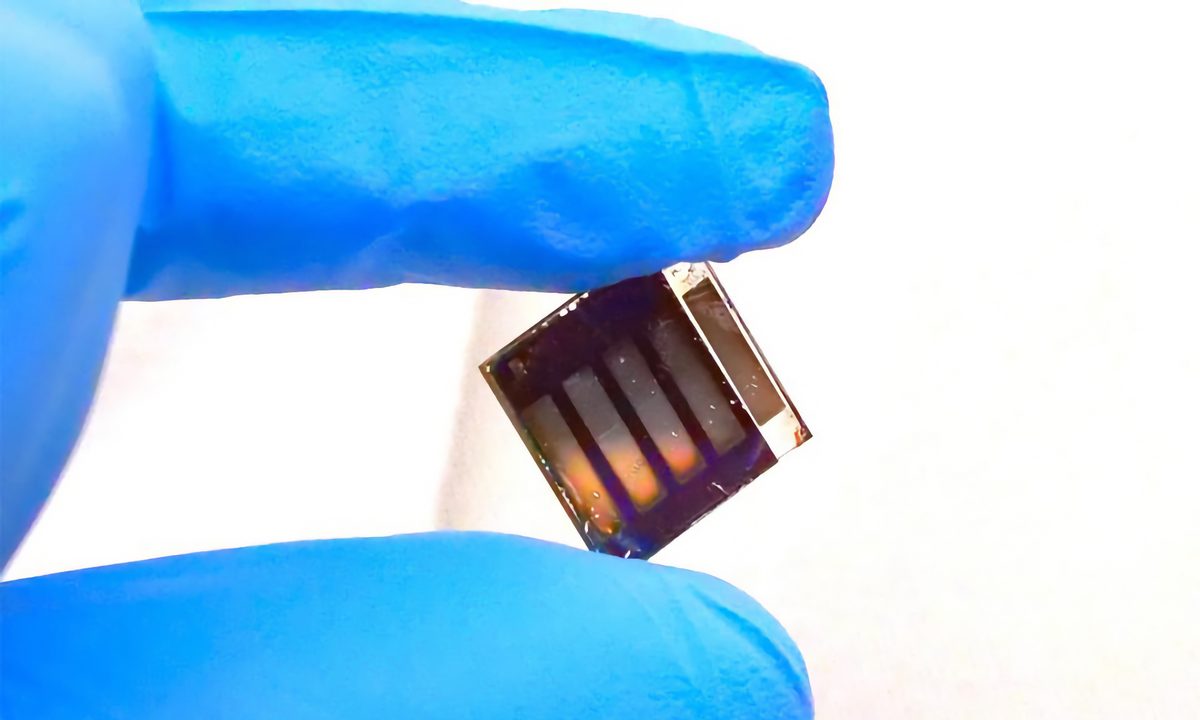
University of Queensland researchers have developed indoor solar panels that could one day power your wearables, sensors, and small electronics using nothing but the light already in your home or office.

The panels are based on perovskite, a material that has been gaining attention as a successor to traditional silicon in solar cells. While silicon-based indoor solar cells top out at around 10 percent efficiency, perovskite can do significantly better. 

Recommended Videos

The catch has always been that most perovskite solar cells rely on lead and hazardous solvents in their production, which is a problem for both safety and scaling up to real-world manufacturing. The UQ team has figured out a way around that.

So how does it actually work?

PhD student Zitong Wang, under the supervision of Dr Miaoqiang Lyu and Professor Lianzhou Wang, developed a vapor-based process that can manufacture high-quality lead-free perovskite material without any hazardous solvents. 

The panels hit a power conversion efficiency of 16.36 percent under indoor lighting, which is the highest recorded for this type of lead-free perovskite indoor solar cell made using an industry-compatible method.

Could these replace the batteries in your gadgets?

The panels are being explored as an alternative to coin-cell and button batteries for low-power devices like environmental sensors, wearables, and health monitors. Supermarkets testing electronic shelf labels, which replace paper price tags, are among the early candidates for the technology.

The panels are thin, flexible, and can be made in different shapes, making them easy to slot into all kinds of products. The next step is encapsulation to protect them from moisture and oxygen. After that, it is mostly a waiting game.

Dr Lyu expects perovskite indoor panels to hit the consumer market within the next few years. This is an exciting new technological development that could significantly benefit the environment. I look forward to seeing how it evolves and improves our lives.

Rachit Agarwal
Rachit is a seasoned tech journalist with over seven years of experience covering the consumer technology landscape.
Amazon’s new AI shopping podcasts are going off the rails
Amazon’s AI shopping hosts are unsurprisingly weird
amazon-join-the-chat-ai

Amazon is giving product pages the podcast treatment, and it's as useful as it sounds. This might sound like a neat new trick till you hear what some of these AI "hosts" are actually discussing.

The company recently expanded its “Hear the highlights” feature with a new interactive mode called “Join the chat.” This feature lets shoppers listen to AI-generated audio summaries about the products they are viewing, and even ask questions by text or voice while the audio is playing. It added a layer of interactivity, with these AI hosts being capable of pausing and answering in real time. But that's where the handy idea ends, and the bizarre bit starts.

Read more
You can now protect your ChatGPT account with a special USB-key
ChatGPT

If you’ve ever worried about someone getting into your ChatGPT account, ChatGPT account, OpenAI has finally introduced something worth paying attention to.

The company has rolled out a new opt-in feature called Advanced Account Security, and it is exactly what it sounds like. You can now lock down your account using a physical security key, which is now available to regular ChatGPT users.

Read more
Your car’s Google Assistant is going away, and this is what replaces it
Electronics, Mobile Phone, Phone

There’s a very specific kind of frustration that comes with talking to your car. You say something perfectly normal, and it responds like it’s hearing you for the first time. “I didn’t get that.” “Please try again.” Or worse, it confidently pulls up something completely unrelated. For years, in-car voice assistants have lived in that awkward space — just useful enough to keep you trying.

That may finally be changing. Google is bringing Gemini to cars with Google built-in, gradually replacing Google Assistant with something that’s designed to understand natural, everyday speech. And if the difference between the two felt noticeable on your phone, in a car — where you need things to just work — it feels far more significant.

Read more