I was recently waiting for an Uber when the GPS decided to lie for sport. The car was somewhere nearby, I was somewhere nearby, and somehow both of us were trapped in that modern ritual of wrong pins, slow turns, vague waving, and “I’m here” messages that help absolutely no one.
That was when I had a very reasonable thought: this is exactly where a hologram of a giant arrow pointing at me would be useful.
Not “spatial computing.” Not a $3,499 headset. Not an AR demo that looks incredible only if you’re the person wearing the glasses. I mean an actual, visible, shared holographic arrow hovering above my head like a beacon for one mildly annoyed passenger.

Sci-fi spent decades training me to expect spectacle. Consumer tech, being consumer tech, looked at that dream and asked whether it could be turned into a screen, an app, a subscription, or a device with a charging case.
Sci-fi did get plenty right
The annoying thing is that sci-fi wasn’t exactly wrong. A lot of the gadgets did arrive, just in forms so ordinary they barely register anymore.
The Star Trek communicator became the smartphone. Pew says 91% of U.S. adults now own one, up from 35% in 2011, which is exactly the kind of miracle that becomes boring once everyone uses it to ignore unknown callers.
The glowing slab became the tablet. Video calls escaped mission control and became FaceTime, Zoom, and another reason to check whether the camera’s accidentally on.
Voice-controlled computers became smart speakers that can handle a kitchen timer and still misunderstand the word “lamp” with total confidence. Domestic robots became robot vacuums, which is impressive until one wages a quiet war against a sock.
The magic is still missing
Holograms are harder to shrug off because they still feel like the missing receipt. We have pieces of the idea, sure, but each one arrives with an asterisk.
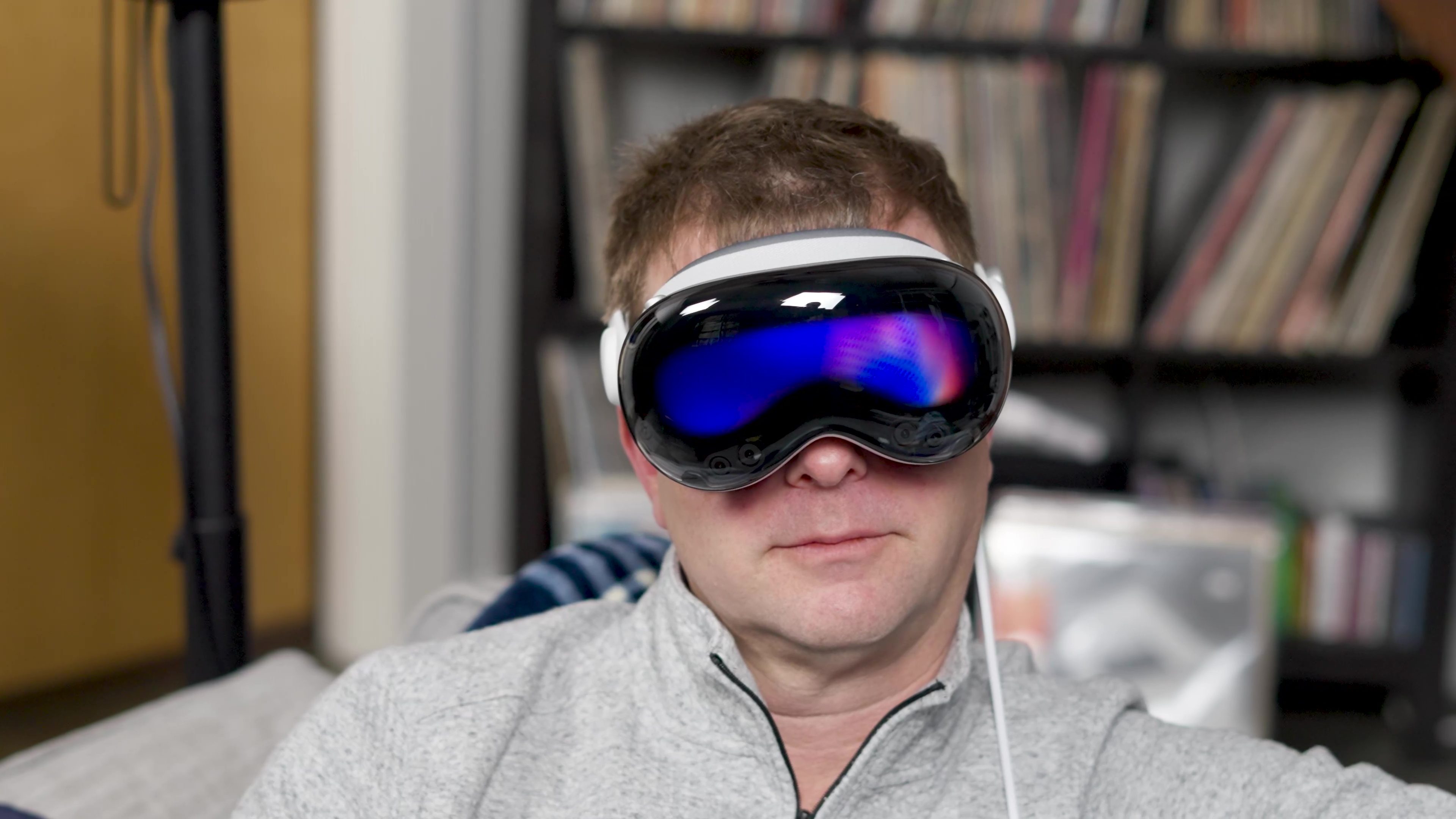
Apple sells the Vision Pro, which puts spatial computing in front of your eyes if your face and wallet are ready for the commitment..
Meta’s Orion sounds closer to the fantasy, but Meta says the prototype is going to employees and select outside audiences while it works toward a consumer AR glasses line.
Looking Glass has pushed holographic displays closer to consumer territory with Musubi, a holographic photo and video frame. That’s genuinely neat. It is also very funny that the sci-fi future apparently starts as a desktop photo frame.
The boring version usually wins
That’s usually how tomorrow arrives. Not as the scene we imagined, but as the most shippable form of the idea. Even XR is drifting toward compromise. IDC says XR device shipments grew 44.4% in 2025, mostly because of smart glasses, while traditional VR and mixed reality headset shipments kept declining.
That doesn’t make the tech useless. The boring version often wins because it solves a real problem without needing to look good in a movie trailer. Phones beat holograms because rectangles are practical in a way floating avatars still aren’t. They fit in pockets, survive bad lighting, and don’t require everyone in the room to pretend this is a normal way to talk.
So yes, the future is here. It just got product-managed into something that needs a charger, an account, and three permissions.
Still, where are my damn holograms?