It’s honestly wild how quickly artificial intelligence has gone from being a futuristic curiosity to something people casually rely on every single day. Tools like ChatGPT, Claude, and Gemini are slowly becoming part of everyday digital life — helping people write emails, summarize documents, plan schedules, debug code, and sometimes even think through problems altogether. And now, according to a new report, telecom companies in China are monetizing that shift in a way that feels both fascinating and slightly dystopian: by selling AI token plans almost like mobile data packs.
Yes, actual AI usage quotas are slowly becoming a thing. Instead of worrying about running out of 5GB data before the end of the month, people may soon find themselves wondering whether they have enough tokens left for a few ChatGPT-style conversations, AI-generated images, or coding requests.
Telecom companies have already noticed that for you
China Telecom, one of the country’s largest carriers, has reportedly started offering dedicated AI token packages. Consumer plans begin at 9.9 yuan (roughly $1.45) for 10 million tokens and scale up to 80 million tokens in higher-priced tiers. Business-focused plans aimed at coding workloads and AI agents go much further, reaching up to 250 million tokens per month. The numbers sound hilariously enormous until you understand what tokens actually are.
Tokens are the tiny chunks of language and data that AI models process. Every sentence you type into an AI chatbot gets broken down into tokens. Every response generated by the AI consumes tokens, too. Even images and code burn through them.
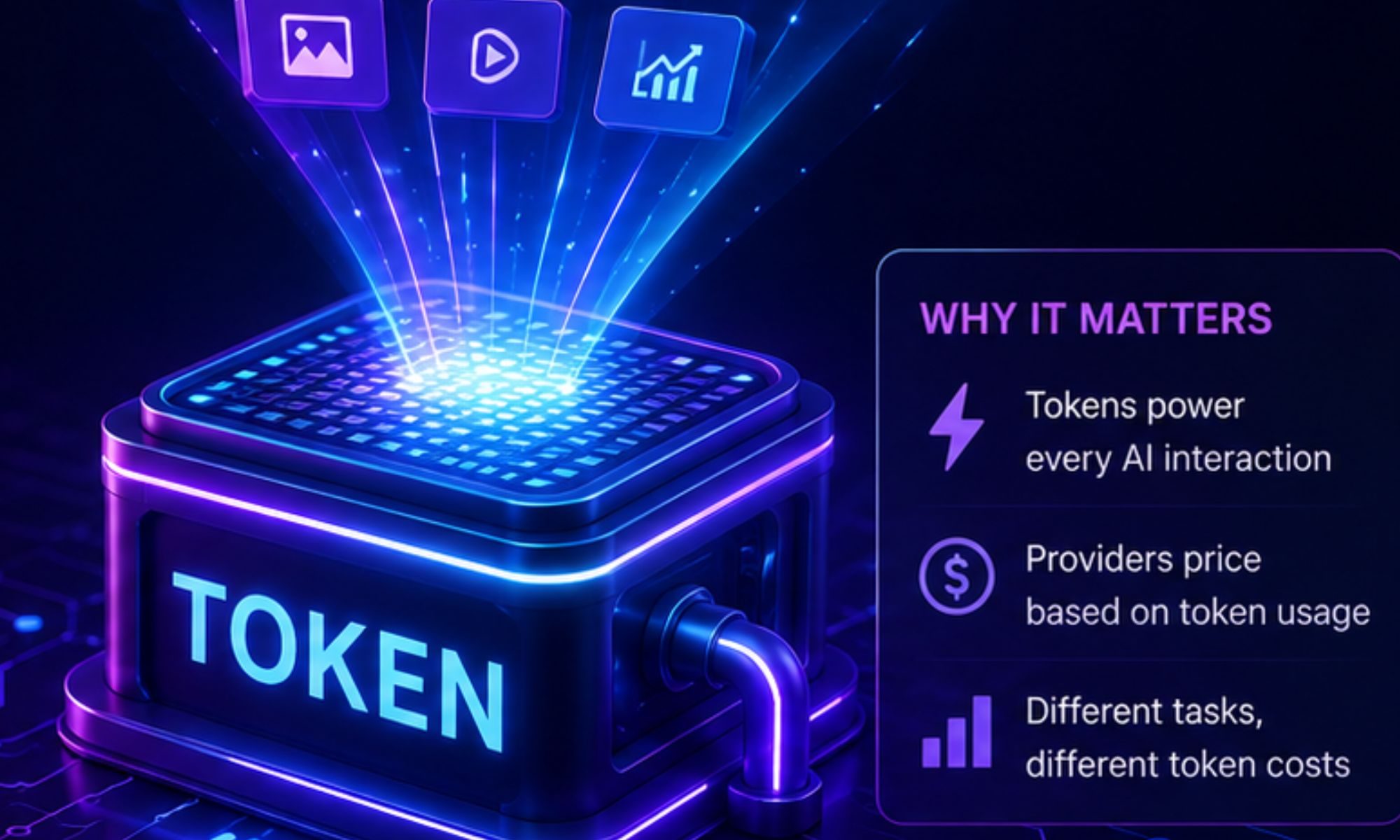
Roughly speaking, one token equals about four characters or around three-quarters of a word in English. A million tokens sounds massive, but AI systems chew through them surprisingly fast once you start generating long documents, analyzing files, or working with images. According to the report, processing a high-resolution image can consume 200-1,000 tokens alone. What fascinates me most is not the pricing itself — it is what this reveals about where the tech industry thinks AI is headed next.
Telecom companies are treating AI the same way they once treated internet access: a utility people will routinely pay for each month. That is a huge psychological shift. AI is no longer being framed as a premium app sitting atop the internet. It is slowly being integrated into the internet experience itself.
That future does not feel very far away
China Telecom is reportedly bundling these token plans with its in-house TeleChat AI system while also supporting third-party models like DeepSeek and GLM-5. Meanwhile, other major Chinese carriers are already following the same playbook. China Unicom has introduced regional token plans, while China Mobile reportedly began testing similar offerings across multiple provinces earlier this year.
The timing is not random either. AI demand in China is exploding at a frankly absurd pace. The report cites government statistics showing that daily AI token calls surged to more than 140 trillion in March — a thousand-fold increase from early 2024. That number almost sounds fake until you remember how aggressively AI has embedded itself into daily life over the past year alone.

The strange part is that most people probably will not even notice this transition happening at first. AI token plans will likely arrive disguised as “AI assistant bundles,” “premium productivity packages,” or “smart services.” But underneath all the marketing language, the industry is building an entirely new economy around AI consumption.
We spent decades paying for access to information online. Now, it seems we are entering an era where we pay for thinking capacity itself.