  1. Home
  2. Emerging Tech
  3. News

A caring robot just won a silver medal at one of the world’s biggest flower shows

Add as a preferred source on Google
Robocrops Chelsea show
University of Lincoln

When you think of the Chelsea Flower Show, robots are probably the last thing on your mind. Yet, the University of Lincoln showed up with exactly that and walked away with a Silver Gilt medal.

The exhibit, RoboCrops: Plant Selection, Beyond the Visible, was put together by the University’s Lincoln Institute for Agri-Food Technology, or LIAT, and placed right in the show’s GreenSTEM zone. That’s the section dedicated to exhibitions exploring the intersection of horticulture, science, technology, and the environment.

What is a robot actually doing at a flower show?

The star of the exhibit was PhenAIx, a robotic system that performs what is essentially a health scan for plants. It uses advanced imaging and AI to catch subtle signs of stress, disease risk, and performance issues that your eyes would simply miss. 
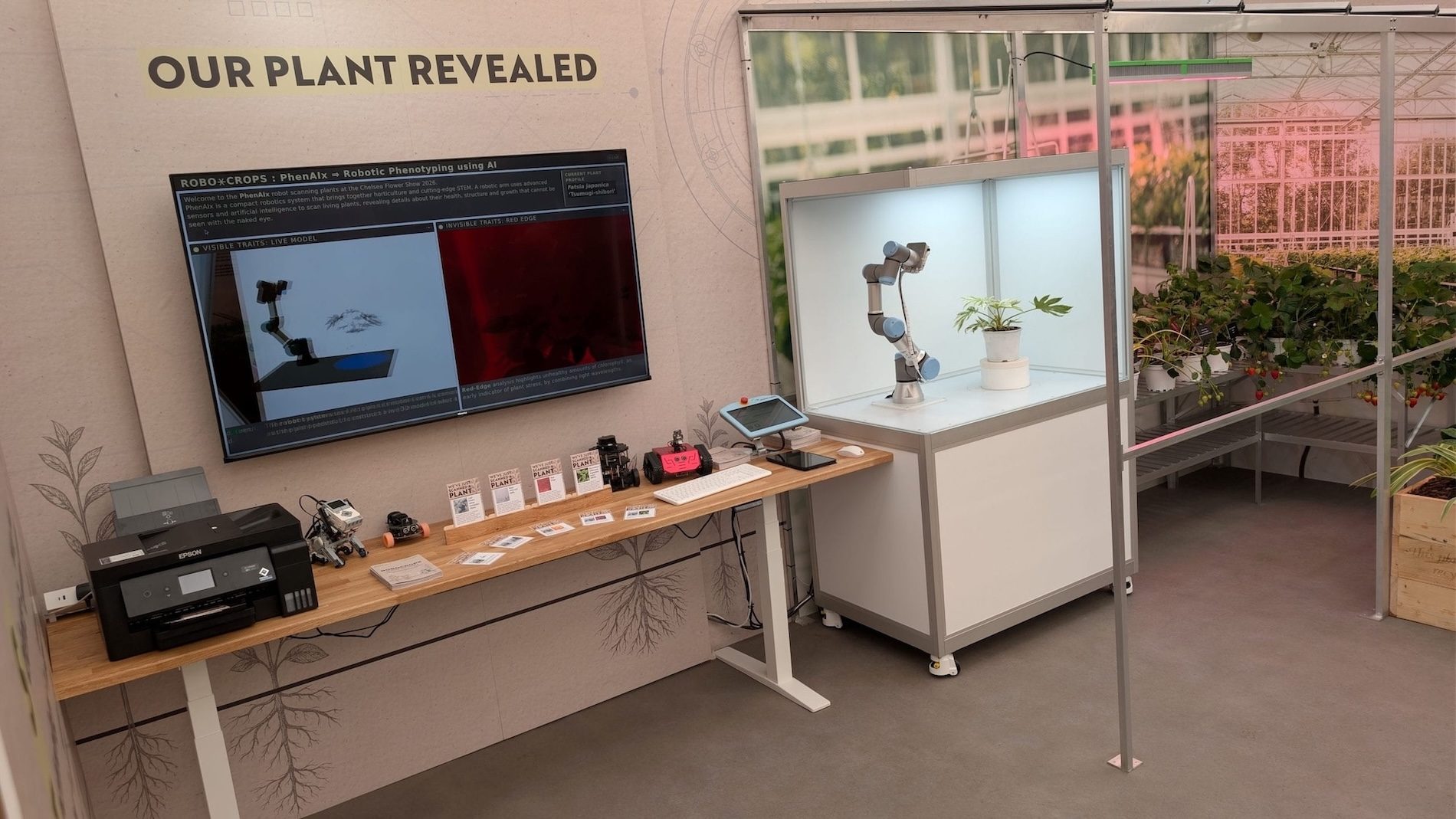
It’s like an X-Ray or MRI machine, but for crops. It can help plant breeders identify more resilient crops more quickly than traditional methods. The exhibit was quite popular, and even the Mayor of London, Sadiq Khan, stopped by to discuss how this technology could eventually scale to tackle wider food production challenges.
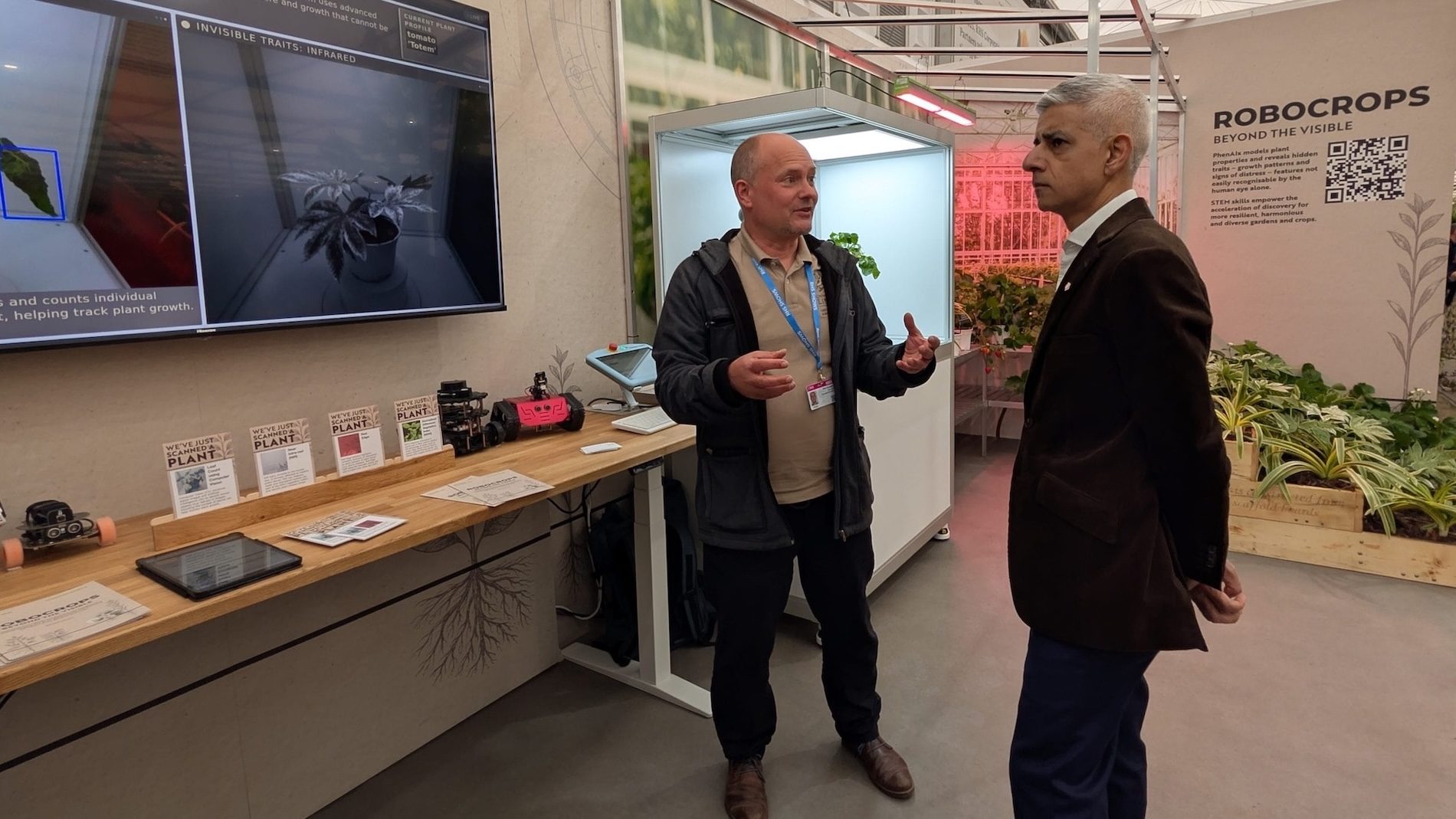
The University is clearly hoping the exhibit plants a seed, so to speak, with young visitors. Particularly those from rural and agricultural backgrounds who might not naturally picture themselves working in AI or robotics. Professor Simon Pearson MBE, Founding Director of LIAT, said the curiosity from young visitors was one of the most rewarding parts of the whole week.

What does this mean for the future of food?

The exhibit showcased how collaboration across STEM disciplines can be helpful in finding solutions to our food crisis. The idea here is to help breeders find stronger, more resilient plant varieties faster than traditional methods allow.

Recommended Videos

Varieties that can handle more heat, survive drought, and thrive with fewer resources have a better chance of surviving the climate we are creating through global warming. Given where global food security is heading, that matters a lot.

Rachit Agarwal
Rachit is a seasoned tech journalist with over seven years of experience covering the consumer technology landscape.
This robot barista is trying to turn championship coffee into a scalable business
Beverage, Coffee, Coffee Cup

Some ideas sound theoretical until they appear in a place as ordinary as your morning coffee. Artly is trying to answer that question with Jarvis, its robotic barista system that is already serving drinks at locations including Muji in Portland, Oregon. The company is attempting to take something that has traditionally depended on human skill, repetition, and instinct, then translate it into a system that can reproduce the same result consistently at scale.

What makes Jarvis more interesting than a standard automation story is that Artly is not trying to build the coffee equivalent of a vending machine. Its goal is to replicate the techniques, standards, and workflow of a world class barista closely enough that the experience still feels intentional rather than automated. According to Digital Trends founder Dan Gaul, who visited the Portland location to try it firsthand, the coffee itself was surprisingly good.

Read more
Magic Cue, one of the smartest Android features on the Pixel phones, is coming to more apps
Google's most underused Pixel 10 feature is finally getting the third-party reach and redesign it needed to become the proactive AI assistant it was always supposed to be.
Magic Cue Settings splash screen on the Google Pixel 10 Pro in Obsidian

Magic Cue, I’d say, was the kind of feature that made me excited about the Pixel 10 launch. However, after the on-stage demo, the feature hardly showed up in day-to-day usage, much less in a useful way.  

Google apparently noticed. At I/O 2026, the company quietly announced that the feature is getting an expansion, along with a possible redesign. While it wasn’t the headline announcement, it could surely be something that makes Pixel 10 users excited again. 

Read more
Research shows educational institutes must not put too much faith in AI text detectors
A UF study shows these tools are so unreliable that the entire evidentiary basis for claims about AI-generated academic writing may need to be reconsidered from scratch.
Man using ChatGPT on a laptop

Here’s an uncomfortable thought for every academic institution currently using AI detectors to police student and researcher submissions: the tools don't work as reliably as institutions assume. 

A paper presented at this week’s 2026 IEEE Symposium on Security and Privacy by researchers at the University of Florida concludes that commercially available AI-generated text detectors are “poorly suited for deployment in academic or high-stakes contexts.”

Read more