  1. Home
  2. Computing
  3. News

Huawei reveals its own replacement for Moore’s Law as it aims straight at 1.4nm chips

Huawei’s new chip playbook is pushing past 2nm

Add as a preferred source on Google
Huawei Kirin 980 processor
Digital Trends

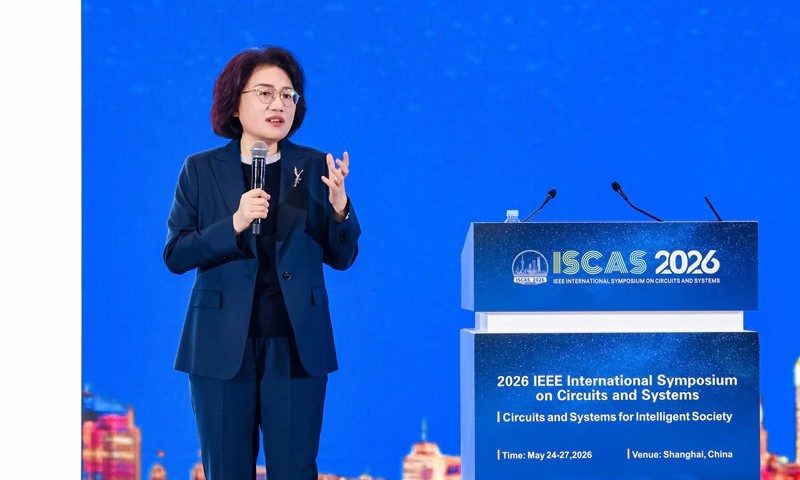
Huawei has revealed what it sees as a new path forward for advanced chips. At the 2026 IEEE International Symposium on Circuits and Systems in Shanghai, Huawei’s He Tingbo introduced the company’s Tau Scaling Law, a new semiconductor principle that Huawei says can guide chip development as traditional Moore’s Law runs into physical and economic limits.

The company says future high-end chips designed under this approach could reach transistor density equivalent to 14 angstroms, or 1.4nm, by 2031.

How Huawei is changing the chip game
1.4nm sounds pretty impressive, but the keyword here is equivalent. Huawei is not saying it has suddenly gained access to the most advanced chipmaking tools in the world, and the company has yet to provide any independent performance data. As of right now, China’s most advanced chipmaking capability is still widely viewed as being around 7nm (like the one powering Huawei’s tri-fold phone). However, the company’s plan is to chase performance through system-level efficiency rather than relying solely on smaller transistors.

Recommended Videos

Tau Scaling focuses on cutting the time it takes signals and data to move through chips and computing systems, with Huawei’s new LogicFolding architecture. The tech basically shortens critical-path wiring, reduces signal-propagation load, and improves both transistor density and circuit performance.

Which chips will test this first?

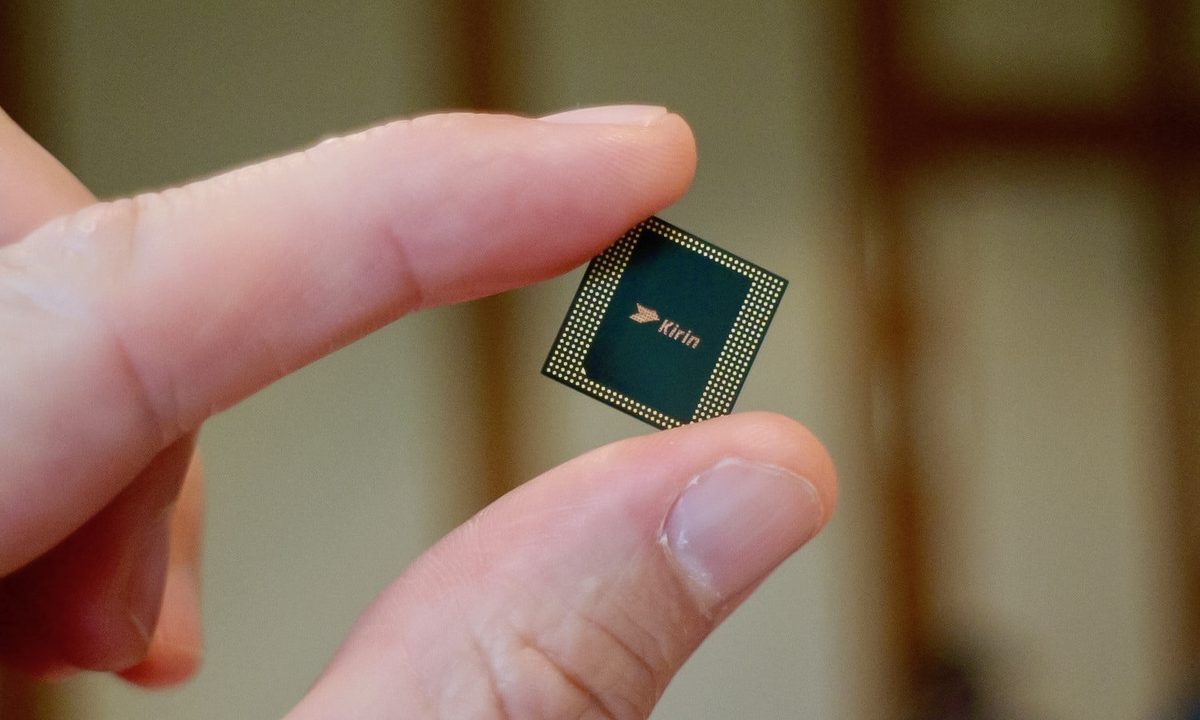
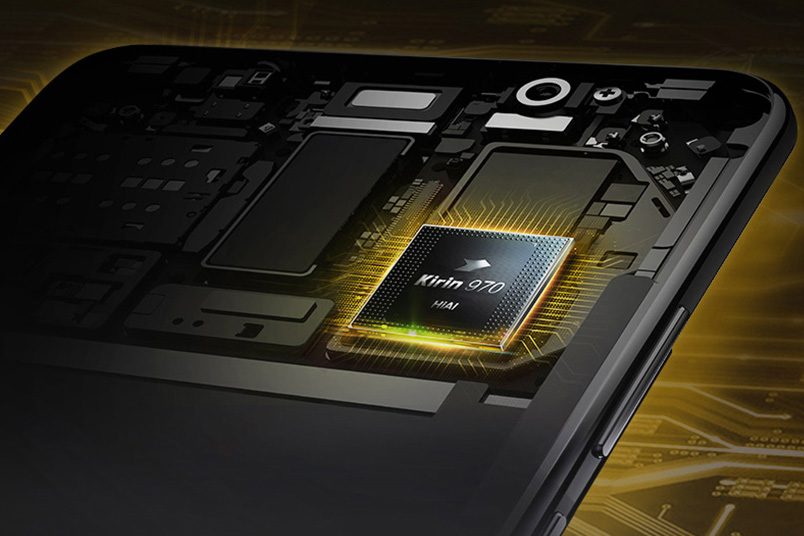
HiSilicon, Huawei’s chip subsidiary, is set to use this tech for its latest generation of Kirin chips. These are scheduled to debut in fall 2026 with the new LogicFolding tech. The company also claims it has designed and mass-produced 381 chips over the past six years based on Tau Scaling, covering areas such as smartphones and AI computing.
Aside from this, the company also plans to apply LogicFolding to the Ascend AI chips by 2030, along with large AI clusters used in data centers. While the 1.4nm is headline-grabbing, the Ascend chips carry a larger weight. With Chinese companies looking for alternatives to Nvidia hardware, which is restricted in the region, Huawei’s AI chips are becoming more important. Reuters also notes that Nvidia CEO Jensen Huang recently said the company had “largely conceded” China’s AI chip market to Huawei.

As the US export controls have limited Chinese access to advanced lithography equipment and other critical semiconductor technologies, making conventional progress toward frontier nodes much harder. TSMC currently uses 2nm technology and plans 1.4nm mass production in 2028, while Huawei is trying to reach comparable density through a different design route. So the company is clearly not waiting for Moore’s Law or easing of US restrictions to decide how far its chips can go.


Vikhyaat Vivek
Vikhyaat Vivek is a tech journalist and reviewer with seven years of experience covering consumer hardware, with a focus on…
Microsoft will let you uninstall Copilot app as Windows 11 clean-up moves ahead
Microsoft finally accepts that not everyone wants Copilot watching them
Microsoft Copilot Banner Featured

Microsoft appears to be softening its aggressive AI push in Windows 11 by making it easier for users and organizations to completely remove the Copilot app from their PCs. The move comes after continued criticism from users who felt Microsoft integrated Copilot too deeply into Windows without offering enough control over the experience.

According to findings from Windows Latest, Microsoft quietly introduced a new Group Policy option in the Windows 11 April 2026 Update that allows administrators to remove the Microsoft Copilot app system-wide. The policy, named “Remove Microsoft Copilot app,” can be found under User Configuration > Administrative Templates > Windows Components > Windows AI.

Read more
Copilot is getting a sidebar treatment for Windows 11, just like Gemini in Chrome
Microsoft is bringing back Copilot's original sidebar concept for Windows 11, this time with left and right docking options and proper desktop integration.
Text, Computer Hardware, Electronics

Microsoft has redesigned Copilot for Windows 11 more than a couple of times. Its latest idea, however, is based on one that it already tried and abandoned: docking the AI assistant to the side of your screen so that it remains accessible even when you’re using other apps. 

By default, Microsoft’s AI assistant still opens as a standalone app (in a separate window). But hovering over a new dropdown menu in the title bar now offers dedicated window snapping options that let you dock it to either the left or right edge of the screen (via Windows Latest).

Read more
HP’s new ZBook workstations are bringing AI chips, Blackwell GPUs, and eye-watering prices
ZBook 8 G2a

HP has officially started rolling out its latest generation of ZBook mobile workstations globally, introducing two new premium laptops aimed at creators, engineers, developers, and enterprise users. The new lineup includes the compact 14-inch ZBook 8 G2a powered by AMD Ryzen AI processors, alongside the larger 16-inch ZBook X G2i featuring Intel Panther Lake chips and Nvidia RTX Pro Blackwell graphics.

The launches signal HP’s broader push into AI-focused professional laptops, where performance is no longer just about CPU power, but also AI acceleration, high-end graphics, and advanced displays.

Read more