  1. Home
  2. Computing
  3. News

Nvidia may have found a new way to bypass GPU export restrictions

Add as a preferred source on Google
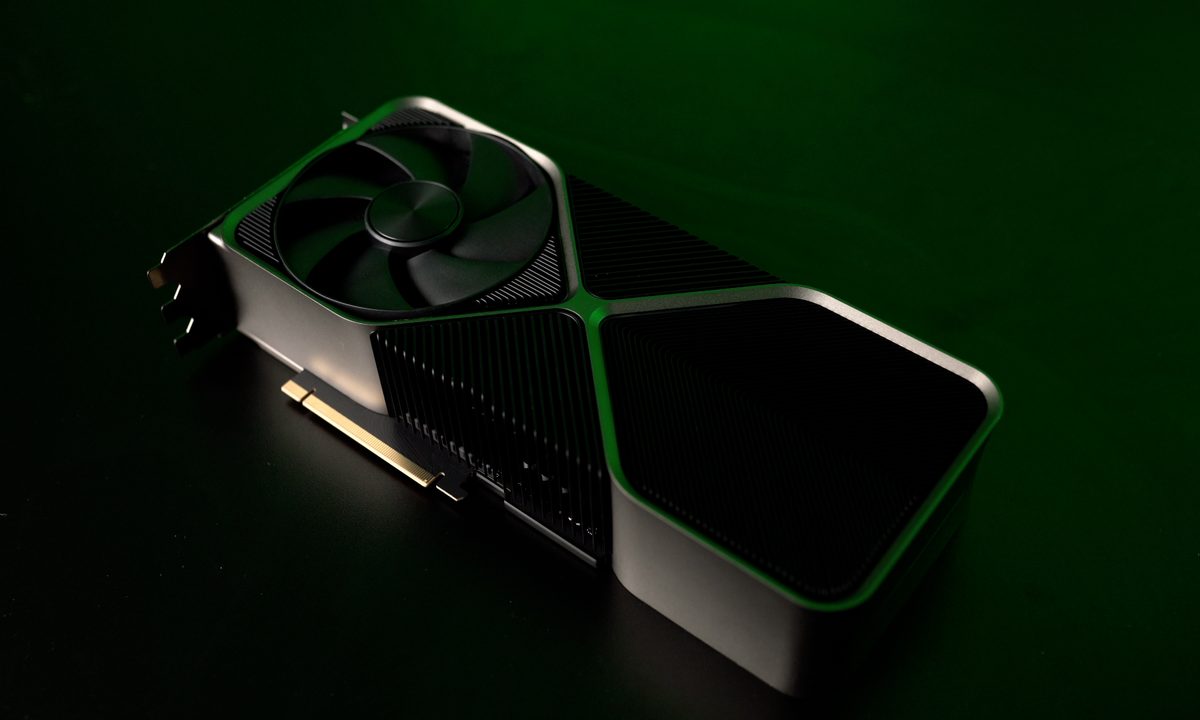
The RTX 4090 graphics card sitting on a table with a dark green background.
Jacob Roach / Digital Trends

Chinese gamers are expected to have limited access to Nvidia’s best graphics card due to strict export restrictions. However, Nvidia may have found a way around it without cutting down its flagship GPU. A new leak suggests that the RTX 5090D will have the same hardware specifications as the worldwide version, and the solution lies in firmware adjustments.

As a quick refresher, the “D” in RTX 5090D stands for “Dragon.” It marks GPUs made by Nvidia to bypass the export restrictions imposed by the U.S. on China, which limit the sale of high-performance graphics processors. We first saw it appear in the RTX 4090D as a remedy for the fact that the base RTX 4090 exceeds the performance thresholds set by these regulations.

Recommended Videos

Initially, Nvidia adopted a simple approach and started selling the RTX 4090D as a cut-down RTX 4090, with fewer CUDA cores and lower power consumption. As VideoCardz notes, they were also not supposed to be overclocked (although people found a way around that in the end). However, it’s easy to imagine that this wouldn’t have worked with the RTX 5090, which is said to be significantly more powerful than its predecessor.

This brings us to today’s leak. As always, remember that we’re dealing with rumors, and the following may not turn out to be true once the RTX 50-series hits the shelves.
The logo for the RTX 5090D.
MEGAsizeGPU

According to Panzerlied, a leaker from the Chiphell forums, the RTX 5090 and the RTX 5090D will be one and the same in terms of specifications. Both will use the GB202 GPU without any hardware adjustments, but Nvidia will limit the AI performance of these GPUs in order to meet the regulations.

It’s unclear what kind of firmware changes Nvidia could add to make sure that the RTX 5090D won’t be quite as useful for AI workloads. One way to go about it would be to limit Tensor core performance, but this would also affect DLSS 3 capabilities. This might make the card much less worth buying for gamers when compared to the RTX 4090D, which, while cut-down, gets the full power of DLSS 3. Nvidia could also slice the card’s default power limit.

This reminds us of the lite hash rate (LHR) limiter versions of RTX 30-series cards. While the GPUs were the same on a hardware level, Nvidia attempted to make them less useful for cryptocurrency miners by including BIOS limiters. Crypto enthusiasts found their way around this pretty quickly, though — whether the same happens to the RTX 5090D remains to be seen.

Monica J. White
Monica is a computing writer at Digital Trends, focusing on PC hardware. Since joining the team in 2021, Monica has written…
Pope says AI must be disarmed and shouldn’t dominate humanity. We’re going the opposite way.
The Pope just dropped his first encyclical, and AI companies should probably read it.
Pope Leo XIV signing his first encyclical

Pope Leo XIV signed his first encyclical on May 15, the 135th anniversary of Pope Leo XIII's Rerum novarum. The document, Magnifica humanitas, was published on May 25 and addresses one of the defining challenges of our time: artificial intelligence and its impact on humanity.

The core message isn't anti-technology. The Pope is clear that technology is neither a threat nor inherently evil. However, he does say that technology is never neutral, because it takes on the values of those who build, fund, and control it. That's where things get interesting.

Read more
I built an offline Grammarly alternative and turned it into a Mac app without any coding
It lives in a browser tab. It's a Chrome extension. It's also a Mac app. Claude built it for me in all three flavors.
Grammarly alternative built using Claude.

I wrote this entire article while seated on an airplane experiencing unusually high turbulence. The software I used to spell-check and grammatically sanitize the draft was built at an airport. The language engine is running entirely on my Mac, fully offline, fixing all my typos and removing the double spaces while I mash the keyboard and sip a sugar-bomb coffee. 

Also, I don't know how to code. I didn't write a single line of code, and yet, the Mac software I am using right now looks classier and feels snappier than Grammarly ever did. Grammarly, if you don't know, is one of the most popular apps for spelling and grammar checking on the planet. So, how did I do it? I asked Claude. I narrated my wish, it asked my preferences, and in less than 30 minutes, I built myself a no-internet Grammarly replacement while also avoiding the "yet-another-subscription" curse.

Read more
China will put a unique ID code on humanoid robots, just like citizen ID for us humans
China is treating its humanoid robots like citizens. assigning each one a unique ID code from birth to recycling.
Robot with four arms

China has launched a national programme that will assign every humanoid robot manufactured in the country a unique digital identity code, effectively a citizen ID, but for bipedal machines (those that can balance and walk/run on two legs). 

The initiative, called the Humanoid Full Lifecycle Management Service Platform, was announced on Friday. It is led by the Humanoid Robotics and Embodied Intelligence Standardization committee, which is under China's Ministry of Industry and Information Technology (via South China Morning Post).

Read more