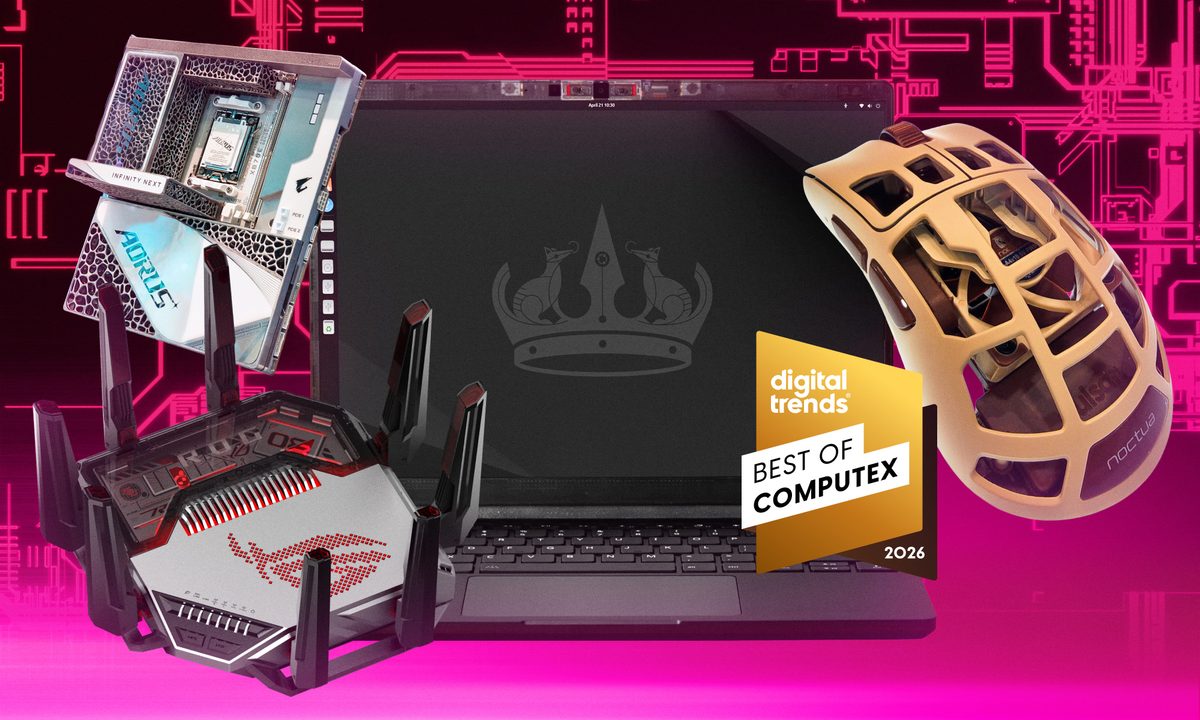

Computex 2026 is over, and as usual, the show floor was packed with more laptops, PCs, components, peripherals, and oddball gadgets than any one person could properly process in a few days. There were sleek ultrabooks, massive gaming rigs, AI PCs, experimental designs, and plenty of products that looked like they were built mainly to make people stop and stare.
A handful of products stayed on our minds long after we left the show floor. They weren’t always the most practical, powerful, or important announcements, but each had something memorable about it. So, in no particular order, here are the coolest things we saw at Computex 2026.
ASUS ROG Rapture GT-BN98 Pro Wi-Fi router
The ASUS ROG Rapture GT-BN98 Pro immediately caught our attention on the show floor. It looks absolutely wild, with a spider-like design that feels more like a sci-fi gaming prop than a router you would place next to your setup.

Once you get past the spider-like design, the bigger surprise is that this is already a Wi-Fi 8 router. That sounds slightly unreal considering most households still rely on Wi-Fi 6 or even Wi-Fi 5, while Wi-Fi 7 remains a relatively premium upgrade. Instead of chasing higher throughput speeds, Wi-Fi 8 focuses more on connection reliability and efficiency.

It has Adaptive QoE for intelligent traffic prioritization, Wi-Fi Insight for real-time network monitoring, AI Game Boost, and dual 10G ports. Do most people need a Wi-Fi 8 router right now? Probably not. But as a piece of future-facing gaming hardware, it was hard to ignore.
Pulsar Feinmann F01 Noctua Edition mouse
The Pulsar Feinmann F01 Noctua Edition is exactly the kind of thing that makes Computex fun. It is a gaming mouse with a tiny Noctua fan built into it, which sounds ridiculous at first, but makes much more sense when you actually try it.

The mouse was shown earlier, but after delays, it now appears much closer to launch. It is based on Pulsar’s Feinmann F01, but weighs slightly more due to the added Noctua NF-A4x10 5V PWM fan. It has a 42,000 DPI sensor and 8K polling. The fan can spin at up to 5,000 RPM, but because it is so small, its noise is hardly noticeable. It blows a gentle breeze toward your palm to help keep your hand from getting sweaty during long gaming sessions.

When it was first revealed last year, we thought the gimmick was pretty cute. After trying it in person, though, the idea started to make a lot more sense. Anyone who has spent hours gaming with sweaty hands will immediately understand the problem Noctua is trying to solve. It is definitely a little unusual, but we can see the practical appeal. That said, we only had a short time with the mouse on the show floor, so we did not get the chance to properly test how effective it is over a long gaming session or in a warm room where sweaty hands would really put the concept to the test.
Noctua also had its first liquid cooling AIO on display, and we saw a demo from the brand. It looks like a worthwhile AIO to keep an eye on for PC builders and Noctua fans who want to bring liquid cooling into their brown-and-beige themed setups.
Alienware AW3926QW monitor
Alienware’s AW3926QW was one of the more polished showpieces at Computex. It is a 39-inch curved Tandem OLED monitor, and at $1,099, it is obviously not cheap. But considering the size, 5K2K resolution, and RGB stripe OLED technology, the price starts to sound a little less outrageous.

The RGB stripe layout improves text clarity and color performance compared with some older OLED monitor layouts. The monitor runs at 5120 x 2160 with a 165Hz refresh rate, but it also has a dedicated mode for competitive players. You can switch it into a 27-inch mode with black bars, dropping the resolution to 2560 x 1080 and pushing the refresh rate up to 330Hz.

That basically makes the monitor a jack of all trades. You can use it as a large, immersive curved display for cinematic gaming or productivity, then switch to a faster esports-focused screen when needed. It also looked great in person without being too flashy.
Gigabyte X870E AORUS INFINITY NEXT motherboard
It is Gigabyte’s 40th anniversary, so we expected the brand to do something special for the occasion. However, we were not prepared for the brand to turn the engineering madness up to eleven with the X870E AORUS INFINITY NEXT motherboard.

It immediately grabbed our attention with its almost biological-looking hollow structures. We soon discovered that this is not just a cosmetic choice, but something far more bizarre. These “gyroid” structures are actually heatsinks, created using advanced 3D metal printing and “thruster-grade thermal materials” to cool the components and VRMs of the motherboard in low Earth orbit.
Yes, you read that right. This motherboard is meant to function in space. Since there is no airflow available to wick heat away from the components in those conditions, these structures are Gigabyte’s solution to the problem. The brand has also 3D-printed a vapor chamber for the chipset and added a honeycomb-style metal backplate to push cooling to the extreme.


Then there is the power delivery. This thing has 64 power phases and uses Low Earth Orbit and data center-grade Quad OptiMOS technology to deliver up to 5,120 amps of total current. That is beyond overkill for a gaming PC, and honestly, we think Gigabyte made this motherboard just to show that it can.
Gigabyte did not say when or if it plans to launch this motherboard to market. However, we did learn that manufacturing it alone costs about $3,000, so even if it ever does go on sale, it will be extremely expensive.
Framework Laptop 13 Pro
The Framework Laptop 13 Pro was announced a few months back, and we were eager to get our hands on the laptop to see if it actually delivers on its advertised promises, and it did not disappoint. The first thing that stood out to us is how sturdy the laptop felt. The brand has taken a page out of Apple’s playbook and used an aluminium unibody chassis in the 13 Pro.
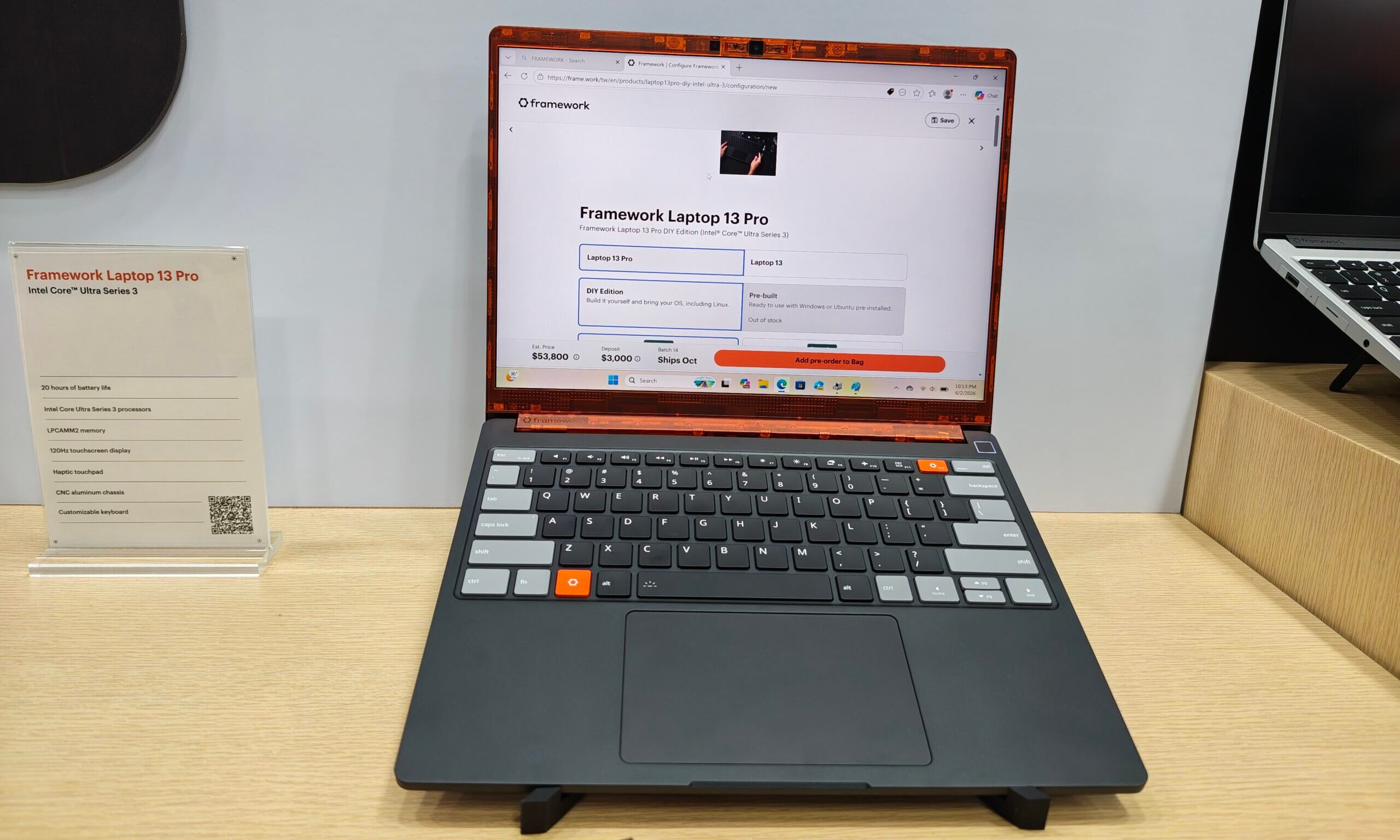
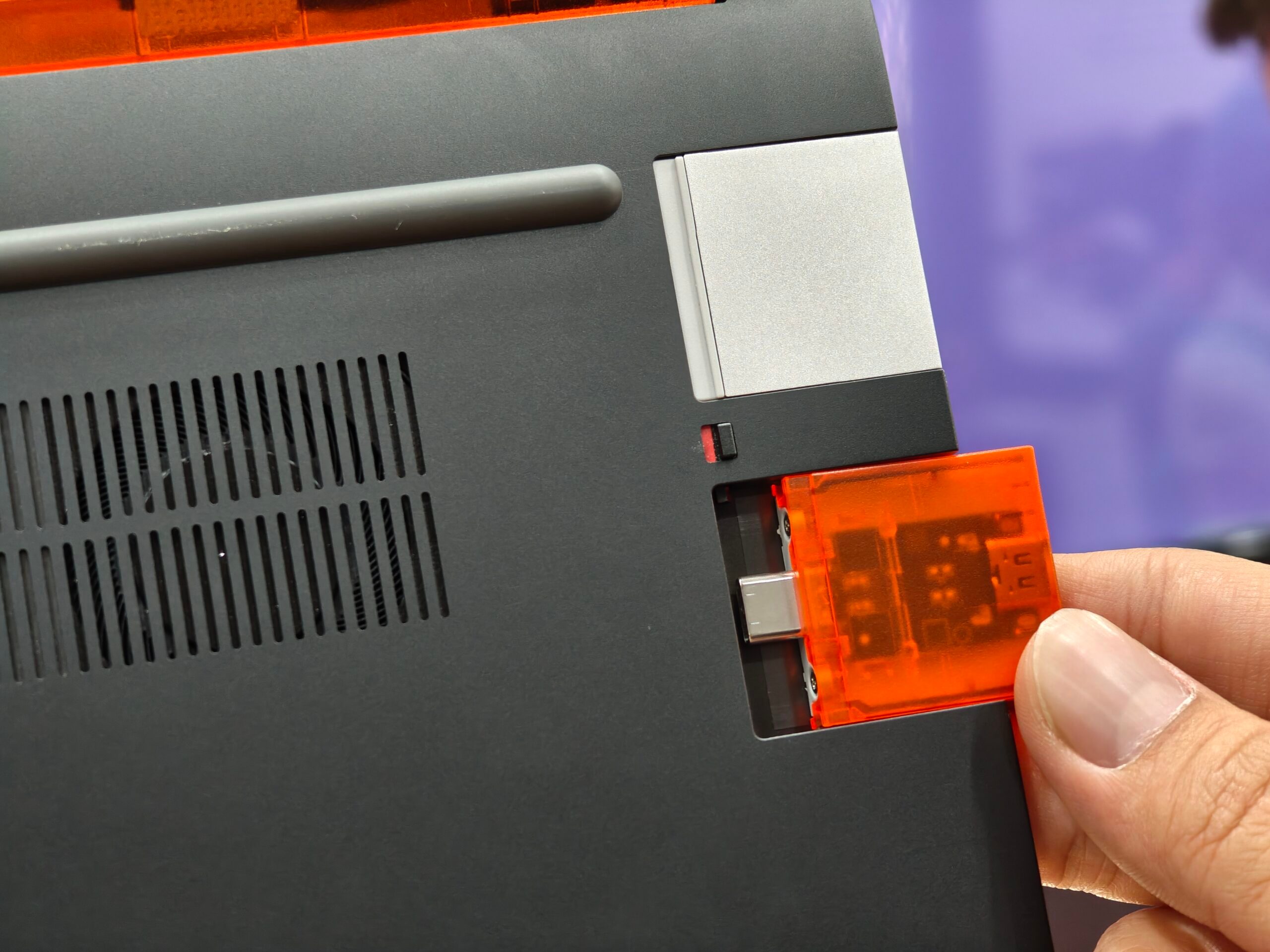
The latch has also been improved so removing or plugging in the expansion cards can be done with one hand, which is a good quality-of-life change. Framework has also moved to LPCAMM2 memory on the Laptop 13 Pro, allowing it to use LPDDR5x while still keeping memory upgradeable. This is significant because laptops that use LPDDR memory are typically not upgradeable.
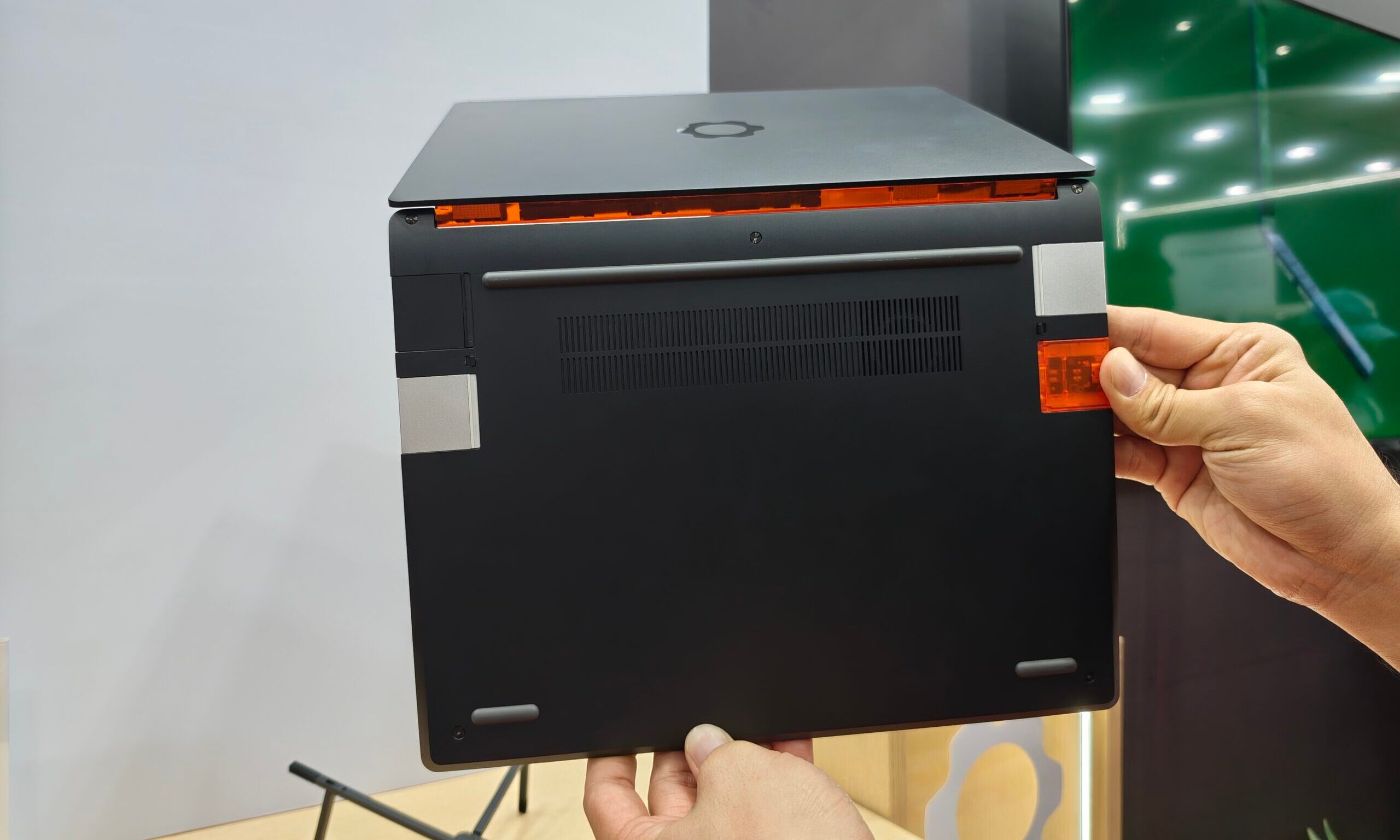
It has a 13.5-inch display with 2.8K resolution that finally offers touch support, though the laptop can only bend backward up to 180 degrees, so it can’t be flipped into a tablet. The other big upgrade is the 74Wh battery, which is 22% larger than the previous generation, with the brand claiming more than 20 hours of Netflix 4K streaming. We could not verify that claim during our brief hands-on time.
That said, the Framework Laptop 13 Pro is not cheap. The pre-built model starts at $1,499 with an Intel Core Ultra 5 325 processor, so there is an upfront premium. But that price is easier to accept because this is a laptop you can upgrade over time rather than replace entirely.