“I didn’t want any overlap,” I told DT Deputy Editor Jeffrey Van Camp before writing this piece, concerned it would end up saying the same thing as another article in production, just in a slightly grouchier way. After all, that would end up being really confusing and annoying for people. We both chuckled at the irony. What a terrible shame Google didn’t have exactly the same conversation before vomiting out three new messaging apps into the world this week.
Messaging a friend used to be a case of sending an SMS (a text message), which was almost always done through a single app. Nowadays SMS has fallen out of fashion, and data-driven messenger apps are the thing to use. There are already dozens of high-profile chat apps, but Google has added the group chat app Spaces, the ludicrously named Allo chat app, and the video chat app Duo to the mix.
Which one should we use? If you’re not sure, don’t look at Google. Based on its confused approach to messaging, it doesn’t have a clue either, which is concerning for the company in charge of Android, the world’s most popular mobile operating system.
Confused? You will be
On your Android phone now you’ll find Hangouts, which can do SMS, messages, video chat, and group chat, and plenty more. It can do most everything, but that’s not enough for Google. Recently, Google relaunched Google Messenger, which also does SMS, and in the past week Spaces, a collaborative group chat app. If you use Google Voice, you can send SMS through that app, too.
I cannot fathom why we need a six Google chat apps to do the job of one.
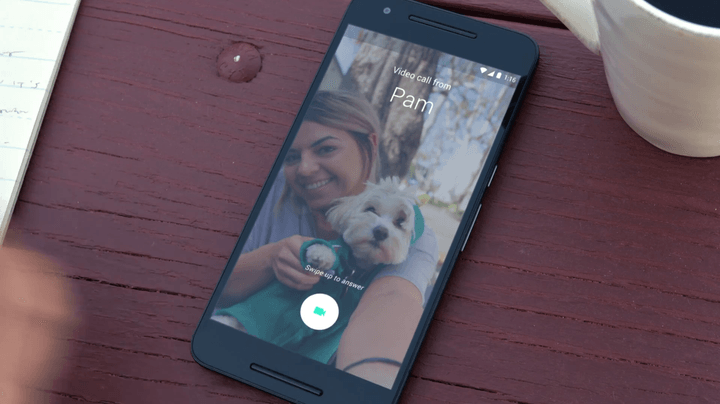
But the fun is only just beginning. Later this summer Google will also launch Allo, a message app that talks back to you using Google Assistant (which seems the same as Google Now), and Duo, another video chat app, but just for two people at a time. That’s six Google apps that share functionality.
Those may come on your next phone, in addition to a few manufacturer or wireless carrier chat apps for good measure. You’ll have a new way to say ‘hey’ every day of the week.
Overlap, much? Obviously, yes.
Surely Google has a plan to retire Hangouts or humanely put Messenger down? No. A Google representative told Digital Trends that Hangouts will continue on, and implied that the newer apps will do the same. Our chat logs will survive, but our sanity may not. I cannot fathom why we need a six Google chat apps to do the job of one.
The Google representative called Allo a “smart chat bot-powered messenger for everyone,” and Duo a “personal and speedy” one-on-one video chat app. They’re all completely “different things,” according to Google. Apparently the world needs more chat apps because “people use different apps for different people and situations.”
Google’s right, we do, but not through choice. And its only making the situation worse.
No-one uses dozens of apps
Google should know better than to have six chatting apps. In fact, it could check its own research. Here’s a quote from a Google app marketing study, which says the average phone owner has 36 apps installed on their device, but, “only one in four are used daily, while one in four are never used.” This statistic has been repeated various times with only slight variation, and always coming down to us only using a handful of apps each day.
If most people use four apps each day, inevitably, one or maybe even two of those apps will be for chatting, which will be chosen based almost exclusively on whether their friends use it or not. Those who think ahead will commit to an app that has a solid chance of being around for a while.
Right now, there is a clear winner, and it’s not made by Google.
It’s WhatsApp, a chat app that in February, told us it was used by a billion people. It’s owned by Facebook, which also has more than a billion users to its name, and has recently updated (hear that Google? Updated. Not, ‘released umpteen spinoffs’) its Messenger platform to include bots, with which you can converse with and get things achieved. Messenger is used by at least 800 million people. Facebook owns mobile messaging.
The best chat app is the ones your friends have, and more than two billion people say it’s not one of Google’s six apps.
Remember what happened the last time Google challenged Facebook? We got Google+. Sundar Pichai didn’t talk about how that’s growing, or the new features we should expect soon, during his keynote address at Google I/O 2016. That’s because it’s just another of Google’s failed communication tools that it has given up on, and an excellent reason for us not to waste much time on Allo, Duo, Spaces, or going forward, Hangouts either.
Google is committed to making products, but has no real commitment to see them through. Google+ is all but forgotten. Google Buzz, Google Wave, Google Reader, and many other services that people have invested time and effort into have been retired over the past few years. This chart shows more than 40 dead Google products, and it’s two years out of date. Google’s history doesn’t inspire confidence in the lifespan of these new chat apps, none of which offer anything completely new to pull us away from our existing favorite, or can compete with business-focused platforms like Slack. Google can do single, integrated, feature-packed apps superbly. Just look at the almost ubiquitous Gmail and Chrome browser for proof. Why it can’t repeat that success with a single, all-encompassing messenger app is a mystery.
Consistency keeps people coming back, Google
When you go to a bar, you choose the one that your friends are at. Often, you stay faithful to that bar, continue going for years, and get to know the staff there. If that bar kept opening, closing, or changing its mind about whether it served beer, wine, burgers, vegetarian, or frothy animal urine in giant plastic beakers on a monthly basis, you’d rapidly get tired of the indecision, thinking, “why did I come here in the first place?’ It’s the same thing with chat apps.
Nearly two billion people use Facebook-owned message apps, and another 700 million still use WeChat. Google clearly wants a platform that can emulate that success — it was said to have made a $10 billion bid for WhatsApp itself at one time. Hangouts was so close to being a challenger, offering lots of features and coming pre-installed on our Android phones. Now? It’ll remain online, but we bet the funky, flashy-featured upstarts will get all the attention from Google as it scrambles to build their user bases
Allo, Duo, Messenger, and Hangouts can co-exist, but Google’s making success really difficult for itself by offering them. Isn’t the Google folder of apps on an Android phone stuffed enough as it is? If the four had been wrapped up in a single app — Hangouts 2.0 perhaps — things would be different. Instead, it has set in motion events that only spell more frustration, disappointment, and long-term fear regarding Google’s entire, bewildering range of communication tools. Massive confusion is coming, as we all struggle to understand which Google app we should use for what use.
I can tell you which messenger to use. It’s the one your friends have, and more than two billion people say it’s not one of Google’s six apps.