1. Home
  2. Computing
  3. News

Samsung shows off a 4K virtual reality display

Add as a preferred source on Google

Samsung has showcased a selection of its next generation of displays at the SID Display Week conference in San Francisco, CA this week. One was a virtual reality-oriented 4K display at 5.5 inches, which is the first VR-focused display seen at one of these conferences.

4K resolution VR displays don’t exist yet. The highest resolution displays for VR on the market today come in the form of pocket-sized phones, as none of their commercially available desktop counterparts, such as the Oculus Rift or HTC Vive, reach the same level of pixel density. This is not to discredit stationary solutions though, since with body and position tracking as well as custom solutions they can get rid of that horrendous “screen door effect.” Regardless, offering higher resolution displays for VR is a step toward eventually getting rid of the visible pixels in VR completely.

Recommended Videos

At this stage, the featured display is being demoed as a prototype. Some rumors suggest that the Samsung Galaxy Note 6 will come equipped with a 4K display. But assuming this device is in its prototype stage, it doesn’t sound like it will be seen among retailers this fall when Samsung is expected to launch that device. Details are lacking as to what makes this particular display suitable for VR displays beyond what others can provide, so we’ll just have to sit and wait while Samsung does its thing.

In addition to the 4K display, two other screens show promise in the VR field as well. One of them is called “Bio Blue” and is designed to lessen potentially harmful blue light. Put in numbers, the new display is meant to emit only 6 percent blue light as opposed to the 32 percent often seen on modern AMOLED displays. There was also an early light-field display on the site as well. This type of display uses a technology that provides a realistic sense of depth in an image. Both of these technologies are meant to allow depth to be perceived more naturally, and thus be easier on the eyes.

Thus far there aren’t any detailed hardware specifications for these displays. The question of what technology will lead the way for VR is in no way set in stone, but for now a higher resolution display would likely be welcomed by everyone.

Dan Isacsson
Being a gamer since the age of three, Dan took an interest in mobile gaming back in 2009. Since then he's been digging ever…
Yet another research breaks the hype bubble for AI browsers serving serious security flaws
Four popular AI browsers can be exploited to steal your data from other open tabs.
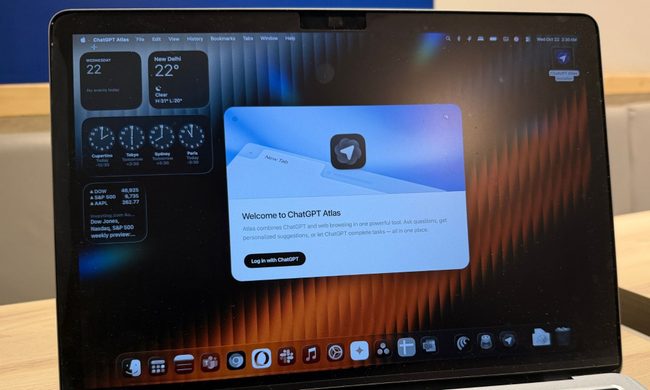
ChatGPT Atlas browser on a MacBook.

AI browsers are being sold as the next big thing. They can summarize pages, book trips, and even make purchases for you. But a new study from the University of Washington found that four of the seven most popular ones come with a security risk serious enough to let malicious websites steal data from other sites you have open. The more capable the browser, the bigger the risk turns out to be.

The 30-year security rule that AI browsers are breaking

Read more
Valve just gave away the blueprint for its coolest Steam Machine mod
Valve giving away the recipe instead of the dish, and honestly, we're okay with it.
Valve Steam Machine Featured Design Coverplate

While Valve’s Steam Machine launched at a higher-than-expected price due to the AI-driven chip shortage, it seems that the company is not sitting on its haunches and is still working hard to make the product more enticing to users. 

One of the coolest features of the Steam Machine is the user-customizable front faceplate, and Valve has just made it better. The company open-sourced its "Inkterface" project, which allows users to build their own e-ink faceplate for the Steam Machine.

Read more
Brave’s new Container feature is a lifesaver for anyone juggling multiple accounts
With this feature, you won't need to open three different browsers
Brave browser 3D logo

Brave has added Containers to its desktop browser, giving users a built-in way to keep different accounts, sessions, and browsing activity separate. The feature is available in Brave 1.92 for Windows, macOS, and Linux, and is rolling out in phases over the next few days.

Containers have been a highly requested feature, especially for users who regularly switch between work, personal, developer, or creator accounts. Once enabled, they let users open tabs in separate spaces where cookies and site storage are not shared outside that container.

Read more