
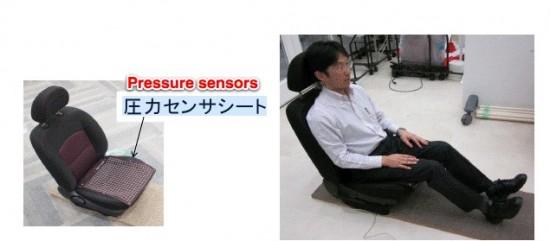
 Car security comes in many shapes and forms, but a new car seat developed by engineers in Japan designed to prevent your car being stolen is about exactly that: shape and form.
Developed by the Advanced Institute of Industrial Technology in Tokyo, the seat is able to determine whether the person sitting on it is the car owner or simply someone wishing they were the owner (ie. a thief).
So how does it do it? Placed throughout the car seat are 360 pressure sensors. When someone sits on the seat, data from the sensors is sent to an external computer which, using special software, works out if the person is the rightful owner. If the computer says “no,” the car won’t start.
It does throw up certain questions though; what if you’re wearing particularly bulky clothes, like on a freezing cold day? Won’t the computer think a person larger than the regular driver is trying to steal your vehicle?
 Well, according to tests, the technology doesn’t do too badly, with a 98 percent success rate having been recorded. Such a high rate does sound promising, though it nonetheless means there will be occasions when you want to go shopping but are left sitting in your driveway, shuffling around in your seat in the hope that the computer relents and allows you to start your car.
The future isn’t certain for this new car seat, but if its success rate can be pushed up to 100 percent, butt-recognition technology could yet join the likes of fingerprint- and voice-recognition systems in helping to improve car security.
[Source: Geekosystem via TechCrunch]


