
While dozens of new cars are unveiled every year, the arrival of a new Lamborghini is something special.
The Sant’Agata Bolognese-based automaker likes to take its time with new models. Its best-selling Gallardo was on the market for 10 years, an eternity in the car world.
So the new 2015 Huracán LP610-4 is poised to make quite a splash. It broke cover back in December, and is set to make its official debut at the 2014 Geneva Motor Show in a couple of weeks.
In the meantime, Lamborghini decided to release all of the important details of this new supercar for enthusiasts to drool over. Enjoy.
Styling
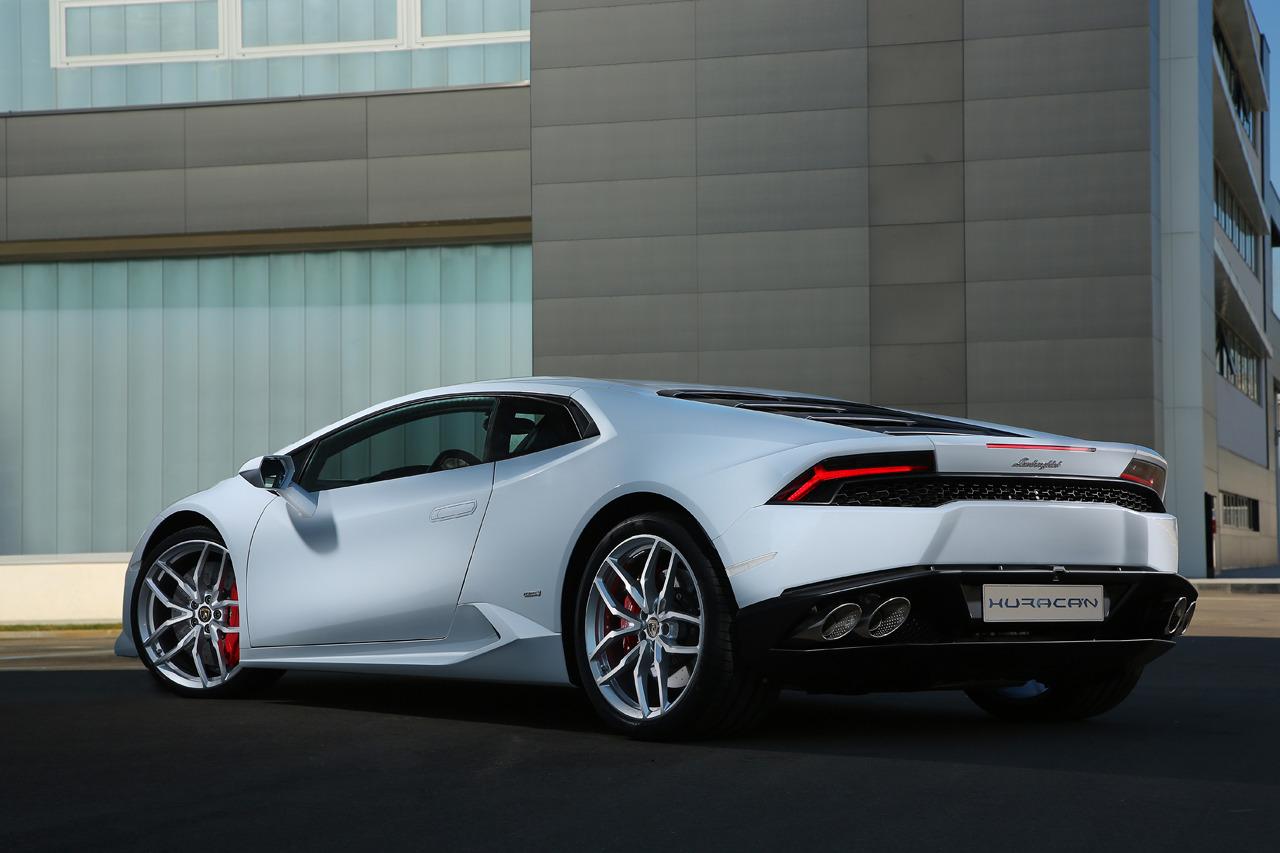
As the baby in the lineup, the Huracán has a smaller footprint than the existing Aventador, but its styling takes cues from both that car and the Gallardo-based Sesto Elemento concept.
The result is a car with essentially the same proportions as the Gallardo, but with sheetmetal that looks like it’s been massaged by Jaws.
While there are plenty of curved surfaces, what really stands out are the many sharp, angular lines, particularly the headlights and the multi-faceted bodywork that surrounds the windows and melts into an air intake.
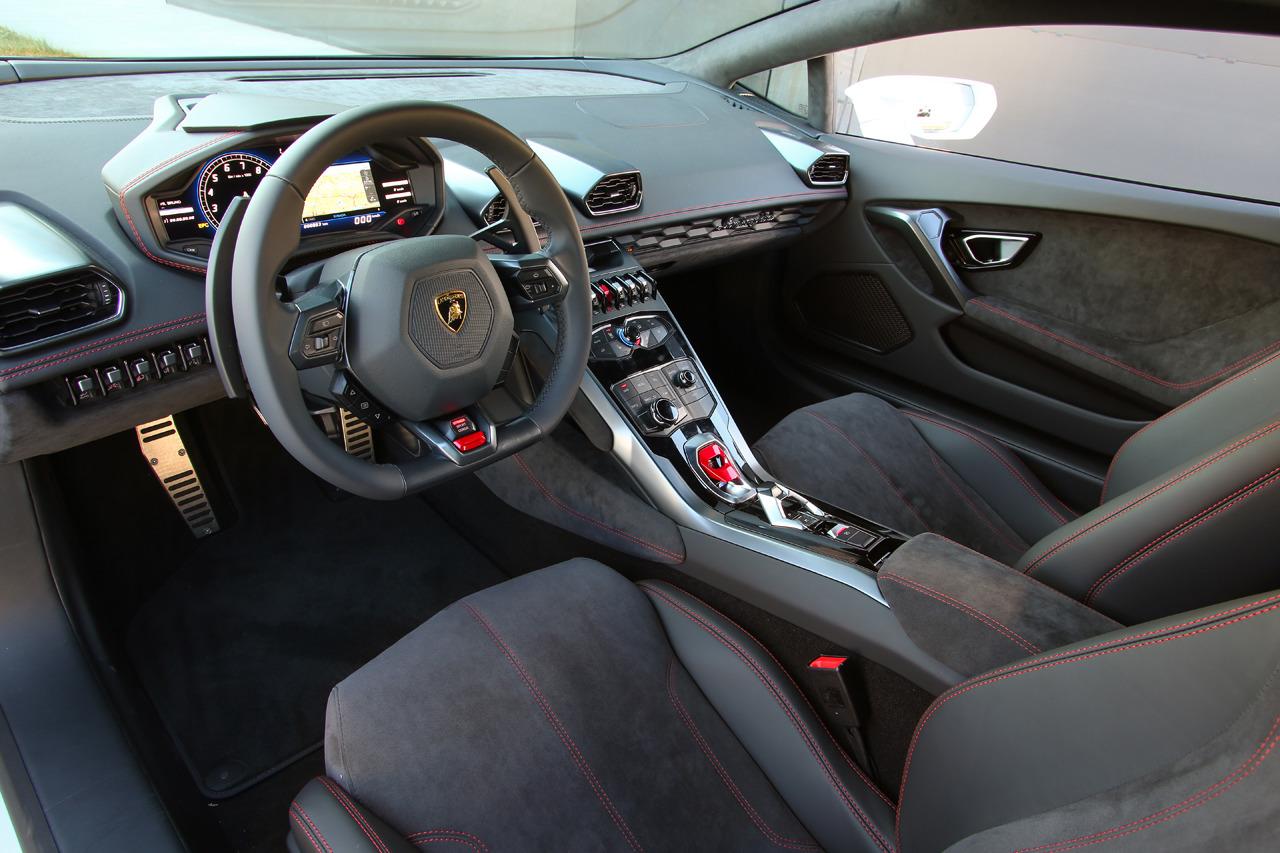
The theme continues with the interior, which features hexagonal air vents and a steering wheel with a hexagonal center. The center console looks like the control panel for a fighter airplane, complete with an engine start button designed to look like a missile arming switch.
Powertrain
Yet this sleek supercar is propelled not by a jet engine, but by a modified version of the 5.2-liter V10 from the Gallardo.
Among the improvements is a new system called Iniezione Diretta Stratificata (IDS), which combines conventional fuel injection with direct injection.
Lamborghini says the Huracán will do 0 to 62 mph in 3.2 seconds, 0 to 124 mph in 9.9 seconds, and reach a top speed of 202 mph.
Backing up the V10 is a new seven-speed dual-clutch transmission called Lamborghini Doppia Frizione (LDF).
This should provide fast shifts worthy of a supercar like the Huracán, but but also more civility than the Aventador’s single-clutch gearbox, which reportedly features shifts that are as violent as they are fast.
In “Corsa” (Italian for “race”) mode, the LDF transmission will feature launch control, and a program that allows the transmission to pre-select gears for even quicker gear changing.
Finally, an all-wheel drive system (the “4” in LP610-4) helps get the power to the ground. the default torque split is 30/70 front/rear, but the Huracán can send up to 50 percent of its power to the front wheels, or 100 percent to the back wheels, depending on conditions.
Chassis
That powertrain won’t have much weight to move. The Huracán’s chassis is an aluminum spaceframe, with a rear bulkhead and transmission tunnel made from carbon fiber.
Lamborghini previously quoted the Huracán’s dry curb weight at 3,135 pounds.
Like most modern performance cars, it also comes with modern electronics, including Lamborghini Dynamic Steering variable-ratio electronic power steering, and magnetorheological dampers.
These adjustable components are controlled through a system called ANIMA, which stands for Adaptive Network Intelligent MAnagement.
That may sound like the asset management software for an envelope manufacturer (it’s also Italian for “soul”), but it features three modes – Strada, Sport, and Corsa – that control the behavior of the engine, transmission, all-wheel drive, and suspension.
Also helping to keep the driver in control are the brakes: carbon-ceramic rotors that measure 15 inches in front, and 14.2 inches in back.
Performance
With all of that technology, Lamborghini has clearly made an effort to replace the circa-2003 Gallardo with something more current, but what really matters is the performance.
Lamborghini says the Huracán will do 0 to 62 mph in 3.2 seconds, 0 to 124 mph in 9.9 seconds, and reach a top speed of 202 mph.
That’s 0.2 second faster to 62 mph than a Ferrari 458 Italia, which has an identical top speed to the raging bull.
In addition, Lamborghini says the Huracán is significantly faster around Italy’s Fiorano test track than the outgoing Gallardo LP560-4 but, then again, it should be.
Price
Lamborghini has not announced U.S. pricing for the Huracán, but it the European base price is reportedly 201,000 euros, or around $275,000.
Deliveries are set to begin later this year, but Lamborghini has already received over 700 orders for the car. If you want one, start planning that bank robbery now.


