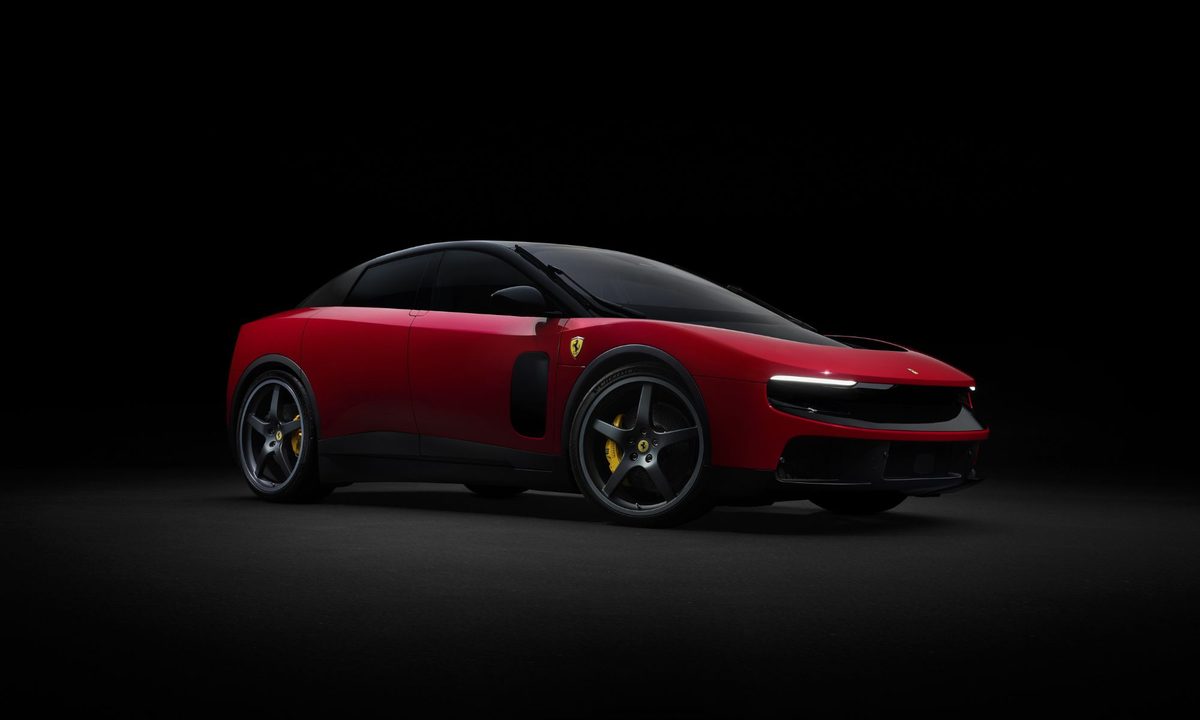
Ferrari has officially entered the electric era with the unveiling of the all-new Ferrari Luce, the first fully electric production car in the company’s history. Revealed in Rome, the Luce marks one of the biggest shifts the Maranello-based automaker has made since the company was founded in 1939.
For years, Ferrari resisted going fully electric. The company repeatedly argued that emotion, sound, and driver engagement were core to the Ferrari experience, something enthusiasts believed could not exist without a combustion engine. Even when rivals like Porsche launched EVs such as the Porsche Taycan and brands like Lamborghini began discussing electrification strategies, Ferrari largely stayed focused on hybrids and traditional performance cars.
That changed as emissions regulations tightened globally and EV technology matured enough to support the kind of performance Ferrari customers expect. Ferrari first outlined its “multi-energy strategy” in 2022, confirming electrification would become part of the brand’s future without replacing combustion engines entirely.
The result is the Ferrari Luce, a car Ferrari says is not simply “an electric Ferrari,” but an entirely new type of Ferrari built around an all-electric architecture. The Ferrari Luce was designed in collaboration with LoveFrom, the creative design firm founded by former Apple Chief Design Officer Jony Ive and industrial designer Marc Newson. Working alongside Ferrari design chief Flavio Manzoni, the team developed both the exterior styling and the futuristic interior of Ferrari’s first fully electric car. The Luce features a minimalist design language with extensive use of glass and aluminium, giving the EV a distinctly different look compared to traditional Ferrari models.
And that design is already proving divisive
Unlike Ferrari’s traditionally aggressive and sculpted supercars, the Luce adopts a much smoother, cleaner appearance dominated by a massive glasshouse design and floating aerodynamic wings. Ferrari describes it as “shell-like,” while critics online have compared it to a futuristic crossover more than a traditional Ferrari.
The proportions are also different from what many expect from the brand. The Luce is Ferrari’s second four-door model and its first with five seats. It rides on enormous 23-inch front and 24-inch rear wheels, making it one of the largest road-going Ferraris ever built.
Underneath the controversial styling is an extremely ambitious EV platform. The Ferrari Luce uses four independent electric motors – one for each wheel – producing a combined 1,050 horsepower (772kW). Ferrari claims a 0-100km/h sprint in just 2.5 seconds, 0-200km/h in 6.8 seconds, and a top speed exceeding 310km/h.
Power comes from a large 122kWh battery pack developed in-house at Maranello using 800V architecture. Ferrari says the car supports charging speeds up to 350kW and can recover around 70kWh of charge in 20 minutes under ideal conditions. The estimated driving range is over 530km.
The Luce also introduces several technologies never before seen on a Ferrari road car. These include active aerodynamic grilles, four-wheel independent torque vectoring, active suspension derived from the Ferrari F80 hypercar, and Ferrari’s new “Torque Shift Engagement” system, which attempts to recreate progressive acceleration feel through paddle-controlled torque delivery.
Ferrari says it achieves the lowest drag coefficient ever seen on one of its road cars thanks to its smooth bodywork, active aerodynamic grilles, and adaptive ride height system that lowers the front by 10mm at higher speeds.
So, what’s up with the Luce – is it worth the hype?
Perhaps unsurprisingly, Ferrari has also spent considerable effort trying to address the emotional side of EV driving. Instead of fake engine sounds, the Luce uses accelerometers mounted inside the drivetrain to capture real vibrations and mechanical frequencies from the electric motors. Ferrari then amplifies and refines those sounds both inside and outside the vehicle to create what it calls an “authentic and functional” soundtrack.
Inside, the Luce looks more like futuristic consumer electronics than a traditional sports car. The cabin features OLED displays developed with Samsung Display, a rotating center control panel, extensive use of recycled aluminum and glass, and a 21-speaker 3,000W audio system.
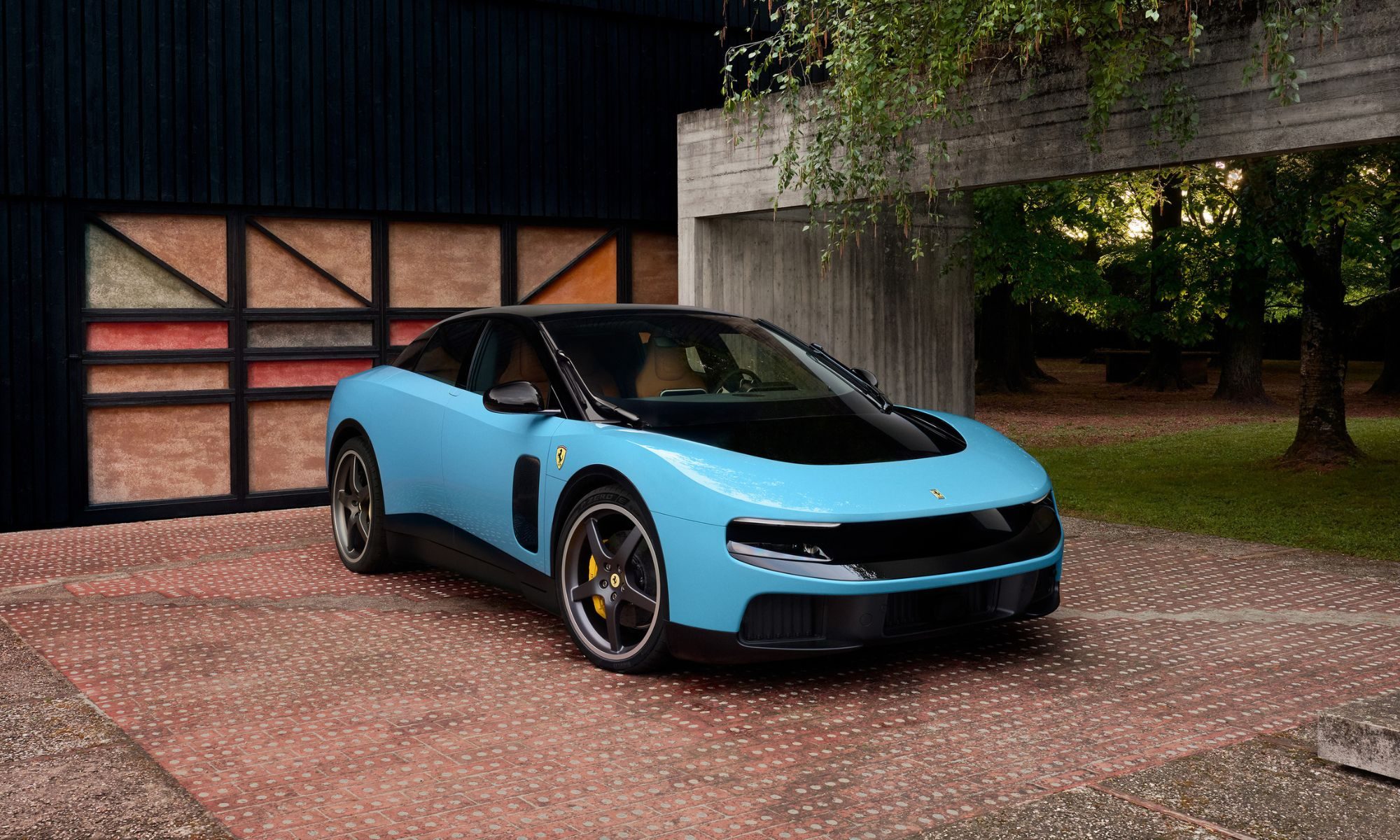
The EV platform also enables a lower centre of gravity and improved weight distribution for sharper handling. Ferrari’s new Vehicle Control Unit manages power delivery and dynamics in real time, while the brand’s first electric all-wheel-drive system uses advanced torque vectoring for better responsiveness.
Whether Ferrari enthusiasts fully embrace the Luce remains uncertain. But one thing is clear: Ferrari is no longer treating electrification as a side experiment. The Luce represents the company’s clearest acknowledgment yet that the future of high-performance cars will include EVs – even if that future looks very different from Ferrari’s past.