  1. Home
  2. Cars
  3. Legacy Archives

Do leaked patent renderings show a Ferrari F12 GTO or SP Arya? Doesn’t matter. It’s hideous

Add as a preferred source on Google

Is it a Ferrari F12 GTO or the one-off Ferrari SP Arya?

A series of Ferrari patent drawings have been sweeping the Internet. Initial reports suggested that they might depict a GTO version of Ferrari’s clinically insane F12. However, it appears that the images might actually show a one-off Ferrari called the SP Arya.

Recommended Videos

The car can be identified as the 599-based Arya given its grille and the high waistline. From another angle, though, some of the lines, like the indented side scoops, suggest the F12. 

The one-off Ferrari Arya is named for the man who commissioned it: Cheerag Arya. The 32-year-old petrochemical tycoon is an avid Ferrari collector and already has an F40 and an Enzo.
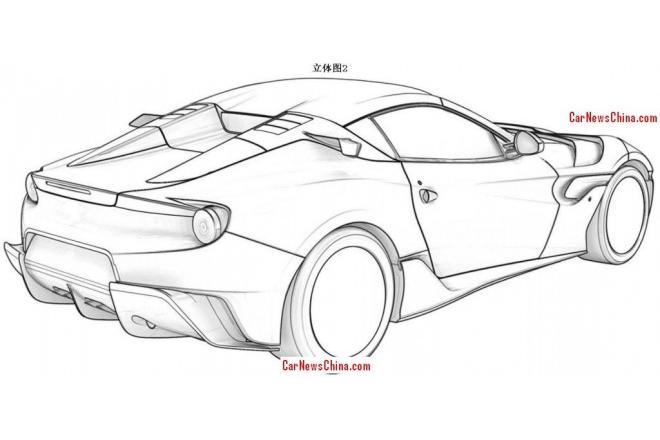
Ferrari SP Arya Rear Three Quarter 

Regardless of which future Ferrari these images show, the renderings are likely legitimate, as the Chinese patent office is renowned for being leakier than a 20-year-old Yugo. Boom! Yugo slam!

Still, people with eyesight might still be hoping these images are either fake or at least represent the reprehensible taste of one Ferrari collector. If Ferrari is the Mona Lisa of the car world, the one in these drawings is the elephant man.

The front splitter and areo package are so misshapen I want to give this car some anti-inflammatory medication. Still though, Ferrari probably has some very sound reasons for this aesthetic catastrophe.

Ferrari SP Arya Rear Three Quarter
Image used with permission by copyright holder

No news suggests that Arya suffered a head injury during the design process, so we are going to have to assume that this car reflects his taste.

If this is the Ferrari Arya, and Arya really does love these lines, I have a 1992 Acura Integra with a badly fitting body kit he might be interested in.

Peter Braun
Former Digital Trends Contributor
Peter is a freelance contributor to Digital Trends and almost a lawyer. He has loved thinking, writing and talking about cars…
Chinese drivers have figured out a silly way to fool Tesla Autopilot and it involves doll heads
God forbid a Tesla wants to drive itself!
Tesla Autopilot

Tesla's driver-monitoring systems are designed to ensure drivers keep their eyes on the road while using Autopilot and other assisted-driving features. But in China, some Tesla owners have reportedly found an unusual workaround: tiny plastic doll heads.

According to a recent Wired report, a growing niche market has emerged around figurines and gadgets designed to trick Tesla's in-cabin camera into believing an attentive driver is sitting behind the wheel. The most popular version involves miniature celebrity heads, often resembling actors or public figures, mounted near the rearview mirror to block the camera's view of the actual driver.

Read more
Tesla FSD update adds a new dialog that previews your car’s parking plan
Version 14.3.4 surfaces the car's intended parking method on screen before it begins the maneuver, a change that makes supervised autonomy feel more predictable.
Tesla FSD Supervised featured

Tesla has started rolling out Full Self-Driving (Supervised) version 14.3.4, and one of its standout additions makes the end of a trip feel notably more polished. The update introduces a new dialog box that appears as the car approaches its destination, showing the driver exactly how it plans to park before it begins the maneuver.

A robotaxi-style arrival experience

Read more
This tiny sensor could help self-driving cars and robots see better in the dark
Penn State researchers have developed a light-adaptive photomemristor modeled on the human eye that achieves over 95% visual accuracy in shifting light conditions.
Waymo Jaguar I-PACE sensors close up

Penn State researchers have developed a light-adaptive sensor component that could make autonomous vehicle cameras and robots far more reliable in shifting lighting conditions. The work, published Monday in Nature Communications, takes direct cues from how the human eye adjusts between bright and dark environments.

Biology as a blueprint

Read more