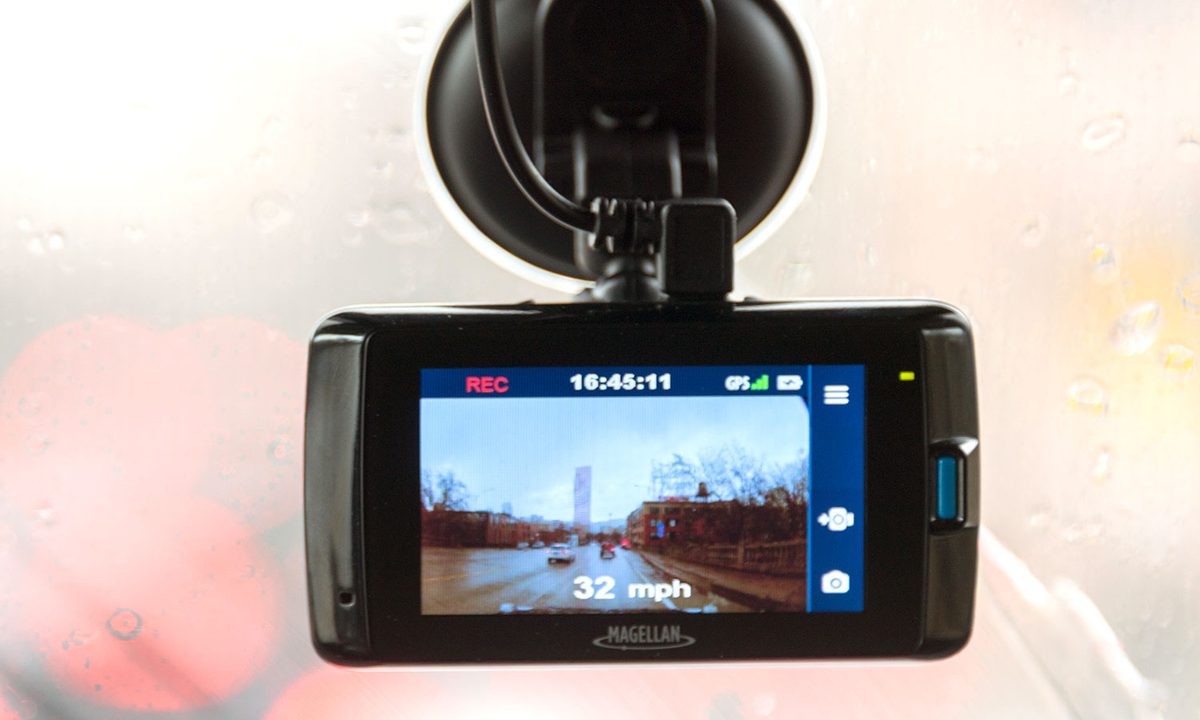
“The video quality is good, but the features that could set this MiVue 420 apart fail to deliver.”
- Daytime video quality
- Easy to use MiVue Manager
- Inaccuracy of Driver Assistance Alerts
- Video quality in low light
- Narrow field of vision
“Why you can trust Digital Trends – We have a 20-year history of testing, reviewing, and rating products, services and apps to help you make a sound buying decision. Find out more about how we test and score products.“
Magellan is widely known for helping guide you, both on and off-road, with their popular navigation systems. But now they have shifted their focus to also watching the road ahead with a series of dash cameras. With high definition video and various safety features, the Magellan MiVue 420 may be the co-pilot you are looking for.
Specs and initial setup
The Magellan MiVue 420 camera will cost you $175 and ships with an 8GB MicroSD card (expandable up to 128GB). The MiVue 420 unit has a large 2.7” LCD display, 140-degree viewing angle, and a 1296P (2304×1296) camera. The viewing angle is marketed as panoramic or wide-angle but similarly priced cameras from brands like Vantrue have larger 160 to 170 degree viewing angles. The camera is constructed of quality black plastic and features four menu navigation buttons on the right side and a single power button on the left.

In the package, you will find the MiVue 420 camera, suction mount, MicroSD to SD card adapter, and 12’ Mini USB Power Cable. Setup is simple as the removable suction mount adheres to the windshield firmly. The camera slides onto the mount and can be calibrated in the MiVue settings so that the horizon line, vehicle hood line, and center of the driving lane align properly. This setup is crucial to ensure that the lane departure and forward collision alert system are as accurate as possible.
Hitting the road
The MiVue 420 will begin recording as soon as it is plugged into a powered 12V outlet in your vehicle. You can specify either 1, 3, or 5-minute video segments in the MiVue settings and the system will override the oldest clips that have not been marked as an “Impact” recording. These “Impact” clips are triggered when the Magellan system senses an accident and saves the video, GPS coordinates, and time stamp so that it cannot be overridden.
The Lane Departure system cannot tell when you are intentionally changing lanes.
The “Parking Guard” feature of the MiVue 420 can be enabled and will trigger when it senses motion in front of the camera while the car is parked. This feature worked well and captured various pedestrians walking in front of our car while parked outside a shopping center.
The overall quality of the video during the day is good and the higher resolution video puts the Magellan MiVue 420 on par with most of the competition. However, once you start to lose daylight the quality suffers and the MiVue seemed to be slightly below average in lower light. The basic shapes and details of other cars and larger signs are still distinguishable, but they lack the sharpness when compared to even lower resolution cameras like the Thinkware F750.
Vehicle safety features
In addition to the standard dash camera features that one would expect, the MiVue 420 has additional driver assistance alerts to give you a warning and avoid a potential accident. Once the camera has been positioned correctly and calibrated in the settings, you can receive lane departure and forward collision warnings. We found that both alerts were better served at highway speeds and are best to be avoided for driving around town.

The forward collision warning worked well at higher speeds to ensure you weren’t approaching a vehicle too fast, but in town, it would trigger at every stop light where a vehicle was ahead of the car. Similarly, the lane departure alert was accurate on most straighter highways but would trigger every few moments around town or on a windy road. Also, the lane departure system cannot tell when you are intentionally changing lanes and can become annoying on longer trips.
MiVue Manager
To make it easier to view and share your recorded video, Magellan has developed the MiVue Manager program for Mac and PC. With the free application, you will be able to plug in the MiVue 420’s Micro SD card and organize all the data that is captured during the various driving events. The program is very user-friendly and allows you to narrow down your videos based on the day or types of recording (Event, Normal, or Parking).
When playing the clips, you can see instant data such as speed, location, and even the G-force on the vehicle from different angles as you were driving. You cannot edit the video from within the program but you can save a local copy, take a screenshot, or even share directly to Facebook and Youtube. The MiVue Manager program was easily one of the best media managing programs for a dash camera that we have used.
Our Take
Overall, the Magellan MiVue 420 offers great video quality and a simple user interface at a relatively reasonable price. However, users looking forward to the addition of Driver Assistance Alerts will be let down by the results.
Is there a better alternative?
Yes, something like the new Vava Dash offers similar video quality (despite a lower resolution) and user experience with a lower price and a more innovative package.
How long will it last?
Magellan seems serious about being a contender in the market and owners can look forward to additional updates. Future software updates could really fix the Driver Assistance flaws and make this device more interesting.
Should you buy it?
No, unless you simply have to have inconsistent features like the Driver’s Assistance Alerts, there are better quality cameras at a similar price.