
The 12-minute EV charge dream is coming closer to reality
A Korean research team has developed a self-adjusting protective layer that suppresses dendrite growth in lithium-metal batteries, paving the way for EVs that could charge fully in just 12 minutes.

Lamborghini kills its upcoming all-electric Lanzador because of nearly zero interest
Lamborghini cancels its all-electric Lanzador after weak demand, pivoting to plug-in hybrids by 2030 as CEO says EVs lack emotional appeal for buyers.

Why Tesla should worry about BYD’s latest move
BYD is finally rolling out its 1360kW megawatt flash chargers in China, and the specs leave Tesla Superchargers in the dust with 400km of range added in about five minutes.

The next big car threat is an AI backdoor you can’t detect
Georgia Tech researchers discovered VillainNet, a dormant AI backdoor that lets hackers hijack self-driving cars with 99% success while remaining invisible to current security tools.

Here’s your chance to grab a cheaper Cybertruck but you have to hurry
Tesla dropped the Cybertruck’s price for a limited 10-day window, aiming to spark demand after slow sales. It’s the lowest price yet — but the offer won’t last.

Rivian adds Apple Watch app to control EVs from your wrist
Rivian’s new Apple Watch app lets drivers lock, unlock, check charge levels and control climate settings directly from their wrist, expanding the company’s connected EV ecosystem.
Researchers find Tesla Model 3 and Cybertruck are hackable machines on wheels
Researchers show that Tesla’s Model 3 and Cybertruck can be manipulated through internal network access, raising major concerns about cybersecurity in modern connected vehicles.

You’ll soon be able to use ChatGPT, Gemini, and Claude in Apple CarPlay
Apple is opening CarPlay to third-party AI chatbots like ChatGPT, Gemini, and Claude with iOS 26.4.

Ford wants to make EVs more affordable for you
Ford is shrinking EV batteries and cutting wiring complexity to reduce costs, aiming to price future electric vehicles closer to traditional gasoline cars.

This new aluminum-based EV battery could solve cold-weather range and charging issues
Researchers from the Chinese Academy of Sciences have successfully field-tested a new aluminum-based lithium-ion battery that aims to address winter range loss while supporting fast charging.

After hidden doors, yoke-style half-steering wheels could go out of vogue soon
China's upcoming 2027 safety rules could effectively ban yoke-style steering wheels after targeting flush door handles, signaling a broader shift toward traditional, safety-focused vehicle design.

A key flaw of self-driving cars could just be poor understanding of humans
According to an engineering psychology expert, autonomous car drivers have come to face a vigilance task, raising questions on the convenience of self-driving cars.

Rivian’s new Watch app turns your wrist into a car remote
Rivian is launching a full Apple Watch app that lets EV owners lock, unlock, start, and control vehicle functions directly from the wrist, expanding support across Gen 1 and Gen 2 models.

Toyota just introduced its own robotaxi to tackle Tesla and Waymo
Toyota and Pony.ai unveil a mass-produced bZ4X robotaxi, signaling a serious, manufacturing-driven push into autonomous mobility, starting in China, with global ambitions clearly in sight.

Ferrari’s first electric car is Luce, rocking interiors by ex-Apple designer Jony Ive
Jony Ive's firm LoveFrom worked with Ferrari to design the Luce, and the interiors looks unlike any sports car we have seen before.

A Chinese EV giant could be testing superchargers with an absurd output
Leaked filings suggest BYD is testing 2.1-megawatt EV chargers that could slash charging times to minutes, raising big questions about infrastructure, grids, and future road trips.

2027 Audi A6 Sportback e-tron and Q6 e-tron have some of the coolest tech we’ve seen in a car
Audi's 2027 A6 Sportback e-tron and Q6 e-tron bring next-gen tech, gaming, AI, and comfort features you actually want, plus refreshed graphics, active privacy, and more.

Apple might soon allow Gemini and ChatGPT on CarPlay for voice control
According to Bloomberg, Apple is planning to allow third-party AI chatbots for CarPlay, opening the doors for ChatGPT and Gemini in the near future.

Hyundai has no Kona EV plans for 2026, but it isn’t retiring for good
Hyundai says the Kona Electric will skip the 2026 model year in the U.S. due to stock exceeding demand, but promises a return with a refreshed 2027 version.

Porsche might shelve plans for electric Boxster and Cayman sports cars
Porsche may shelve plans for electric Boxster and Cayman models as costs rise, EV demand softens, and delays mount, signaling a broader rethink of sports-car electrification.

Tesla adds a new Model Y AWD option, and a new price point for you
Tesla listed a $41,990 Model Y AWD trim in the US, adding a new step above the Standard rear-wheel drive model as buyers face higher effective costs and tougher EV competition.

Pop-out door handles may be on their way out as China cracks down on the controversial design
China has banned hidden door handles on new cars, citing safety concerns around the controversial design.

This new battery tech will let you fast-charge your EV without hurting battery health
Chinese EV battery giant CATL has developed a new battery that supports ultra-fast charging while preserving long-term battery health.

Honda just tested an AI system that lets your car automatically report potholes and damaged signs
Honda just tested an AI system that lets vehicles detect and automatically report potholes, damaged signs, and other road hazards.

You might finally see CarPlay Ultra beyond a $200,000 Aston Martin
CarPlay Ultra has been hard to find outside a $200,000 Aston Martin, but it may finally reach a mainstream Hyundai or Kia model later this year, signaling Apple’s first real chance to scale its bespoke dashboard system.

Slate wants to build more than just a cheap truck
Slate Auto’s CEO says the affordable EV pickup success could lead to a wider lineup of electric vehicles in the future.
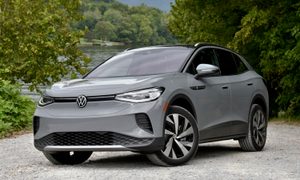
Volkswagen should be a bigger EV player — and maybe it can be
Volkswagen's EV plans for the United States haven't worked out, but that doesn't mean the German automaker should abandon them.

Uber will soon have you riding in style in a driverless Mercedes-Benz S-Class
Uber has teamed up with Nvidia and Mercedes-Benz to bring driverless S-Class robotaxis to select cities.

Volvo says it will continue to offer CarPlay as rivals shift away
Volvo confirms it will continue supporting Apple CarPlay, distancing itself from rivals dropping third-party smartphone integration in favor of proprietary infotainment systems.

Tesla kills Models S and X in a shocking twist to make more robots
Tesla will end Model S and Model X production in 2026 as it pivots to Optimus robots, marking a strategic shift away from legacy premium EVs.

New sensor tech may help cars and planes detect black ice before it’s too late
University of Michigan researchers have developed dual sensors that detect black ice and freezing rain early, offering safer driving and aviation by identifying hazards before they become dangerous.

Waymo triggers another probe over its robotaxis passing stopped school buses
The NTSB has launched an investigation into Waymo following multiple reports of its self-driving taxis passing stopped school buses in Austin.

Tesla Model 3 got outsold by an EV from a Chinese smartphone brand
Xiaomi's SU7 electric sedan has outsold Tesla's Model 3 in China for the first time, marking a potential shift in EV dominance and boosting Chinese brands while posing a fresh challenge to Tesla's strategy.

Your future BMW electric M3 will still sound like a real M car
BMW’s electric M3 will feature authentic audio built from real M-engine recordings, offering selectable sound profiles and simulated gear shifts to preserve the signature M driving experience.

This is the tech that makes Volvo’s latest EV a major step forward
Volvo is no stranger to EVs, but the EX60 SUV shows the automaker is learning from past experience.

Your cheap Chevrolet EV might not be cheap for Long
GM will end the Chevy Bolt EV’s limited production run by mid-2027 and shift its Kansas factory to other lines.

Tesla kills Autopilot for good and Musk warns of FSD price hikes
Tesla is ending Autopilot and steering customers toward higher-priced FSD subscriptions, signalling a major shift in its driver-assistance strategy.

Buying a new Tesla? You might want to double-check if Autosteer is included
Tesla has quietly removed the Autosteer feature from all Model 3 and Model Y variants, including the top-end Performance trims.