  1. Home
  2. Cars
  3. News

Why Tesla should worry about BYD’s latest move

The Chinese automaker is scaling up chargers that hit 1,360kW and store grid power for peak times.

Add as a preferred source on Google
Lighting, Person, People
BYD

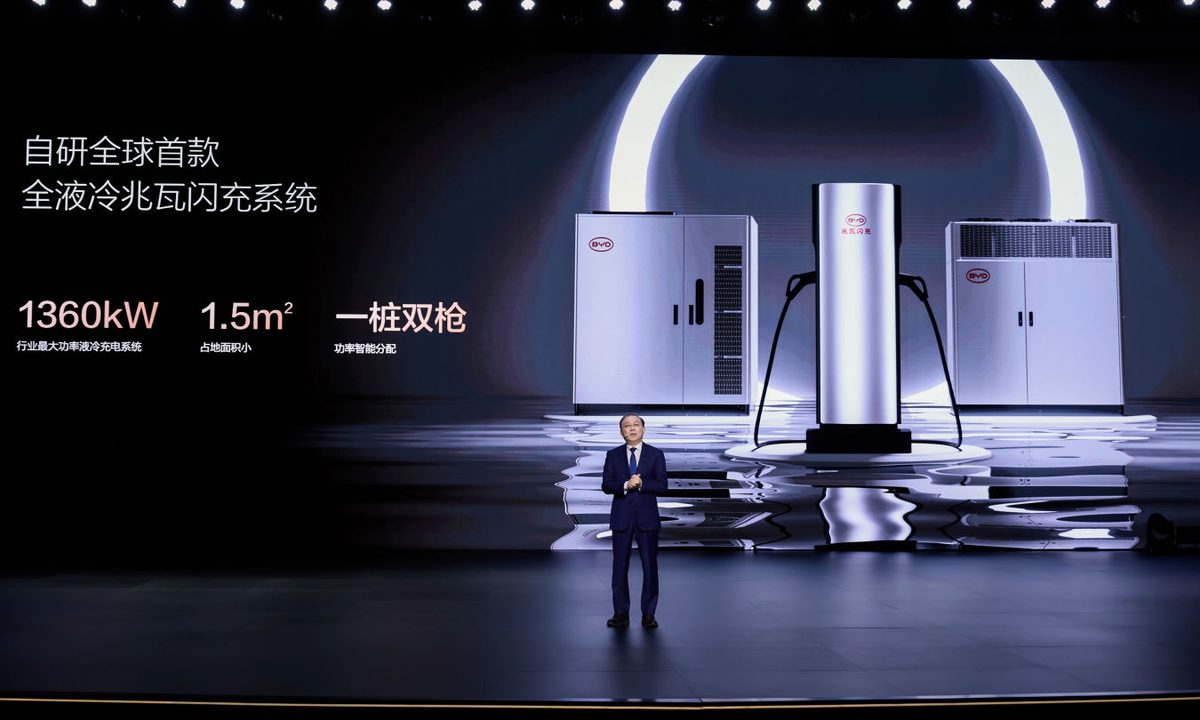
Tesla has a new problem in China. BYD is finally rolling out its megawatt flash chargers at scale, and the specs leave Superchargers in the dust. These new units push 1360kW, enough to add roughly 400 kilometers of range in about five minutes.

The timing matters. BYD has talked up this technology before but held back on deployment. Now construction is visibly underway based on the social media posts as reported by Car News China, and the company is betting that ultra-fast charging will pull more drivers to its EVs.

What 1360kW actually buys you

The numbers are hard to ignore. BYD’s system runs at 1000V and 1000A to hit that peak, a level Tesla hasn’t reached with its Superchargers. The company claims “1 second 2 kilometers,” which trims a 400km top-up to roughly five minutes plugged in.

Recommended Videos

Liquid cooling keeps the hardware from melting under that load. It runs through both the cables and the terminal itself, so you can sustain max current without overheating. The design also solves a physical annoyance, dual cables suspended from a pulley system. No more wrestling heavy lines or hunting for a cord that reaches your port.

There is a smart grid play here too. The piles store electricity during off hours and release it when demand spikes. That keeps output steady at 1MW and dodges the expensive demand charges that kill fast-charger economics.

Where Tesla still leads and where it doesn’t

The gap is stark. Tesla’s V3 Superchargers cap out at 250kW. Even the upcoming V4 cabinets, expected to hit 350kW for Cybertruck, fall short of BYD’s 1360kW peak. Real-world charging curves will taper, but that headroom still matters.

Charging speed is now a purchase driver. Tesla built its empire on range and network size. BYD is attacking the other variable, how fast you can leave. Liquid cooling means these chargers can sustain high power without the sag that plagues older fast chargers.

Cost explains the delay. The source notes this hardware is expensive, which is why BYD took so long to scale. But with construction now visible, the company is signaling that the math finally works. Local battery storage also helps keep prices reasonable by flattening demand peaks.

What to watch in the charging war

Network size still favors Tesla. Superchargers are everywhere and they just work. But BYD is closing the gap where it stings most, the actual minutes you spend waiting. The pulley system and liquid cooling also suggest these piles might stay reliable as more EVs pile on.

The open question is rollout speed. BYD needs to prove it can build this network as fast as it builds cars. If the deployment matches the charger specs, Tesla might need an answer sooner than the next Supercharger update.

Keep an eye on construction timelines in China. That is where this race will be won or lost.

Paulo Vargas
Paulo Vargas is an English major turned reporter turned technical writer, with a career that has always circled back to…
Everything new coming to CarPlay in iOS 27
CarPlay's most meaningful update in years is hiding behind the Siri AI headlines.
Car, Transportation, Vehicle

Apple barely talked about CarPlay at its WWDC 2026 keynote, giving most of the spotlight to Siri AI and the broader Apple Intelligence additions in iOS 27. But that doesn't mean CarPlay is a no-show this year.

The Cupertino giant buried most of the CarPlay updates in a developer-only video, and, as it turns out, there's genuinely more here than you would have expected. As a CarPlay user myself, I'd say some of these features are long overdue, while others tag along with the broader iOS 27 redesign.

Read more
We just got a hot signal that a Tesla and SpaceX merger could happen, after all
Tesla

For years, the idea of Tesla and SpaceX becoming a single company has lived somewhere between ambitious business theory and Elon Musk fan fiction. The two companies already share DNA, leadership influence, engineering talent, and long-term goals. But every time the topic surfaced, it felt more like an interesting thought experiment than a realistic possibility. Now, one of the most important people at SpaceX has added fresh fuel to the conversation.

Speaking in a recent CNBC interview, SpaceX President and COO Gwynne Shotwell was asked about the possibility of closer ties between Tesla and SpaceX. Her response wasn’t a flat-out denial. In fact, she suggested that bringing the two companies together could make life a little easier for Musk. That may sound like an offhand comment, but coming from Shotwell, it’s noteworthy. She’s been at SpaceX since its earliest days and remains one of the company's most influential executives.

Read more
Chinese drivers have figured out a silly way to fool Tesla Autopilot and it involves doll heads
God forbid a Tesla wants to drive itself!
Tesla Autopilot

Tesla's driver-monitoring systems are designed to ensure drivers keep their eyes on the road while using Autopilot and other assisted-driving features. But in China, some Tesla owners have reportedly found an unusual workaround: tiny plastic doll heads.

According to a recent Wired report, a growing niche market has emerged around figurines and gadgets designed to trick Tesla's in-cabin camera into believing an attentive driver is sitting behind the wheel. The most popular version involves miniature celebrity heads, often resembling actors or public figures, mounted near the rearview mirror to block the camera's view of the actual driver.

Read more