  1. Home
  2. Cars
  3. News

The 12-minute EV charge dream is coming closer to reality

Scientists suppress the dendrite growth that has kept next-gen batteries stuck in the lab.

Add as a preferred source on Google
EV
EV Unsplash

A Korean research team says it has solved the biggest technical hurdle standing between today’s EVs and a 12-minute charge.

The breakthrough targets dendrites. Those are the needle-like crystals that grow inside lithium-metal batteries during fast charging. They’ve kept advanced cells from leaving the lab by shortening lifespan and increasing fire risk.

Recommended Videos

Now researchers at KAIST have developed an intelligent coating that rearranges itself. It keeps lithium ions moving smoothly, even under extreme electrical load.

A self-adjusting layer that mimics traffic flow

The team added thiophene to the battery electrolyte. That creates a protective barrier with a flexible electronic structure.

Think of it like a smart traffic system that shifts lanes as cars merge. When lithium ions move, the charge distribution inside the layer changes. It creates optimal pathways on the fly.

Simulations confirmed this design beats existing commercial additives. The result was consistent charging at currents exceeding 8 mA per cm². That’s more than double what the field usually considers high.

Real-world testing confirms mechanical stability

The researchers didn’t just simulate success. They used in-situ atomic force microscopy to watch the battery at the nanometer scale during operation.

Even under high power, lithium deposited and removed itself uniformly on the surface. That visual proof confirms the mechanical reliability needed for real driving conditions.

The technology also works with common cathode materials including lithium iron phosphate and lithium nickel-cobalt-manganese oxide. That means it could integrate into existing EV battery production lines without a complete overhaul.

What comes next for ultra-fast EVs

This work tackles the fundamental instability at the electronic structure level. It’s not just a material tweak.

By enabling stable high-current operation, it opens the door for lithium-metal batteries to finally reach real-world use. The team specifically mentions ultra-long-range electric vehicles as an immediate target.

But the applications stretch further. Urban air mobility and next-gen energy storage systems could also benefit from the density and speed this design allows.

The next step will be moving from demonstration to scaled manufacturing. That process will determine how soon you might see that 12-minute charge at an actual charging station.

Paulo Vargas
Paulo Vargas is an English major turned reporter turned technical writer, with a career that has always circled back to…
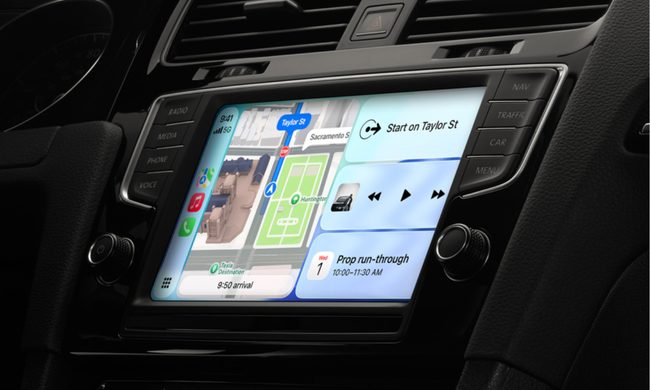
Everything new coming to CarPlay in iOS 27
CarPlay's most meaningful update in years is hiding behind the Siri AI headlines.
Car, Transportation, Vehicle

Apple barely talked about CarPlay at its WWDC 2026 keynote, giving most of the spotlight to Siri AI and the broader Apple Intelligence additions in iOS 27. But that doesn't mean CarPlay is a no-show this year.

The Cupertino giant buried most of the CarPlay updates in a developer-only video, and, as it turns out, there's genuinely more here than you would have expected. As a CarPlay user myself, I'd say some of these features are long overdue, while others tag along with the broader iOS 27 redesign.

Read more
We just got a hot signal that a Tesla and SpaceX merger could happen, after all
Tesla

For years, the idea of Tesla and SpaceX becoming a single company has lived somewhere between ambitious business theory and Elon Musk fan fiction. The two companies already share DNA, leadership influence, engineering talent, and long-term goals. But every time the topic surfaced, it felt more like an interesting thought experiment than a realistic possibility. Now, one of the most important people at SpaceX has added fresh fuel to the conversation.

Speaking in a recent CNBC interview, SpaceX President and COO Gwynne Shotwell was asked about the possibility of closer ties between Tesla and SpaceX. Her response wasn’t a flat-out denial. In fact, she suggested that bringing the two companies together could make life a little easier for Musk. That may sound like an offhand comment, but coming from Shotwell, it’s noteworthy. She’s been at SpaceX since its earliest days and remains one of the company's most influential executives.

Read more
Chinese drivers have figured out a silly way to fool Tesla Autopilot and it involves doll heads
God forbid a Tesla wants to drive itself!
Tesla Autopilot

Tesla's driver-monitoring systems are designed to ensure drivers keep their eyes on the road while using Autopilot and other assisted-driving features. But in China, some Tesla owners have reportedly found an unusual workaround: tiny plastic doll heads.

According to a recent Wired report, a growing niche market has emerged around figurines and gadgets designed to trick Tesla's in-cabin camera into believing an attentive driver is sitting behind the wheel. The most popular version involves miniature celebrity heads, often resembling actors or public figures, mounted near the rearview mirror to block the camera's view of the actual driver.

Read more