1. Home
  2. Cars
  3. Emerging Tech
  4. News

Digital Trends may earn a commission when you buy through links on our site. Why trust us?

Stellantis’ 2027 Dodge Charger Daytona might feature solid-state battery tech

Add as a preferred source on Google
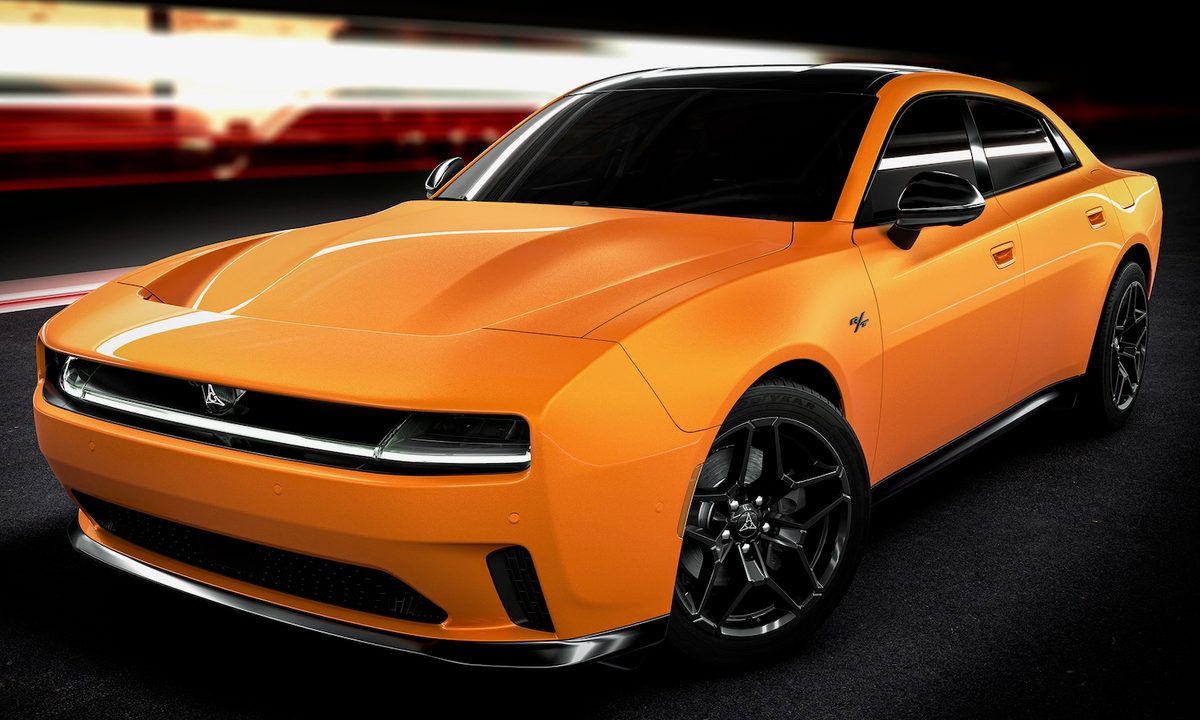
Front three quarter view of the 2024 Dodge Charger Daytona sedan.
Dodge

The battle to use cheaper, more efficient, and safer EV batteries is heating up among automakers.

At the heart of this battle, the development of solid-state battery technology, an alternative to highly flammable and costly lithium batteries, is garnering more and more attention.

For proof, Stellantis, the world’s fourth-largest automaker, is betting on the technology for its next generation of electric vehicles.

The Netherlands-based company announced that it will launch a demonstration fleet of Dodge Charger Daytona EVs that will feature solid-state battery tech made by U.S. startup Factorial.

The demo fleet, expected to launch by 2026, will provide a real-world assessment of Factorial’s technology. Factorial has been partnering with Stellantis since 2021 and is also partnering with the likes of Daimler AG’s Mercedes-Benz and Hyundai.

Besides Dodge, the technology would eventually be deployed on the Stellantis STLA Large multi-energy platform, which includes brands such as Jeep, Chrysler, Alfa Romeo, and Maserati.

Stellantis said that the integration of solid-state battery technology will yield “improved performance, longer driving ranges, and faster charging times in the coming years.”

Factorial, meanwhile, says its technology provides higher energy density, reduced weight, improved performance, and the potential for further reduction in total vehicle cost over time.

Stellantis, Daimler, and Hyundai aren’t the only ones to bet on solid-state battery tech. Toyota, the largest automaker in the world, has heavily invested in the technology. It also created a coalition with Nissan and Panasonic to boost its production in Japan.

So far, making solid-state batteries has remained an expensive endeavor. But steps such as the Stellantis demo fleet and production at scale by the likes of Factorial are expected to improve manufacturing processes and costs over time.

Other automakers, meanwhile, are working on ways to improve lithium batteries. Volkswagen, for one, is developing its own unified battery cell in several European plants as well as one plant in Ontario, Canada.

Nick Godt
Former Freelance reporter
Nick Godt has covered global business news on three continents for over 25 years.
Porsche’s 2027 Taycan gets virtual E-Shift gears hooked to real paddle shifters
Porsche’s is trying to solve one of the most prominent EV hardware problems with software.
Car, Coupe, Sports Car

While electric performance cars have gotten quite fast, especially when it comes to driving in a straight line, they still struggle to replicate the engaging feel of a regular sports car. Missing are the gear changes, the rev build, and the physical feedback that make a sports car feel alive.

Porsche thinks it can fix this with software, and the 2027 Taycan update is its most serious attempt yet. The car comes with something called E-Shift, a system that adds eight virtual gears operated using the paddle shifters behind the steering wheel.

Read more
China has new EV safety rules ready. The US needs to follow in its footsteps
Mandatory battery fire protections and hard power cutoffs show what a tougher EV safety playbook could look like in the U.S.
EV

China's EV safety rules are about to make automakers prove their cars can fail safely, not merely warn people before trouble spreads.

Starting July 1, 2026, two mandatory national standards will require stronger battery safeguards and a physical one-touch way to cut high-voltage power during an emergency. The pressure points are the ones drivers, firefighters, insurers, and regulators can't brush aside for much longer, including battery fires, crash damage, smoke exposure, and rescue access after a severe incident.

Read more
Mercedes’s Chinese partner made an EV that costs under $10,000 and looks deceptively stylish
At around $10,000, the Arcfox Beta T1 has a feature list that embarrasses several $30,000 US EVs.
Car, Transportation, Vehicle

BAIC, the Beijing-based automaker that produces Mercedes-Benz vehicles in China, has launched the refreshed Arcfox Beta T1 on June 16, a compact EV priced roughly between $9,200 and $11,700, depending on the trim.

It's not coming to the United States, but the fact that its most affordable version undercuts the cheapest new car sold here by roughly $13,000 and the cheapest EV by almost $20,000 deserves some attention. What BAIC has built here is a direct indictment of the higher EV costs here in America.

Read more