

CES 2013 proved that automobile technology is growing, and that it’s going to continue that way. We’re approaching a point in history where a car isn’t just a car anymore – it’s a giant, metal computer on wheels, designed to keep you connected to the road and the world. The minutiae of driving are being handed over more and more to technology. Where we once used our eyesight to guide us while reversing, we now have backup cameras with trajectory displays. Where we once needed to check our blindspot when switching lanes, we now have sensors that provide audio/visual warnings. There is, however, another piece of technology that lingers on the horizon, a technology that polarizes opinion from outside and within the industry, and one that could make piloting a car a thing of past, at least for humans anyways. We’re talking, of course, about autonomous vehicles, and while the technology is closer than you think, a few bumps in the road remain before cars will completely drive themselves.
Until now, being driven to work meant your salary was packing more zeros than a runway model’s dress size. But that could all change soon. During last week’s 2013 International Consumer Electronics Show in Las Vegas, no less than two automotive companies displayed autonomous vehicle technology. Lexus, as it so often does, took the safe road, showing off an LS-based Advanced Active Safety Research Vehicle at its press conference. The AASRV is outfitted with radars, cameras, and more sensors atop its hood and roof than a NATO satellite installation, and while it’s easy to mistake a car that drives itself as the ultimate form of convenience, Lexus vice president Mark Templin was eager to point out the company’s primary focus was on safety. From Lexus’ perspective the “smart” car of tomorrow is best served when operating in conjunction with a driver, not in substitute of one.
Audi, as it has grown so accustomed to, stole the show. Not only did it hold a press conference highlighting five focal points for its grand tech strategy, which included expanding areas in connectivity, human-machine interface, infotainment, lightning tech, and driver assistance, but it actually showed off its autonomous vehicle prototype. Well… sort of.

Tucked away beneath a hotel garage off the Vegas strip, the German automaker gave select members of the press a brief glimpse of an A7 equipped with additional sensors that allowed the vehicle to park itself. It might not have been on a crowded road, but Audi’s demonstration showed that the car of the future is more than capable of maneuvering tight spaces and performing complex tasks.
As a quick recap, autonomous vehicles, whether they’re from Lexus, Google, or Audi, use Light Detection and Ranging (LADAR) technology. LADAR revolves around a rapidly rotating laser beam to scans its surroundings and create an outline or “map” thereby allowing a vehicle to navigate independently.
So how far off is a fully-fledged self-driving car? Well, it depends, but it’s not as far off as you think.
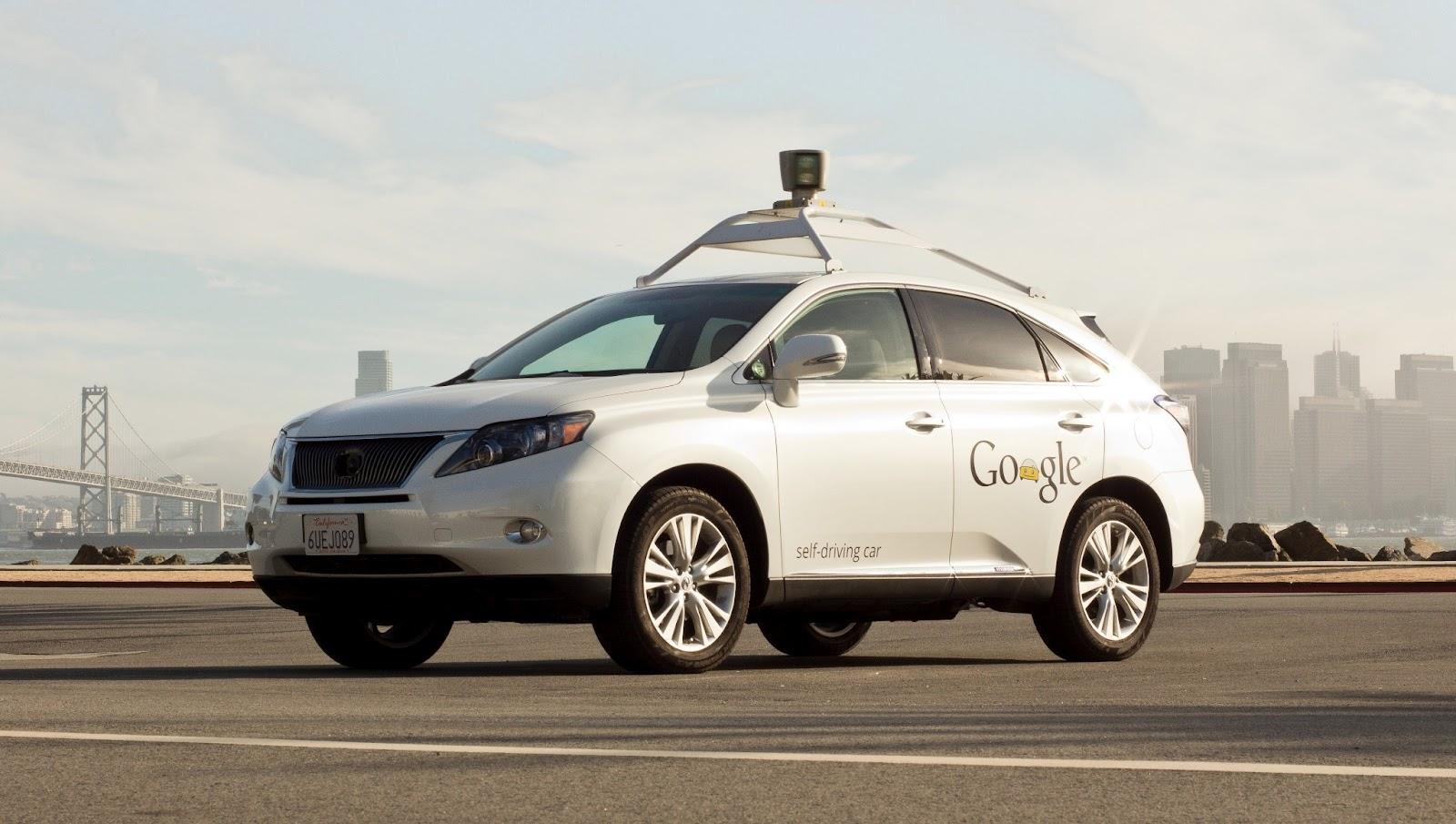
Google has already demonstrated its driverless Priuses on public roads, while Lexus continues to test its own cars at the Toyota Research Institute of North American up in Michigan. Audi’s recent demonstration shows it’s not averse to giving demos of its own, and the company was recently granted license to test autonomous vehicles on public roads in the State of Nevada, along with Google.

The problem here isn’t necessarily how far along the tech is but the amount of equipment each vehicle is packing. The technology might be right out of a science-fiction flick, but the amount of gear adorning each vehicle is more unsightly than a teeth-gnashing alien. This shouldn’t be an issue much longer as Audi already showed off a laser sensor array prototype that could fit snugly in a vehicle’s grille. In fact, during Audi’s CES press conference, Chief Executive of Electronics Ricky Hudi claimed that autonomous vehicles would be a reality by the end of the decade, a sentiment Lexus execs have confirmed with us as well. We can be sure that other automakers, Google included, aren’t far off either.
It’s important to note that of the three companies pioneering autonomous vehicle technology, Audi, Lexus, and Google, each have a very different ethos: Lexus is focusing its efforts towards safety; Google appears to be focused on convenience; while Audi seems to be camped out in the middle, a sentiment Ricky Hudi echos in his description of “piloted driving” as “When I don’t want to drive, I allow myself to be driven,” referencing situations such as parking and traffic jams as perfect instances where piloted driving would be ideal. As a real world example, Hudi cited commercial aircraft pilots utilizing a plane’s autopilot feature, but ultimately retaining full responsibility of the aircraft.
Speaking of responsibility, it’s probably the biggest obstacle staring automakers in the face when it comes to actually implementing driverless vehicles. While companies will continue to push autonomous vehicle tech, it’s another headache altogether creating legislation and clear guidelines. What happens if things go awry? Who is responsible? Where will we be allowed to let the car drive itself? Will it be reserved for highways only, or can a car drive itself on any public road? Will everyone need to have an autonomous vehicle? Will the “driver” of the driverless vehicle ultimately be held responsible if a system malfunctions or will it be the automaker? How will insurance companies play into all of this? And what legislation needs to be passed to make autonomous driving both safe and viable?
It’s a lot of questions to be sure and ones we really don’t have clear answers to. Undoubtedly, automakers will play a key role as will politicians and insurance companies, but what about consumers? Do people even want to be driven around by their car, or is this a technology that is being explored without the real support of those it will affect the most – drivers?
Regardless of your feelings, autonomous driving is on the horizon. It might sound like a technological pipe dream, as crazy a notion as the flying car, but it’s not. The technology is rapidly improving and the only real hurdles that remain center on bringing cost down, providing legislation, and establishing industry safety standards. We’ll need roads where we’re going, even if they are bumpy ones, and likely drivers, too. But before we can start updating our Facebook statuses while comfortably sipping our non-fat lattes, we’re going to need rules.
Best to not let that license expire just yet…


