
I may finally be on my way toward buying my first EV. Sure, I’ve tested dozens of electric car models over the years, but despite that (or perhaps because of it), I have yet to buy one. But my family is growing, and my wife and I aren’t so sure about carting our future kids around in an aging car that lacks the safety features of modern vehicles.
Because of the fact that we’re expecting our kid in January, we have a bit of a deadline. So what are we leaning toward? Well, despite the fact that it’s far from my favorite EV, we may actually end up just getting a Model Y.
Timing makes a difference
If the baby was coming along in a year’s time, things might be completely different. There are a few reasons for that.
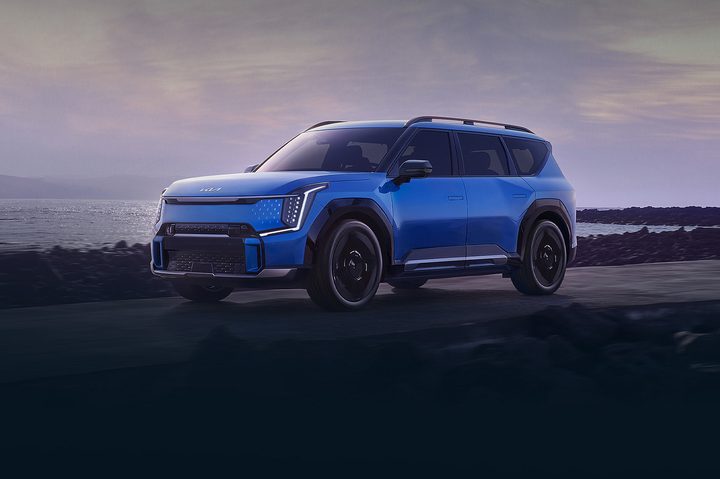
For starters, in a year, it’s likely that there will be a whole lot more options. In just a few months, we’re expecting the launch of the highly anticipated Kia EV9 — a vehicle that lines up with the size of car that I’m looking for. The details about the pricing of the EV9 in the U.S. have yet to be revealed.
But when the EV9 does launch in the U.S., it may be pretty different from the EV9 of 2025. How so? Well within the next year or two, most EV manufacturers are expected to adopt the Tesla NACS charging connector — and over time, the public chargers with it. In other words, if you buy a CCS-equipped car now, you eventually may have to use adapters to charge at public stations.
Now, that’s really not a big deal. I’ll be charging at home most of the time, and can have an adapter in the car for the times that I do want to charge publicly. And, the move to NACS is going to take some time — there will be a crossover period where companies adopt both NACS and CCS. Still, I’d be lying if I said that those minor inconveniences didn’t put me off the idea of a CCS-equipped car a little.
Charging matters … a lot
Along with the charging connectors is the charging network — and the Tesla Supercharger network is the best one right now. Tesla Superchargers are located across the country, in key charging areas. They’re usually pretty fast too. They don’t get as fast as the superfast 350kW Electrify America stations — but those are much less common than 250kW-capable Tesla Superchargers.

Tesla chargers are easier to use too — simply plug in, and you’re good to go. The charger can talk to the car for payment, so if you have a payment method in the app, you don’t need to mess around with paying manually. Admittedly, the ease of use isn’t quite as important to me as the charger availability — but it still makes a difference.
Tesla has a head start
Tesla has been building high-quality electric cars for much longer than anyone else. That doesn’t mean that its EVs are necessarily better than the others — especially the legacy automakers that have decades of experience in building cars in general. But it does mean one thing — it’s much easier to get a used Tesla.
Tesla’s used inventory site is filled with cars that are available with less than 50,000 miles on the odometer, and that come at a lower price than their new counterparts. A used Tesla Model Y Long Range may be a few years older than a new one, but it also costs around $12,000 less. A new one comes at $50,490 right now, while a used one is $38,200. You’ll be hard-pressed to find those kinds of discounts on any other EV — though that will likely change in the next few years.
I’m picky
I want a medium-to-large electric car that’s easy to charge and doesn’t cost too much. Yeah, I’m picky. But those requirements aren’t necessarily that niche. I suspect most new electric car buyers have similar ones.
Considering the fact that right now, you can get a used Tesla within a few weeks and I don’t feel rushed to order one right now so that I’ll get one in time for January, I will likely end up waiting just a few more months to see if something better pops up. I’m not committing right now to buying a Tesla. But unless something big changes in the next few months, a shiny new (used) Model Y will likely end up in my driveway. Hopefully, next time I’m in the market, it’ll be easier to buy something else.


