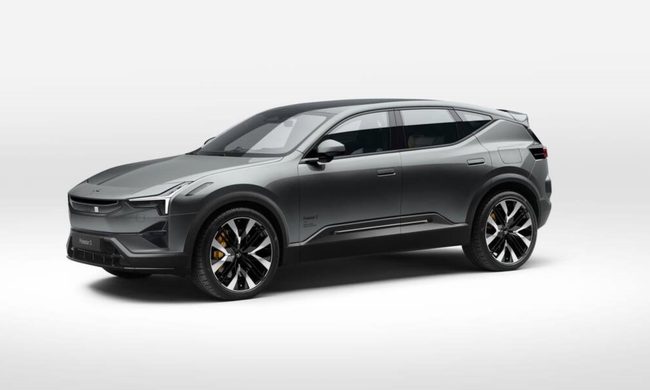
Xiaomi announced the Xiaomi SU7 Ultra just a few days ago, but already the company is showing the blazing-fast new EV to the public. In fact, I had a chance to see it in person at MWC 2025.
Boy is it a handsome car.
The SU7 Ultra is essentially a supercar version of the standard Xiaomi SU7, which was itself already an impressive offering. It starts with the design. The standard SU7 looks modern and aerodynamic, with design elements reminiscent of the likes of the Porsche Taycan and Tesla Model S. It’s a sedan with four doors, and while its second row isn’t necessarily the roomiest, it’s definitely comparable to other sedans. The SU7 Ultra steps up the premium look even more — making the car look kind of like a rallycar. The model we saw has a bright yellow color with black carbon fiber accents, including a large spoiler on the back. It looks even better in person than it does in the images.

Perhaps even more impressive is how it performs though. The Xiaomi SU7 Ultra is able to accelerate from 0-100km/h in under two seconds, which is eye-wateringly quick. It’s powered by two Xiaomi V8s electric motors and one Xiaomi V6s motor — which hit a huge 1,527 horsepower combined. When it’s time to slow down instead of speed up, you’ll be able to leverage the car’s 430-millimeter carbon fiber ceramic brake discs.
We weren’t able to get inside the car, but the basics of the interior are similar to the base SU7. It comes with enough room for five (including the driver), and at the front there’s a huge infotainment display, which is how you’ll control much of the driving experience, similar to driving a Tesla. I haven’t been able to use the software in the car in person, but by all accounts it’s modern and intuitive, easily beating legacy automakers, and matching companies like Tesla and Rivian.

The car highlights how impressive Chinese EVs have become — yet we still can’t buy them in the U.S. It seems increasingly unlikely that will change given the geopolitical forces at play, which is a little unfortunate. It would be great for U.S. automakers to have a little more competition, especially when it comes to affordable-yet-premium electric cars. We certainly wouldn’t want American companies like Ford to go out of business, but if Ford felt a little more pressure, and developed better and cheaper EVs, that would be good for everyone.

I’m certainly not saying the Xiaomi SU7 Ultra is cheap though. The new Ultra variant starts at a relatively pricey 529,900 yuan, which equates to around $73,000. That’s more than double the base price of the standard Xiaomi SU7, which comes at 215,900 yuan, or around $30,000. But, the SU7 Ultra is built for those who want the best performance possible, and the base price of the standard SU7 is something to behold in the U.S. EV climate, which requires spending at least $40,000 for a decent EV.
Then there’s the fact that neither of these two vehicles is available in the U.S., and while Xiaomi has said that it would like to change that, again, it seems unlikely. In the meantime, hopefully the EV manufacturers that are available here see the writing on the wall — and seriously step up.