  1. Home
  2. Cars
  3. News

Digital Trends may earn a commission when you buy through links on our site. Why trust us?

Your swanky Mercedes EV could soon run on Samsung battery cells

Mercedes deepens its Korea ties with a new Samsung SDI battery deal

Add as a preferred source on Google
Mercedes-Benz Steer-by-wire yoke-style steering wheel Featured
Mercedes-Benz

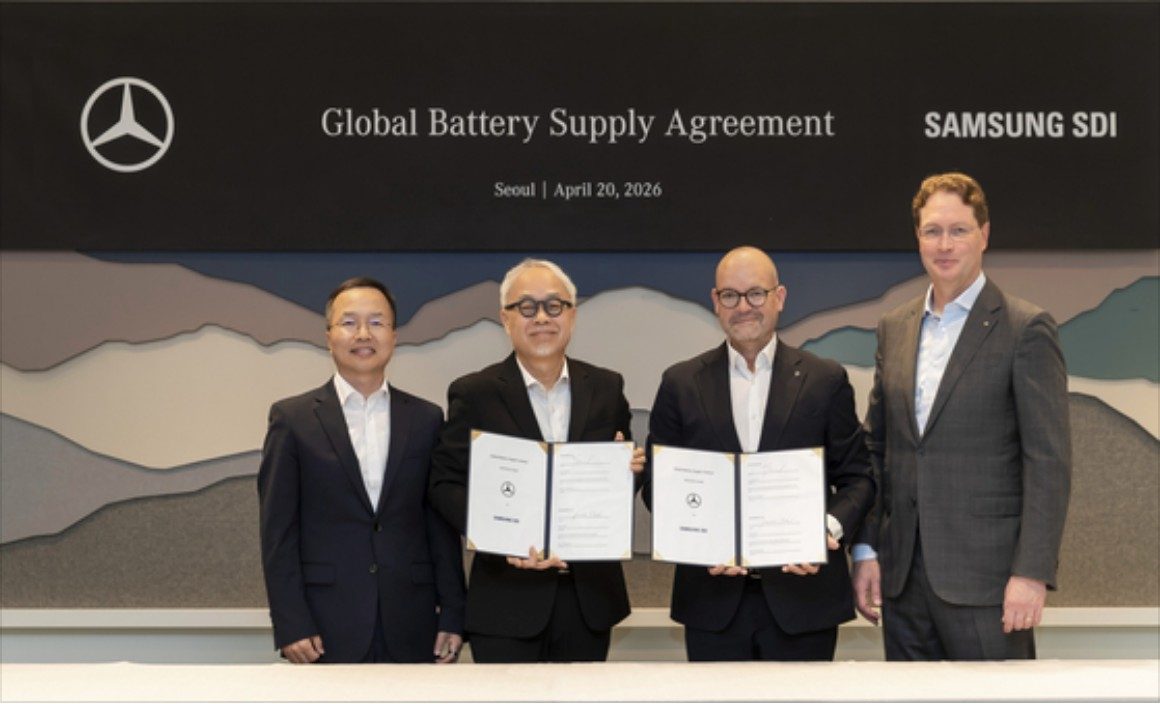
The next Mercedes-Benz EV could draw power from Samsung cells. Samsung SDI has just signed a multi-year battery supply agreement with Mercedes-Benz, marking the Korean company’s first EV battery supply deal with the luxury carmaker.

What to expect from this EV battery deal

Samsung SDI has said that the batteries will use high-nickel NCM chemistry and will go into Mercedes-Benz’s next-generation electric vehicles. According to the Korea JoongAng Daily report, Mercedes plans to use Samsung SDI’s cells in upcoming compact and mid-size electric SUVs and coupe models.

Recommended Videos

While the announcement is light on details right now, it is still a notable announcement.
Why this is a notable supplier shift for Mercedes

The bigger hoke is that this is Samsung SDI’s first battery contract with Mercedes-Benz. Korea JoongAng Daily says Mercedes had previously relied on LG Energy Solution and SK On for EV batteries, while Samsung SDI’s automotive battery relationship had long been anchored by BMW.

Meaning, this is just another routine supply extension. It is Mercedes widening its battery sourcing network at a time when automakers are trying to balance range, performance, cost, and long-term supply security. Samsung SDI says its cells are designed to deliver longer driving range, enhanced longevity, high output performance, and in-house safety solutions.

The report notes that hat Mercedes-Benz chairman Ola Källenius met Samsung Electronics executive chairman Lee Jae-yong during a Korea visit last year, and that Mercedes already works with Samsung in other areas including in-vehicle displays and Samsung Wallet digital key support.

So the german automaker is not betting the whole EV future in one supplier. This also arrives as Mercedes-Benz is pushing into EV’s with improved range and charging tech, making this deal seem like a natural next step.


Vikhyaat Vivek
Vikhyaat Vivek is a tech journalist and reviewer with seven years of experience covering consumer hardware, with a focus on…
This Android Auto update is trying to change how you drive and use your car
Road, Electronics, Credit Card

I use Android Auto every day, and at this point, it feels like a quiet co-driver sitting on my dashboard. That’s exactly why this upcoming refresh from Google actually matters. It is not just a visual tweak; it is a proper overhaul of how Android Auto should feel inside a modern car. The biggest change is the design. Google is bringing its Material 3 Expressive design language from phones into cars. That means Android Auto is getting a more modern, more fluid look with expressive fonts, smoother animations, and even support for wallpapers. This should really make the entire interface feel less rigid and more alive while you are driving.

Widgets finally make Android Auto feel useful at a glance

Read more
BYD’s latest EV costs just over $10,000, goes 250 miles, and packs a LiDAR, too
LiDAR, 250 miles, and a five-figure price tag: the 2026 Seagull is proof that the future of affordable EVs is already here, just not in the West.
BYD 2026 Seagull.

BYD has officially unveiled the 2026 Seagull, sold internationally as the Dolphin Mini or Dolphin Surf, and the numbers deserve your attention. 

The updated compact EV’s price starts from 69,900 yuan, which is around $10,300, in China, and tops out at 85,900 yuan, which is around $12,600. It debuted at the 2026 Beijing Auto Show before going on sale this week (via CarsNewsChina). 

Read more
BYD’s blazing-fast Flash charging tech for EVs got hot enough to roast a turkey
A real-world test of BYD's Megawatt Flash Charge pushed battery temps to 169.6°F.
BYD Flash charging

A real-world test of BYD's Megwatt Flash Charge technology showed the battery hitting 169.6°F during a charging session. That's hot enough to roast a turkey, and well above China's recommended safety ceiling of 149°F for lithium iron phosphate battery cells. The test, conducted by an automotive blogger who livestreamed the session (via ChinaEVHome), has raised concerns about whether the heat generated by ultra-fast charging degrades long-term battery health.

Why the heat matters

Read more