  1. Home
  2. Computing
  3. News

AMD’s canceled GPU could have crushed Nvidia

Add as a preferred source on Google
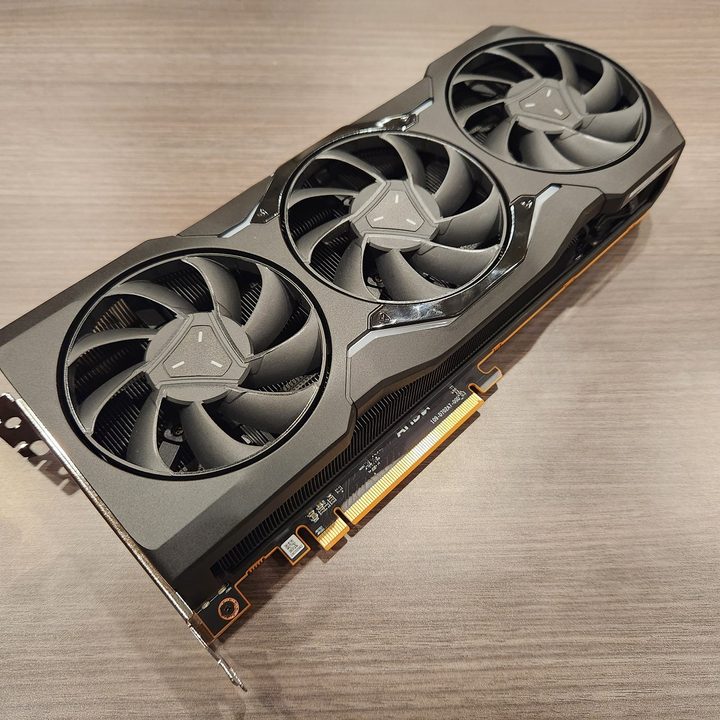
The AMD Radeon RX 7900 XTX graphics card.
Jacob Roach / Digital Trends

For months now, we’ve been hearing rumors that AMD gave up on its best graphics card from the upcoming RDNA 4 lineup, and instead opted to target the midrange segment. However, that doesn’t mean that such a GPU was never in the works. Data mining revealed that the card may indeed have been planned, and if it was ever released, it would’ve given Nvidia’s RTX 4090 a run for its money.

The top GPU in question, commonly referred to as Navi 4C or Navi 4X, was spotted in some patch information for AMD’s GFX12 lineup — which appears to be a code name for RDNA 4. The data was then posted by Kepler_L2, a well-known hardware leaker, on Anandtech forums. What at first glance seems to be many lines of code actually reveals the specs of the reportedly canceled graphics card.
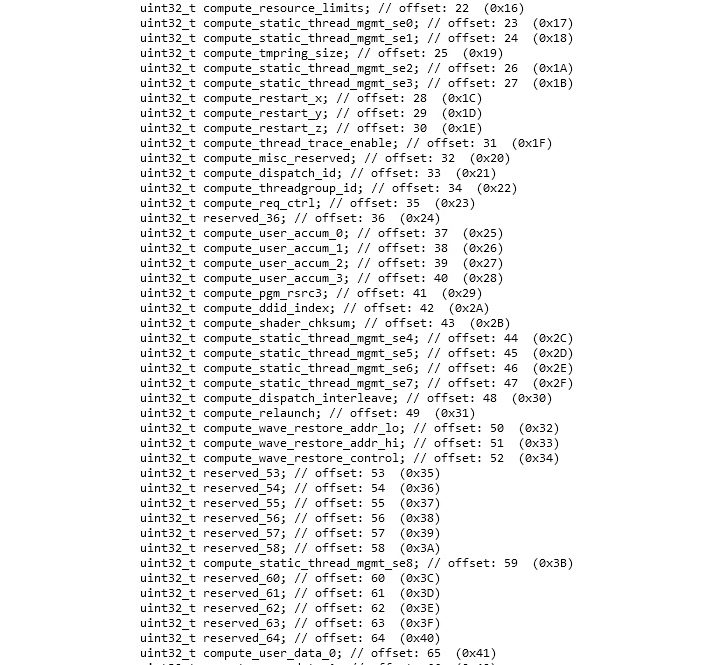
AMD patch files.
Kepler_L2 / Anandtech forums / AMD

These are not the full specs that we’re getting, of course, but what we’re seeing here is perhaps the most important specification — the number of shader engines, ranging from zero to eight, for a total of nine. This implies a very high-end design for the RDNA 4 flagship and would mark a significant increase over the RX 7900 XTX, which sports six shader engines. In the same discussion thread, another user reported that the Navi 4X GPU was meant to have over 200 compute units (CUs). That’s twice the number of the RX 7900 XTX, which comes with 96 CUs.

Recommended Videos

The graphics card was also said to feature a major architectural change, sporting three graphics compute dies (GCDs), each with three shader engines. This is the multi-chiplet design that leakers first mentioned as a possibility for RDNA 3, then RDNA 4, and now, RDNA 5. Regardless of architecture, such an increase in CUs would make for a competitive GPU.

For comparison, if this rumored RX 8900 XTX would have been twice as fast as the RX 7900 XTX, it could outperform Nvidia’s RTX 4090 in raw rasterization. There would still be DLSS 3 to give Nvidia a boost, but that wouldn’t have made it less of a major win for AMD.

However, by the time this GPU would have comeout, Nvidia’s RTX 5090 would have been right around the corner, most likely ready to claim the crown yet again, along with the rest of the RTX 50-series. That could be why AMD is reportedly sticking to less extreme GPUs in the upcoming generation.

These few lines of code are perhaps the most tangible leak we’ve had about this GPU so far, but the truth is that we don’t know anything for a fact just yet. AMD is yet to confirm anything one way or the other. But most leakers agree — this GPU, however great it might have been, will not see the light of day in this generation of graphics cards.

Monica J. White
Monica is a computing writer at Digital Trends, focusing on PC hardware. Since joining the team in 2021, Monica has written…
In a market where Mac has been aspirational, it’s somehow a better deal than windows machines now
Windows Laptops became so expensive that MacBooks look sensible now
Computer, Electronics, Laptop

For a long time, the laptop buying advice was simple enough. Windows had a more versatile portfolio that brought you affordable, mid-range, high-end, and even gaming options, while MacBooks were known as the easy premium recommendation.

But owing to the pricing circus caused by memory shortages and component price hikes, the equation makes no sense anymore.

Read more
HP’s new RTX 5070 laptop feels like the sweet spot between thin and bulky
The new HyperX Omen 15 combines AMD and Intel and targets portability without fully sacrificing performance.
HP HyperX OMEN 15 Gaming Laptop

Modern gaming laptops have largely drifted toward two extremes lately: massive 16-inch and 18-inch desktop replacements, or ultra-compact 14-inch machines that still feel slightly cramped for serious gaming sessions. That’s exactly why HP’s new HyperX Omen 15 feels refreshing, because it brings back the familiar 15-inch gaming laptop formula with a chassis that still feels portable without sacrificing proper gaming hardware underneath.

HP’s compact HyperX Omen 15 packs RTX 5070 graphics with AMD and Intel options

Read more
Corsair is putting Chinese RAM in mainstream market. It won’t quite end the crisis though
A cheaper DDR5 supplier could shake up the market, but it is not a magic fix
Samsung DDR4 RAM in hand

After months of painfully expensive RAM and SSD prices, the memory market may finally be showing signs of pressure from an unexpected direction: China. New reports suggest that Chinese memory manufacturers are rapidly expanding production of DRAM and NAND chips, and that major hardware brands are starting to take notice. The most notable example so far is Corsair, which has reportedly tested DDR5 memory modules using chips from Chinese DRAM giant ChangXin Memory Technologies, better known as CXMT.

This feels inevitable. Memory prices have remained frustratingly high across PCs, laptops, and storage devices for months. So when Chinese suppliers began offering RAM at nearly half the cost of some global competitors, manufacturers were always going to at least explore the option. According to market reports, some CXMT DDR5 modules are reportedly being sold near the $150 range, while equivalent products from larger global suppliers can hover between $300 and $400.

Read more