


After many months of anxious waiting and salacious rumors, it’s finally happened: Apple has revealed its generative artificial intelligence (AI) systems to the world at its Worldwide Developers Conference (WWDC).
Yet unlike ChatGPT and Google Gemini, the freshly unveiled Apple Intelligence tools and features look like someone actually took the time to think about how AI can be used to better the world, not burn it down. If it works half as well as Apple promises it will, it could be the best AI system on the market.
Every aspect of Apple Intelligence bears the classic Apple hallmarks, from its intense focus on user privacy to its natural and seamless integration into the company’s devices and operating systems. Apple’s insistence on waiting until its AI was ready — rather than rushing some dangerous, half-baked product out of the door for maximum profit — is exactly what we’ve come to expect from Tim Cook and company. And we’re all better off for it.
Slow and steady

I can’t blame Apple for being slow when it comes to launching generative AI tools. We’ve all seen the damage that unchecked AI can cause. From medical misinformation and deepfakes to job losses and revenge porn, getting it wrong comes with some serious side effects.
That means the race to the AI crown sometimes feels like a race to the bottom, with everyone so desperate to “win” that they resort to pumping out increasingly powerful and perilous tools with no oversight or thought beforehand.
Today, though, Apple got it spot-on. Apple Intelligence is baked into existing Apple apps — apps that you use every day and intimately understand how to use. Where others have tossed over the keys to the kingdom and said “go out there and have fun,” Apple has powered up your existing daily workflows with precisely the right tools in the right places.
There are several significant benefits to this method. For one thing, it brings the required learning curve right back down to earth. You already know how to write an email and edit a photo on your device — with Apple Intelligence, those same processes continue to exist, but now they have a few more generative bells and whistles to play around with.
Apple has also put its world-famous design sense to good use, integrating AI tools into apps that you use every day in ways that look totally natural. You don’t need to learn prompt engineering, you don’t need to load up any plug-ins, and you don’t need to pay for any new apps. In fact, you barely need to do anything different at all.
Privacy first
And there’s more. By constraining its generative AI tools within existing apps and operating system features, Apple can put a lid on dangerous and risky content that is far too easy to create in rival products.
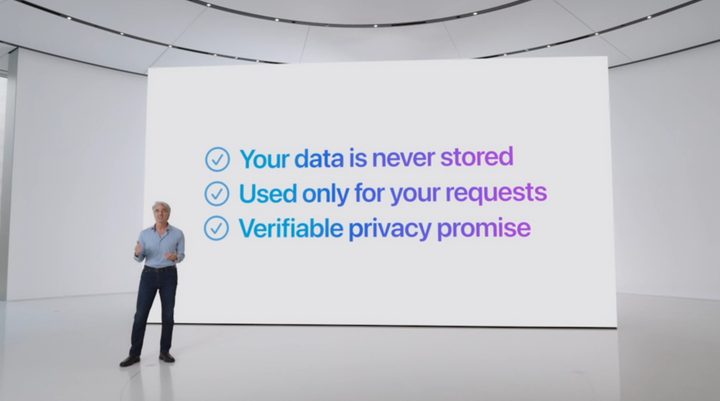
But Apple’s not just looking to protect everyone else from what you might want to create in a dark moment — it’s looking to protect you as well. We’ve all seen what a privacy nightmare existing AI tools can be, with their propensity to leak the private data that they so voraciously vacuum up. Apple Intelligence takes a different approach.
For starters, Apple Intelligence processes most AI requests on your device, meaning no one else can even get a sniff of it — not Apple, not third-party app makers, not anyone. That’s been the case with other Apple-made features for years, but doing so with AI is a must. Of course, Apple has obliged.
When a cloud server really is required to process your queries and requests, Apple has tightly locked that down too. The cloud servers are Apple’s own, but the company has no access to your data. Better yet, it can all be reviewed by external experts to make sure Apple is keeping its word. Just try getting a similar promise from OpenAI or Google.
A better way

It’s unlikely that Apple’s approach is foolproof (nothing truly is, after all). But it’s a far more accessible approach than any of us are used to seeing. Not only does Apple Intelligence look more useable and understandable than anything we’ve seen before, but it looks safer and more private too. In taking this approach, Apple is showing that AI doesn’t have to mean the destruction of humanity. It could instead mean helpful everyday tools and fun little Genmoji. Who’d have thought?
Describing Apple Intelligence, the company’s software chief, Craig Federighi, summed it up as “AI for the rest of us.” I couldn’t have put it any better.


