
The Vision Pro headset will be available to order in the U.S. starting February 2, Apple has just announced, with preorders opening at 5 a.m. PT on January 19. It means the hotly anticipated new product from the Cupertino firm is less than a month away from release.
In a press release on its website, Apple said that the device would be available at both in-store locations and via its website on February 2. Right now, that’s limited to U.S. stores and American online customers. No mention was made of when the headset will be released to users in the rest of the world, although Bloomberg’s Mark Gurman has said he doesn’t expect we will have long to wait until that happens.
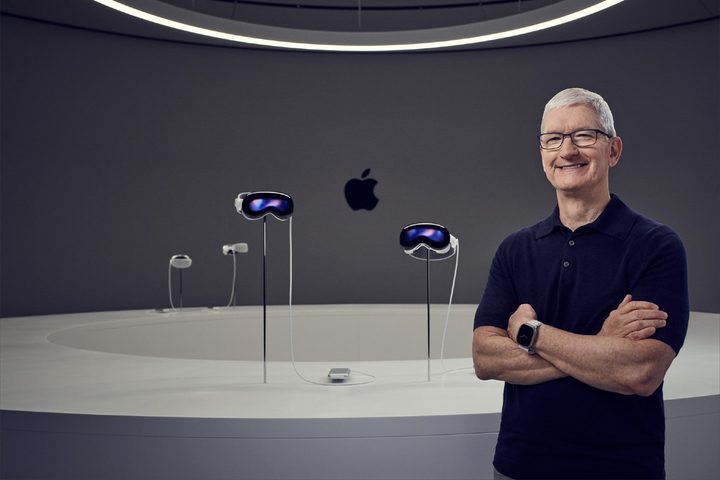
The Vision Pro is Apple’s first major new product category in years. It blends augmented and virtual reality into a single device, allowing users to watch movies, play games, conduct video calls, and much more. It is undoubtedly packed with incredibly high-end technology, but that has been as much of a talking point as its sky-high $3,499 price tag.
Incidentally, Apple’s press release revealed that the $3,499 Vision Pro comes equipped with 256GB of storage. Apple noted that this is the “starting” price, suggesting that options with more storage — and higher prices — will be available. Right now, Apple is keeping those variants close to its chest.
Cheaper lenses than expected
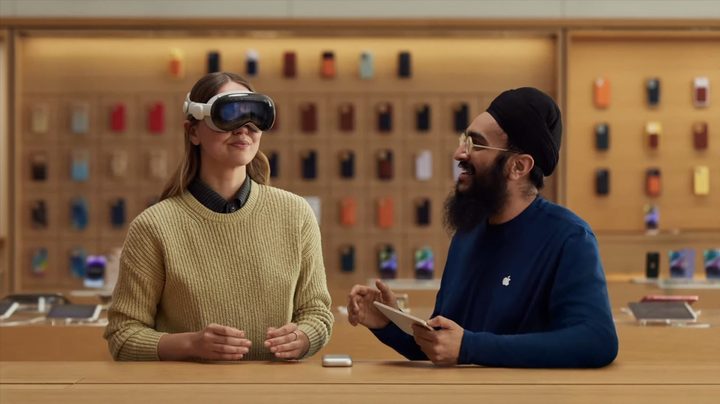
Interestingly, the press release does not mention whether users will need to go to an Apple Store to have a device properly fitted or whether Apple will show users how to use the device before they go home with it. With online purchase available, users might be able to forgo that fitting and training process entirely — or Apple might explain the details nearer the time.
According to a later post by Gurman, however, it’s noted that starting at 8AM on February 2, you’ll be able to sign up for a demo of the Vision Pro at a local Apple Store, and that demo times will be available through Friday and the weekend on a first-come, first-served basis.
Apple Store demo info for Vision Pro: “Starting at 8:00 a.m. on Friday, February 2, we invite you to sign up for a demo of Apple Vision Pro at your local Apple Store. Demo times will be available Friday through the weekend on a first-come, first-served basis.”
— Mark Gurman (@markgurman) January 8, 2024
Since the Vision Pro will be sold alongside custom Zeiss lenses for glasses wearers, it has been long assumed that users would also need to get those fitted before purchase. However, Apple revealed the Zeiss lens pricing for the first time in its press release. Non-prescription “readers” will cost $99, while prescription lenses will be priced at $149. Both magnetically attach to the Vision Pro. The prices are far lower than the $300-$600 Gurman predicted some months ago.
The press release explained what accessories will come with the headset. They include two bands (a Solo Knit Band and a Dual Loop Band), a Light Seal, two Light Seal Cushions, a cover for the front of the headset, a polishing cloth, a separate battery, a USB-C cable, and a USB-C power adapter.
Now that Apple’s “spatial computer” has a release date, we won’t have long to wait to see how many customers are willing to accept its price to get their hands on what is widely considered to be Apple’s “next big thing.” While it’s not expected to sell in large numbers, its impact could be huge, especially in the emerging virtual reality industry.


