
“Why you can trust Digital Trends – We have a 20-year history of testing, reviewing, and rating products, services and apps to help you make a sound buying decision. Find out more about how we test and score products.“
Dell sees itself as a pioneer in the laptop design space, and with the new XPS 13 Plus, it continues to be a trailblazer, but in some unexpected ways.
Its foundation is built on some of the hallmarks of XPS design, whether it’s super-thin bezels or its 16:10 aspect ratio.
But the XPS 13 Plus also dares to be unconventional. It deliberately chooses some head-turning design features that will leave some compelled — and others put off. In my short time with the laptop, I came away both concerned about the practicality of the device and excited about a major laptop line taking some risks.
Specs
| Dell XPS 13 Plus 9320 | |
| Dimensions | 11.63 inches x 7.84 inches x 0.60 inches |
| Weight | 2.73 pounds |
| Processor | Intel Core i5-1240P Intel Core i7-1260P Intel Core i7-1270P Intel Core i7-1280P |
| Graphics | Intel Iris Xe graphics |
| RAM | 8GB, 16GB, 32GB, 64GB – LPDDR5, 5200MHz |
| Display | 13.4-inch (1920 x 1200) LED
13.4-inch (3456 x 2160) OLED, DisplayHDR 500 13.4-inch (3849 x 2400) LED, DisplayHDR 400 |
| Storage | 512GB, 1TB, 2TB, 4TB, 8TB SSD |
| Touch | Optional |
| Ports | 2x Thunderbolt 4 (USB-C) with DisplayPort and Power Delivery |
| Wireless | Wi-Fi 6E and Bluetooth 5.2 |
| Webcam | 720p, Windows Hello IR webcam |
| Operating system | Windows 11 Home or Pro |
| Battery | 55 watt-hour |
| Price | $1,199+ |
Design
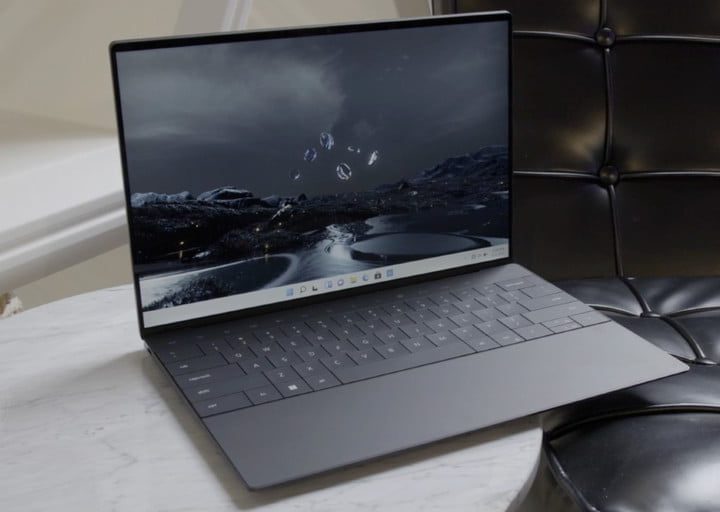
The Dell XPS 13 Plus is considered a complete redesign of what came in previous generations of XPS laptops. There are, however, a few important elements of continuity beyond just the Dell logo on the lid.
The focus here is still on keeping the overall footprint as small as physically possible. Much of that is due to the tiny bezels framing the 16:10 screen. They are unchanged from previous generations but remain notably tiny here.
The XPS 13 Plus is similar in size and dimensions as well. It’s 0.6 inches thick and 2.73 pounds, which is both slightly heavier and thicker than the standard XPS 13 — but not by a noticeable amount. The “Plus” in the name does not refer to its size.
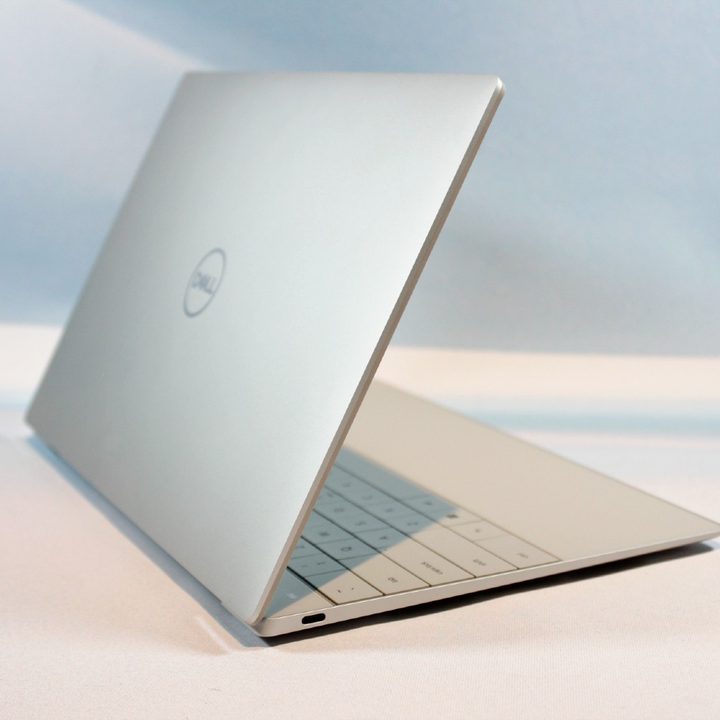
You will, however, notice one very iconic element of current XPS designs missing here. XPS laptops have always been made of aluminum, but the XPS 13 has also always used carbon fiber palm rests with a woven texture. It was a distinctive look and feel, but the XPS 13 Plus does away with it entirely in favor of a more conventional aluminum finish.
The simpler design is certainly suave. It’s a modern look, but it does bear more resemblance now to almost every laptop you can buy. The two color options available are the lighter “Platinum” and the darker “Graphite.” The colors and new materials are emphasized most, however, by the stark, minimalist keyboard and touchpad.
Keyboard and touchpad

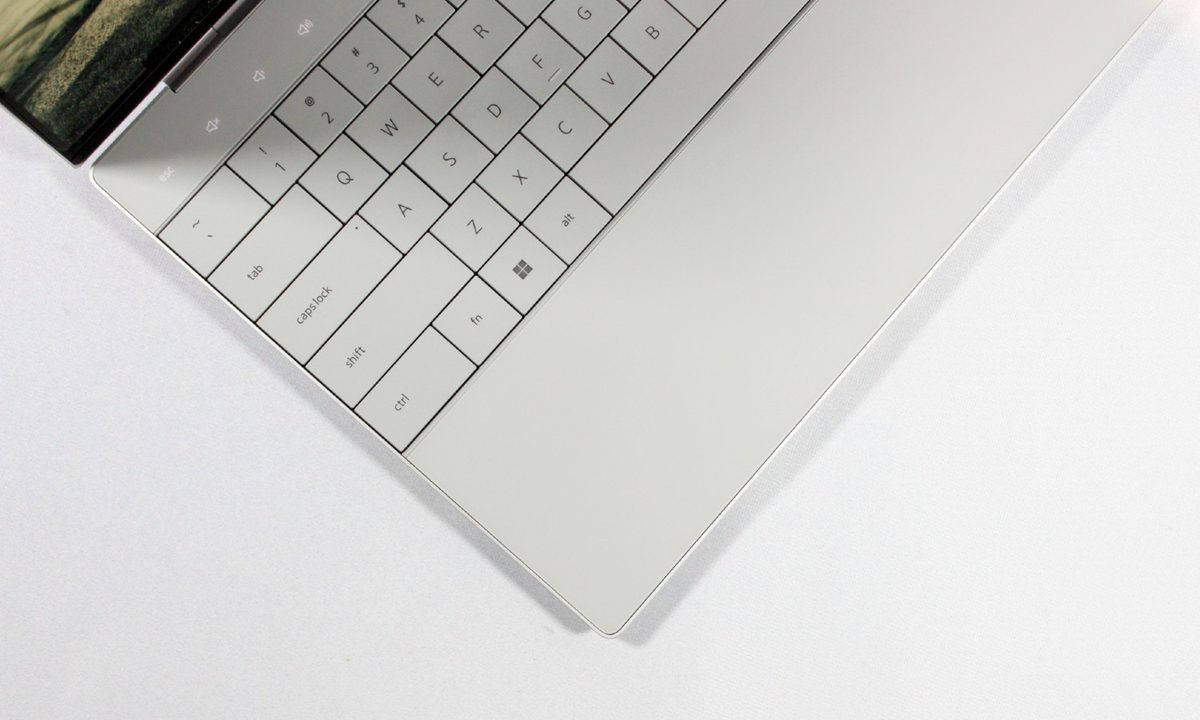
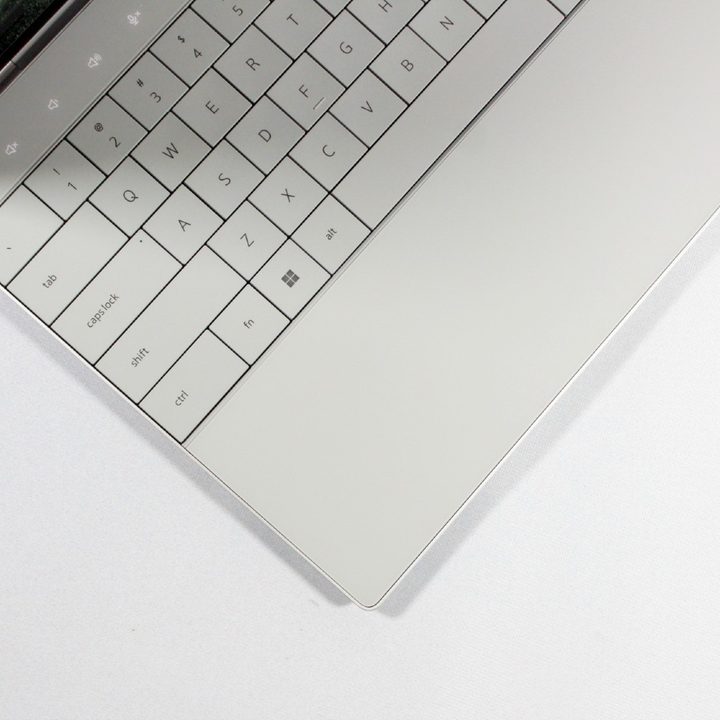
Here’s where things get controversial. First, the touchpad, which looks like it has disappeared altogether. It’s still there, technically, though it’s all done through haptic feedback now. Like the MacBook Pro and Surface Laptop Studio, the laptop uses actuated motors to simulate the feeling of a click.
The result is an ultra-clean design that Dell pulls off well.
In terms of usability, though, some additional tuning could be necessary. The haptics didn’t feel as responsive or smooth as I would have liked. Hopefully that’s something that can be fixed through software, but as of now, the implementation was a bit clunky compared to the competition.
The keyboard takes an even larger risk. The keys themselves have a minimalist look, with larger keycaps and even less space between each. The keys also now extend to the very edges of the keyboard deck, making for a sleek, modern aesthetic. There’s still 1mm of travel, so the typing itself feels similar to the standard XPS 13. That much, I’m fond of.
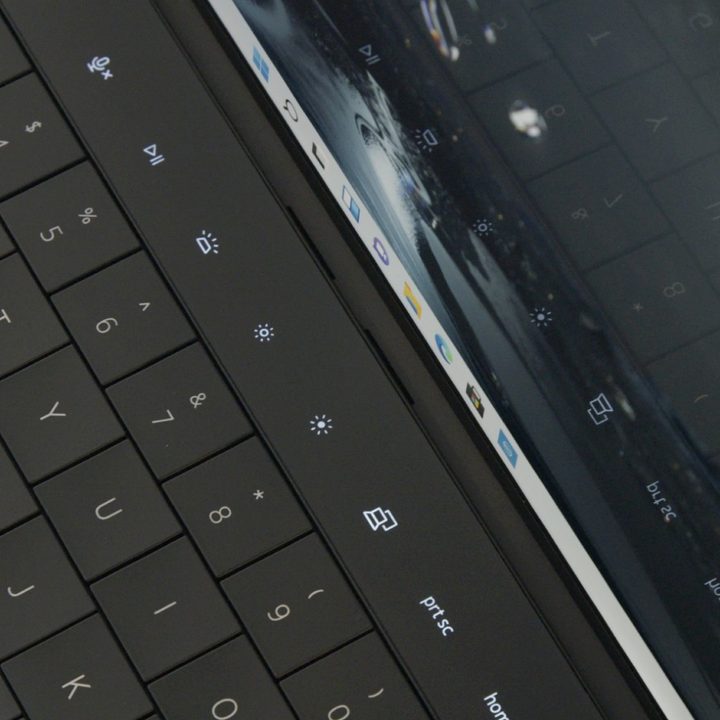
But the function row here has been replaced by capacitive touch buttons instead of keys. They are backlit, showing you what each function “key” does. But they’re a flat surface otherwise. Some haptic feedback would have really helped in this regard.
These obviously take some inspiration from Apple’s defunct Touch Bar, and maintains one of that feature’s worst traits, which is a lack of haptic feedback. A slight vibration to indicate that a key has been pressed could have gone a long way toward fixing this.
Is this a decision Dell will regret in the future? Maybe. The pushback to the Touch Bar was strong, and it’s now on its way out of Apple products altogether. Whether you interpret Apple’s retraction as a sign of the times or a rejection of Apple’s support of the feature, Dell is certainly opening itself up to criticism for copying Apple’s less-popular decisions.
Dell followed Apple into the darkness with its attempt at a butterfly mechanism keyboard with its (now discontinued) XPS 15 2-in-1, and we’ll have to see if the same thing is happening here with its changes to the function row.
Port selection

The Dell XPS 13 Plus takes the limited port selection of the XPS 13 and reduces it even further. Two USB-C ports are still intact — one on either side — but the headphone jack has been removed. This is the most high-profile laptop to make this controversial move — and does it, surprisingly, even before Apple.
Again, will this be a decision Dell regrets in a few years? This one’s harder to tell. With the proliferation of wireless earbuds, the physical headphone jack is certainly used less today than ever before. Then again, a laptop feels like the one place where you don’t have to worry about charged earbuds or speakers.
Speaking of audio, the XPS 13 Plus does include a set of new speakers. Dell has upgraded them from two speakers to four, and they did offer a noticeable bump in quality from what I could discern at the busy exhibit.
Unfortunately, the webcam did not receive that same improvement. It’s still has a resolution of just 720p.
Performance
According to Dell, the “Plus” in this laptop’s designation refers primarily to performance. The XPS 13 Plus features the latest 12th-gen Intel processors in the Alder Lake family, up to the Core i7-1280P. What’s so “Plus” about this processor? Well, it’s a 28-watt chip, compared to the 15-watt chips used in the standard XPS 13. That should provide an improvement in performance, and Dell has matched that with some enlarged fans. Dell says up to a 55% increase in airflow. The extra space freed up by the lack of a physical function row and headphone jack helps in this regard, according to Dell.
Of course, I won’t know particulars on the raw performance difference this has over the XPS 13 until I can test it out myself.
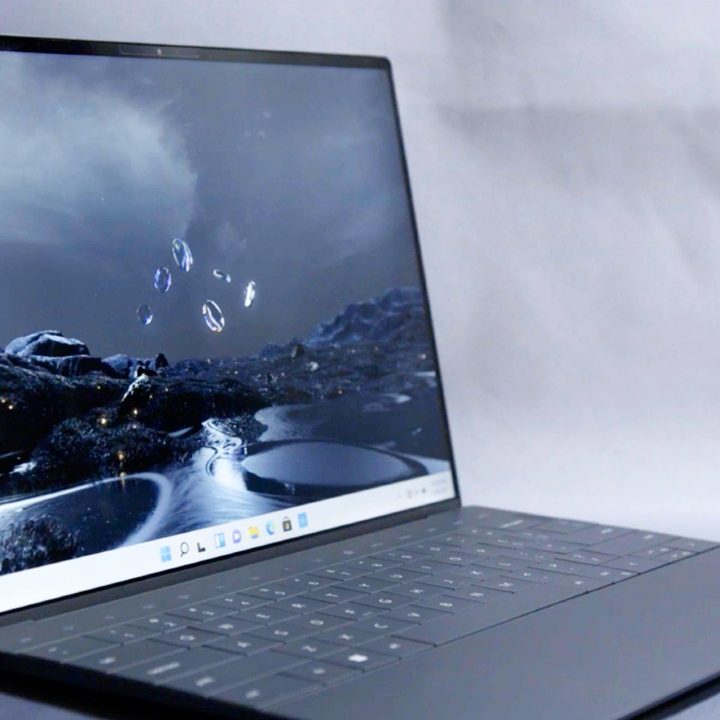
The main problem, however, is the lack of discrete graphics. It’s hard to call a laptop that relies only on integrated graphics a performance-driven device, though it depends on what particular applications and workflow you’re interested in.
I can’t help but compare the XPS 13 Plus to laptops that are slightly larger but can offer discrete graphics options, such as the Acer Swift X.
Price and availability
The XPS 13 Plus starts at $1,099, which nets you a configuration that includes a Core i5 processor, 8GB of RAM, and 256GB of SSD storage. This configuration also comes with a non-touch 1080p screen. You’ll have to pay more for the 4K or touch options.
It’s worth noting that this isn’t that much more expensive than the current XPS 13, so we may see some adjustment to the pricing in the lineup in the future.
Dell hasn’t provided a specific release date for the XPS 13 Plus yet, but has indicated it will be available in the first quarter of 2022.


