
Despite warnings from Nvidia and AMD that the GPU supply crunch will last as long as through the first half of the year, we are now learning that the situation is far worse than we had previously believed. Gamers, creatives, and those needing a new graphics card for work or entertainment should be prepared to either pay double or triple the suggested retail price to snag a graphics card now or wait until the third quarter, when supplies start matching the overwhelming demand.
One GPU vendor claims that supplies have actually decreased, rather than increased, in recent months, which is making a bad situation even more untenable. Asus predicted that sales of its own branded RTX 3000 series graphics will fall by 5% to 10% from the fourth quarter of last year due to short supplies.
“On the graphics card question, currently the main issue is the shortage of Nvidia (GPU) shipments, so there’s a supply constraint situation,” said Asus Co-CEO Sy Hsu in a recent earnings call, according to a report from PCMag. “Everyone is scrambling to obtain units.”
Hsu went on to explain that because there is a drought in supply for the RTX cards, prices are increasing. This means that gamers will not only be challenged to find a retailer with a GeForce card in stock, but they will likely have to pay more than the card’s launch price.
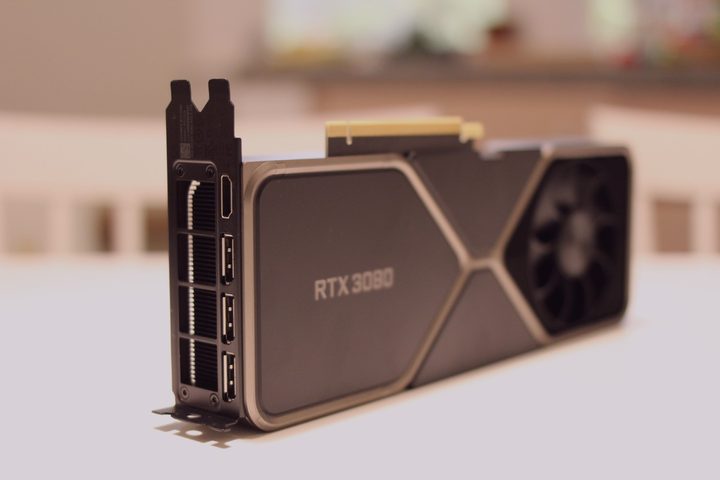
The shortage seems to stem from Samsung, Nvidia’s partner for manufacturing the 8N node for the RTX 3000 series. It’s been reported that Samsung is having a difficult time with its semiconductor yields. A recent report from Digitimes suggests that inventory for Nvidia’s RTX 3000 series will be tight through the third quarter of 2021, which is almost half a year longer than the first quarter date projected by the company’s chief financial officer. AMD’s prior guidance had suggested that its Radeon cards will be more available after the first half of the year.
Amid the ongoing semiconductor shortage, Asus cautioned investors that it could once again raise prices if supply constraints don’t begin to ease. Earlier this year, the company raised the price of its TUF Gaming GeForce RTX 3080 card from $729 to $1,069 to account for rising manufacturing costs and the U.S. tariff that was reinstated in the final days of the Trump administration.
Asus isn’t the only vendor or retailer raising prices on graphics cards, however, and prices of GPUs on the secondary market are double or triple what they were expected to cost at launch. According to research by The Verge, prices for the $499 GeForce RTX 3070 and $579 AMD Radeon RX 6800 were $819 and $841, respectively, on the secondary market in December. Today, the pair of GPUs would be worth $2,570 combined.
On eBay, Nvidia’s top-of-the-line RTX 3090, which has a retail price of $1,499, will fetch $2,985, up from the secondary market average price of $2,076 in December, while the price of the RTX 3060 Ti has more than tripled to a whopping $1,226 from its $399 MSRP.
Retailers like Newegg are also finding creative ways to serve customers looking to score a new GPU while getting in on a cut of the profit. Rather than drop new inventory directly at MSRP, Newegg is offering potential buyers the chance to buy a $330 card for just $540 if they win a raffle to purchase one on social media, according to a tweet posted by The Verge reporter Sean Hollister. In the past, Newegg had bundled accessories with its limited inventory of GPUs to extract a higher price from gamers.


