Catalina is the latest build of Apple’s Mac operating system, version 10.15. Released in October 2019, it’s packed with plenty of new features Mac owners should love, like spreading cloud-based media across focus apps (bye-bye iTunes), second-screen support for iPads, support for iPad-like apps, and more.
Mac owners should consider upgrading to the latest version on a security level at the very least, just like Windows. And just like Windows 10, upgrading to the latest version is completely free. You can grab Catalina simply by loading the Mac’s App Store — the only cost is your time and bandwidth.
Below, you’ll find our easy step-by-step instructions on how to download MacOS Catalina 10.15.
See more
Step 1: Check that your Mac is compatible

First, make sure your Mac can run Catalina. Apple provides a handy list of compatible Macs, but here we summarize the list:
- MacBook Pro from mid-2012 onward
- MacBook Air from mid-2012 onward
- 12-inch MacBook from early 2015 onward
- iMac Pro from 2017 onward
- iMac from late 2012 onward
- Mac Mini from late 2012 onward
- Mac Pro from late 2013 onward
Step 2: Back up your Mac

If you have anything important on your Mac, we recommend backing it up to an external drive or cloud storage service. Updating to a new version carries some risk of running into problems during installation. If you already backed everything up, reverting to the old install is quick and easy.
If you need help backing up your Mac, follow our step-by-step instructions published in a separate article.
Step 3: Open the Mac App Store
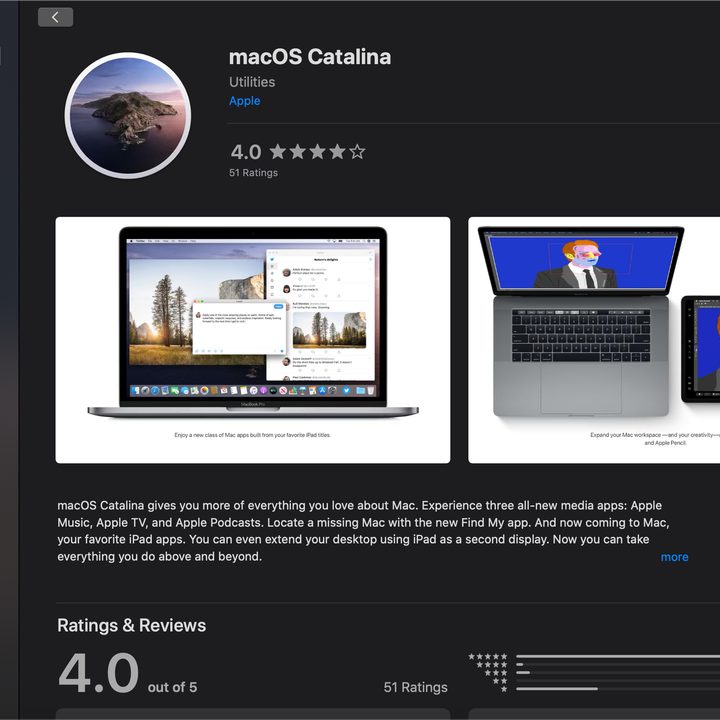
Now that your Mac is safely backed up, launch the Apple Mac App Store by clicking the blue “A” icon parked on your Mac’s Dock. Alternatively, you can click the Apple icon located in the top left corner and select App Store on the drop-down menu.
Once the store opens, click the search bar in the top-left corner and type “MacOS Catalina.” Press return and click the entry for Catalina to load its product page.
Alternatively, you can click the link below and it should launch the Catalina product page within the App Store:
Step 4: Download MacOS Catalina
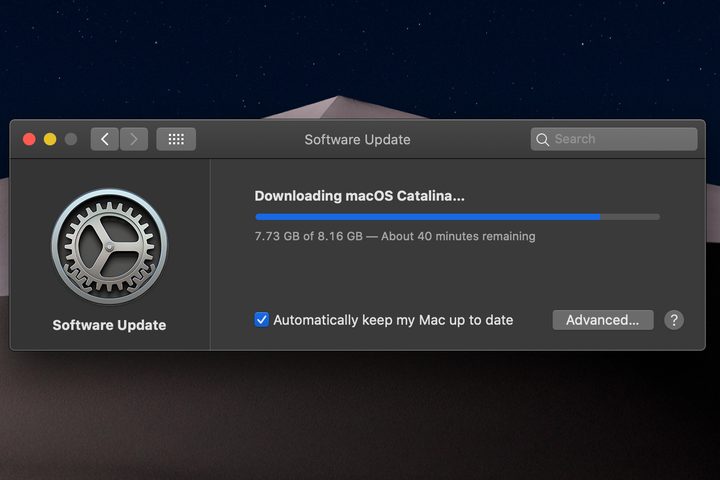
When you’re ready, click the blue Get button to download the MacOS Catalina installer (8.16GB). Depending on your internet connection, this may take a while, so be patient. Once it’s finished, the installer launches automatically.
Note: If you’re installing Catalina on a MacBook, we recommend plugging in the power cord if you haven’t already. You don’t want a dead battery to interrupt your install, as this can seriously corrupt your data.
Step 5: Run the installer
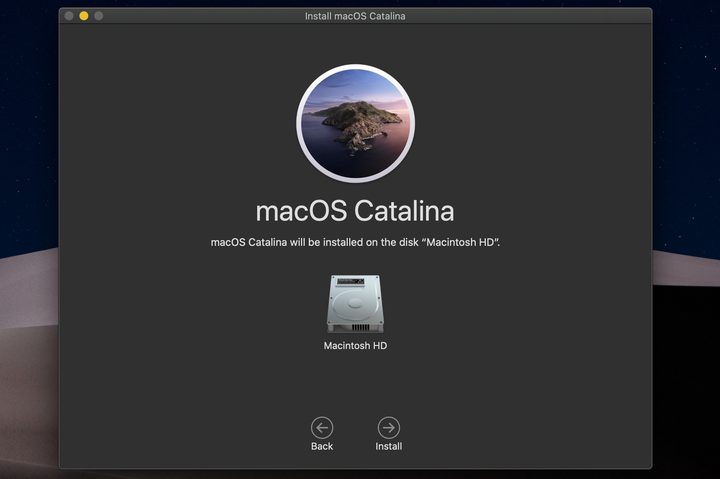
With the installer loaded, follow the on-screen prompts to install MacOS Catalina. If you’d rather install the new update to a different partition than the default choice, select Show all disks when presented with the option. Choose the target partition before continuing.
Once you finally click Install, your Mac may restart several times during the installation. You’ll see a blank screen and a progress bar as well. This is all fine and expected, so don’t worry.
The installation is complete when you see the MacOS Catalina login page. Congrats and have fun!