
Intel peeled back the curtain on its 14th-gen Meteor Lake processors at Hot Chips 2022. Although we have to wait for 13th-gen Raptor Lake processors to make the rounds later this year first, Meteor Lake is shaping up to be an exciting generation that brings Intel’s years-old plans full circle.
In mid-2021, Intel laid out a road map leading into 2025 that started with 12th-gen Alder Lake processors. Meteor Lake is the next significant step in that road map, as Intel moves down to its Intel 4 manufacturing process and begins to integrate multiple dies onto a single chip. Instead of Intel manufacturing everything, Meteor Lake will use dies from different vendors.
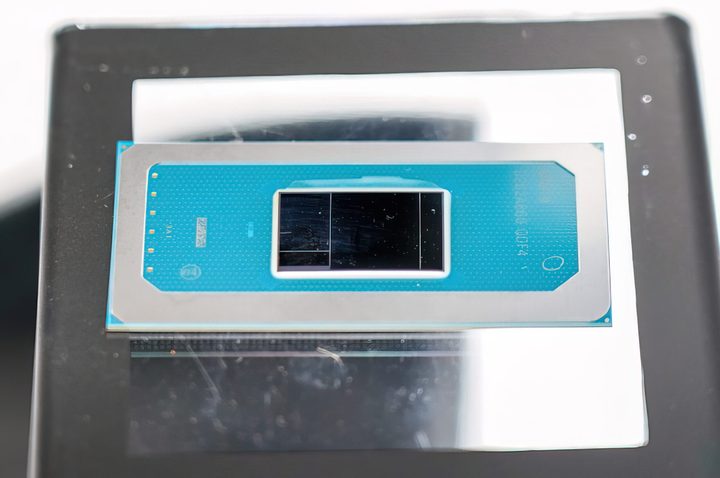
We got a look at a zoomed-back die shot that shows separate compute, GPU, IO, and system-on-a-chip (SOC) tiles, each of which use a different manufacturing process. The main compute die uses Intel 4, and the rest of the die should use process nodes from chipmaker TSMC. Intel isn’t ready to reveal the specific nodes yet, but earlier this year, the company hinted at TSMC N3.
Intel is still designing everything, but Meteor Lake looks like the true starting point for IDM 2.0 strategy. Although the company has tapped other foundries for manufacturing in the past, it hasn’t integrated those various process technologies under one roof. Meteor Lake does that, enabled by Intel’s Foveros 3D packaging technology.
Meteor Lake actually has a fifth die that lives under the other four, and that’s the Forveros die. It’s like a base for all of the other logic on the chip, and Intel says it’s passive, transferring data between the dies without taking up extra power.
We don’t know much beyond the different tiles right now, though. Meteor Lake will use the same hybrid architecture as Alder Lake and Raptor Lake, but with upgraded Redwood Cove performance cores and Crestmont efficiency cores. Rumors also point to Intel using its next-gen Battlemage Xe-2 architecture for the GPU, though the it’s possible that Meteor Lake could use first-gen Arc graphics given its current timeline (Arc Alchemist GPUs use TSMC N6).
Meteor Lake also sets up Intel’s future generations. In a briefing with press, Intel confirmed that Meteor Lake and the following Arrow Lake will be available on desktop and mobile, dispelling an old rumor that Meteor Lake would focus solely on laptops. Intel commented that 16th-gen Lunar Lake processors were originally targeted for portable laptops (15 watts and under) but wouldn’t comment on the generation beyond that. We’re not sure what platforms Lunar Lake will target yet.
At this point, Intel has mostly confirmed a leaked road map that circulated in late 2021. We expect Meteor Lake processors in 2023, following the launch of 13th-gen Raptor Lake processors in late 2022. Intel is rumored to be using a new socket for Meteor Lake, but coolers compatible with Raptor Lake and Alder Lake will reportedly work.
Although Intel has lost some headway in process technology to AMD and TSMC, it is promising to see Team Blue executing on the plan it laid out more than a year ago. That doesn’t mean Intel shoots to the lead, though, as AMD prepares its Ryzen 7000 CPUs for a 2022 launch.


