  1. Home
  2. Computing
  3. Trash
  4. News

Intel may be changing Meteor Lake CPUs to compete with Apple

Add as a preferred source on Google

Intel may be making some major changes to the architecture of its upcoming Meteor Lake chips, industry sources say. This could potentially give Intel an edge over competitors such as Apple.

According to a new report from DigiTimes, Intel may switch from using its own 7nm process node to TSMC’s 5nm.
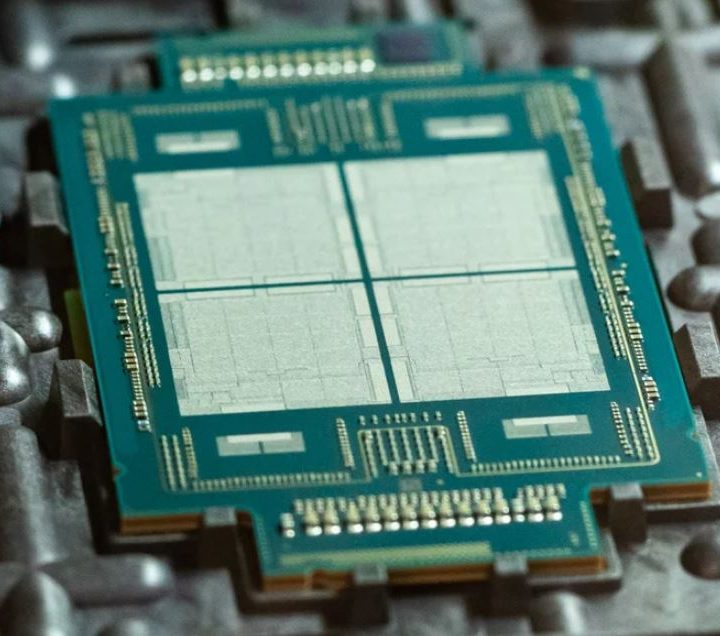
14th-generation Intel processor.
Intel

Intel Meteor Lake refers to Intel’s 14th generation of processors that are set to release in 2023, following Raptor Lake this year. The chips will also represent the first generation of Intel chips that will feature a multi-chiplet design, combining an application processor, a GPU, and connection chips into one advanced package referred to as “Intel Foveros.”

Recent reports from Intel indicate that the company is on track with the development of the new chips. Intel is manufacturing Meteor Lake in-house at its own fabs using the 7nm process, also referred to as “Intel 4.”

According to Intel CEO Pat Gelsinger, the production has been going well and the first Meteor Lake chips have already been able to boot Windows and Linux. Gelsinger said that “the speed at which the team was able to achieve this milestone is a significant sign of the health of both Meteor Lake and our Intel 4 process technology.”

Despite the assurance that the Intel 4 process is doing swell, anonymous industry sources cited by DigiTimes state that Intel may want to move to using TSMC’s 5nm process exclusively . Previously, the compute tile was supposed to be made by Intel (alongside a few other Meteor Lake components), while TSMC’s N5 process was meant to be used to produce the integrated graphics card, as well as the input/output tile. However, Intel may indeed be switching to producing the whole Meteor Lake chip through its cooperation with TSMC.

Although there is something to be said for being able to produce its chips in-house, there could certainly be benefits for Intel from switching to TSMC — and those benefits might be an improvement for the end user.

Intel CEO Pat Gelsinger delivers the Day 1 closing keynote at IAA Mobility.
Intel CEO Pat Gelsinger delivers the Day 1 closing keynote at IAA Mobility. Intel

Expanding to also use TSMC (or perhaps use it exclusively) could result in greater chip yields and could help minimize potential delays. For us, at the very end of Intel’s supply chain, this means greater access to the new processors, as well as more affordable prices. If the disastrous GPU shortage taught us anything, it’s that the harder a product is to get, the more pricey it’s going to be once you do finally find it in stock.

The advantage for Intel could also stem from the fact that TSMC has plenty of experience producing chips similar to Meteor Lake using its 5nm process. Successful chips such as Apple’s M1, M1 Pro, M1 Max, and the all-powerful M1 Ultra found in the Mac Studio, are all built on TSMC’s 5nm architecture. Joining forces with TSMC could perhaps help Intel keep up with its rival in the future.

So far, only one report about this has emerged, and Intel has yet to comment on the situation.

Monica J. White
Monica is a computing writer at Digital Trends, focusing on PC hardware. Since joining the team in 2021, Monica has written…
A Google Pixel laptop might be on its way, but does anyone actually want one?
A new Google laptop might be coming, and I hate to be the bearer of bad news, but the odds are not in its favor.
Google Pixelbook in silver.

It looks like a new member is joining the Pixel family, adding to its resurgent smartphone lineup. Code analysis of the latest Android beta points toward a new Pixel laptop that Google might be planning to launch in the near future. Google last launched a laptop, the Pixelbook Go, in 2019, an affordable version of the Pixelbook it put on the shelves back in 2017.

Both the Pixelbook and Pixelbook Go, along with the earlier Chromebook Pixel models, were not what you would call a smash hit with the audience or a runaway commercial success. Ultimately, they triggered Big G's departure from the laptop segment and a shift in focus toward Pixel smartphones.

Read more
AI is entering the Skynet debate moment in the social media hype circles
AI might end the world - but first, it’ll trend on social media
Representative Image

A growing wave of online voices warning about the dangers of artificial intelligence—often dubbed “AI doom influencers” - is reshaping how the public and policymakers view the technology. According to a report by The Washington Post, these influencers, including researchers, tech leaders, and content creators, are increasingly highlighting worst-case scenarios, from mass job loss to existential risks posed by advanced AI systems.

While critics argue that some of this messaging borders on alarmism, the conversation is no longer confined to speculation. Real-world developments in AI are beginning to mirror some of the concerns being raised, blurring the line between hype and legitimate risk.

Read more
You won’t believe it, but Motorola actually makes a terrific head-turner of a laptop
Motorola’s Moto Book 60 Pro is surprisingly stylish, and the pricing makes it even better
Moto Book 60 Pro in PANTONE Bronze Green

Motorola is not the name I expect to see on a genuinely good laptop. A stylish phone? Sure. A foldable with some personality? Absolutely. But a thin-and-light notebook that actually feels well judged on both design and value was a genuine surprise. And yet, the Moto Book 60 Pro is one of the more quietly impressive laptops in its segment.

With the broader laptop market being in a mess, Motorola's laptops feel refreshing. It is capable, attractive, and still approachable at a time when pricing elsewhere has become increasingly rough.

Read more