  1. Home
  2. Computing
  3. News

Lenovo just let slip that it’s working on two new handhelds

Add as a preferred source on Google

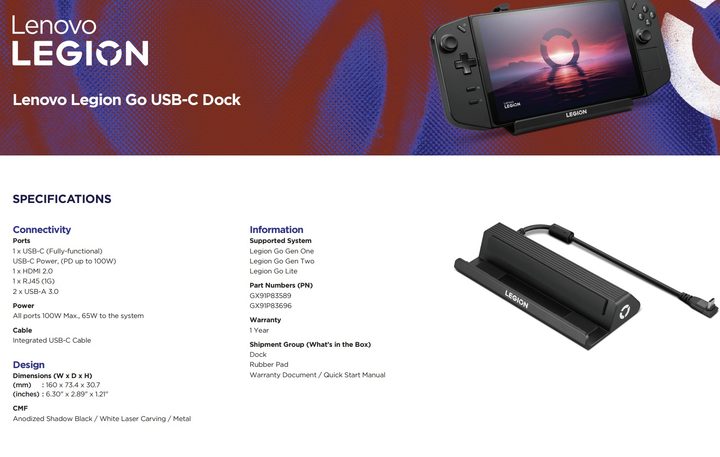
Lenovo has unintentionally confirmed the existence of two new upcoming handheld gaming consoles. The company recently shared documentation for its new Legion Go USB-C Dock, where the brochure lists support for two new devices: the Legion Go Gen 2 and Legion Go Lite.

This is not the first time there has been a mention of the Legion Go Lite. In May, Windows Central reported that Lenovo is working on a Lite version of the original Legion Go. It was suggested that this smaller 7-inch device would be powered by the same AMD Z1 series chipset and would feature certain refinements and a lower price tag.
Recommended Videos

A product documentation of the Lenovo Legion Go USB-C dock.
Just two days ago, there was another leak by YouTuber NITRXX, who posted images of what seems to be the outer shell of the Legion Go Lite. By the looks of it, the new Legion Go Lite may feature fixed controllers, unlike the original Legion Go, eliminating the need for dedicated mouse hardware. It could also have a smaller trackpad beneath the right analog stick, fewer rear buttons, and repositioned auxiliary buttons.
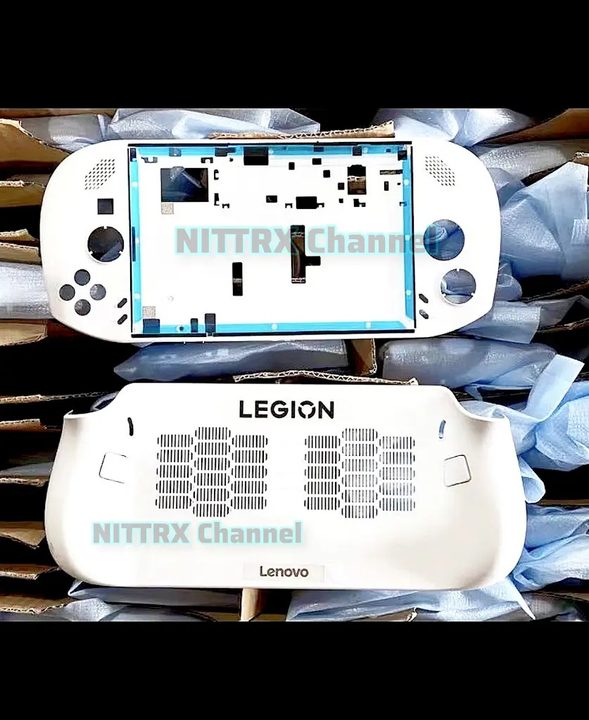
Leaked images of the upcoming Lenovo Legion Go lite handheld consoles.
NITTRX

As for the Legion Go Gen 2, there isn’t a lot of information at hand apart from its name. This is the first time such a product has been mentioned, and it could potentially be the actual successor to the existing Legion Go.

Lenovo’s original Legion Go features the AMD Ryzen Z1 Extreme, 16GB of LPDDR5X-7500 RAM, and up to 1TB of PCIe Gen4 SSD storage, which is comparable to rivals like the Steam Deck and Asus ROG Ally. What distinguishes the Legion Go is its larger 8-inch display and removable controllers, similar to the Nintendo Switch.

There is no credible information, but we expect the Legion Go Gen 2 to feature an upgraded chipset. AMD has new chips in the form of the Ryzen 8000 and its latest Ryzen AI 300, that are available on various laptops and mini PCs. While moving to a new AMD Z2 or Z2 Extreme would be the natural course, Intel’s latest Lunar Lake chips are quite promising and may be a suitable fit for future handheld gaming consoles.

Kunal Khullar
Kunal Khullar is a computing writer at Digital Trends who contributes to various topics, including CPUs, GPUs, monitors, and…
The Sashimi robot is real and it doesn’t fumble at slicing and dicing
Three arms, a GelSight sensor, and surprisingly clean chopstick work.
Laboratory, Robot

Robots can pick up boxes, sort packages, and screw in bolts without breaking a sweat. Some of them can even walk and run like humans. Hand one a floppy, slippery piece of raw salmon, though, and everything starts falling apart. 

A team at the Norwegian University of Science and Technology set out to solve that problem. The result is the Sashimi-Bot, a three-armed robot that can prepare sashimi from a raw salmon loin without a chef in sight.

Read more
macOS 27 means the end of the Hackintosh Era, but does anyone still need one?
Apple's latest software update shuts the door on x86, but today's Macs have already made the original Hackintosh dream surprisingly accessible.
Apple macOS 27 With Hackintosh in background

While the tech world was busy obsessing over Liquid Glass, smarter Apple Intelligence features, and all the shiny new additions arriving with macOS 27 Golden Gate, Apple quietly slipped in another announcement at WWDC 2026 that didn't get nearly as much attention. Buried in the compatibility list was a simple but significant detail: Intel Macs are no longer supported. For millions of users, that's just another software update requirement. For a passionate corner of the internet that has spent nearly two decades bending technology to its will, it's something far bigger. It's the end of the traditional Hackintosh era.

If the term sounds unfamiliar, here's the quick version. A Hackintosh is a regular PC that's been modified to run macOS instead of Windows or Linux. Using community-developed bootloaders such as OpenCore and carefully selected hardware, enthusiasts managed to convince Apple's operating system that it was running on a genuine Mac. The process was anything but straightforward, but for many, that challenge became part of the fun.

Read more
Instacart is testing camera-ready AI shopping carts that sound convenient, but equally scary
Caper Carts promise faster checkout and personalized savings, but the cameras, location tracking, and on-cart ads make grocery shopping feel a lot less private.
Basket, Shopping Cart, Machine

Instacart's AI shopping carts are moving into select Weis Markets stores in Pennsylvania, with more locations planned this year. On the surface, the Caper Cart upgrade sounds useful, since shoppers can see a running total, clip digital coupons, use loyalty rewards, weigh items, and pay from the cart.

The privacy tension comes from the hardware needed to make that work. The carts include basket-facing cameras, outward-facing cameras, location-tracking systems, scales, touchscreens, and payment terminals, turning an ordinary grocery basket into a rolling sensor platform.

Read more