Nvidia CEO Jensen Huang says that the virtual world will soon be larger than the physical one, not in terms of scale, but in terms of economics. In a Q&A following Nvidia’s fall GTC 2021 event, Huang described a world where companies put a greater focus on developing everything from cars to buildings in the virtual world.
“The virtual world will be larger in economics than the physical world,” the executive said. The comment stems from Nvidia’s Omniverse platform, which unifies A.I. platforms, 3D modeling, simulation, and animation under a single roof. Out of the event, Nvidia announced Omniverse Replicator, which is a tool focused on creating digital twins.
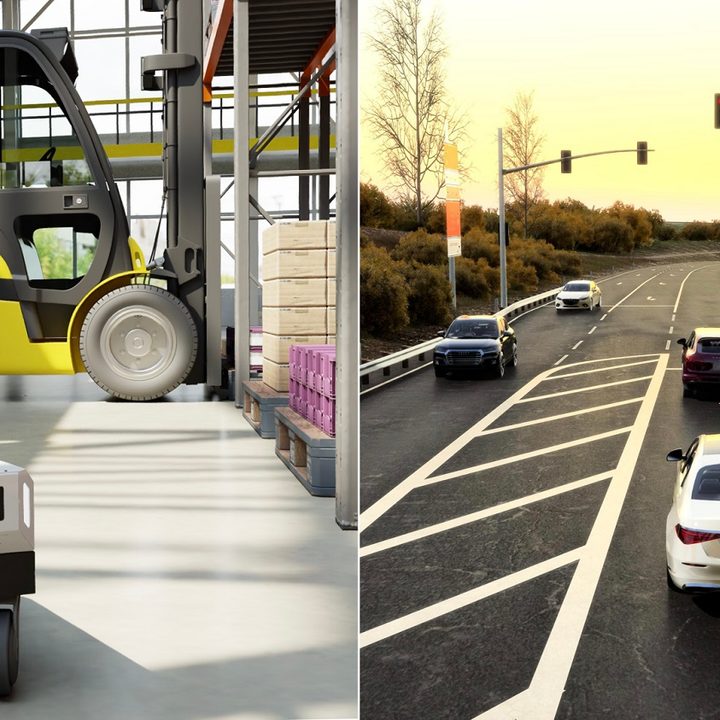
We’re not talking about people here. In April, Nvidia showed how it was able to create a digital twin of a BMW assembly factory. With the digital model, BMW has been able to reorganize machines to accommodate new launches, and even load them into the virtual space to walk around and see the assembly line in progress.
Models of virtual spaces are nothing new, but Omniverse Replicator goes further. It’s not a 3D modeling engine — it’s a synthetic data generation engine. Digital twins are physically simulated, allowing companies, governments, and more to simulate situations through the digital twin to anticipate problems or quickly react to them.
Nvidia Drive Sim, one of the two replicators available now, is an example. Instead of using data in the physical world, which is hard to control for, Drive Sim can generate data based on randomized conditions to better train autonomous vehicles. Nvidia suggests that the applications reach much further, though. Huang said these “virtual worlds will crop up like websites today,” tackling everything from social gatherings and games with friends to wildfires and the best way to combat them.
“Creators will make more things in virtual worlds than they do in the physical world.”
In the future, Huang says that “we will buy and own 3D things, like we buy 2D songs and books today.” The CEO even pointed to a future where we buy and own 3D homes, cars, and art. Perhaps the boldest claim is that “creators will make more things in virtual worlds than they do in the physical world.”
With Facebook’s recent name change to Meta, there has been a lot of talk about the metaverse and how it will impact the future. Huang suggests that the metaverse is the future, where we replace or at least augment the physical world in a dystopian scene ripped straight from a sci-fi novel.
Everyone from Facebook to Apple is in on the virtual world craze. The world’s largest companies are all gunning for the top slot in an innovation that they say will be as significant as the internet.
But will it?
Digital twins and virtual worlds have a lot of applications, particularly in enterprise spaces, solving logistical problems, tackling large-scale threats, and generating data that would otherwise be impossible to gather physically. Whether that makes the jump to the consumer space, as Facebook and others have suggested, is a different matter.
Huang recognized this in the Q&A, saying that “virtual worlds have to be indistinguishable from the real world,” and that’s not where we’re at today. Nvidia announced Avatar at GTC, which is meant to build the A.I. models, voices, and more that will live in these virtual worlds. But a remarkably detailed render of a toy version of the CEO wasn’t enough to distract from the robotic A.I. voice.
Outside of accuracy, virtual worlds have more pressing, real-world issues to overcome. As the internet has already shown, the spread of misinformation has the potential to translate into real-world tragedy, and if left unchecked, the metaverse could amplify those issues like never before.
As for if the metaverse will be larger than the physical world, we’ll just have to wait and see. Regardless, there are a lot of exciting technologies, and a lot of lingering issues to address before we get to that point.